Control Surface Coverage
Routinely scoop out excess fronds so no more than 60–70% of the water surface is covered, which keeps gas exchange adequate and prevents low oxygen stress for fish and beneficial microbes.

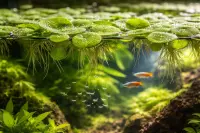
Water spangles (Salvinia minima) is a small free-floating aquatic fern often used in ponds and aquariums. It forms soft, overlapping rosettes that spread into dense green mats on the water surface.
This species is native to warm regions of the Americas and has naturalized in many subtropical and tropical areas. Its rapid growth and ability to shade the water make it useful for reducing algae, but it can become invasive outdoors if not controlled.
Salvinia minima prefers calm, nutrient-rich water, bright but filtered light, and stable temperatures. These traits make it easy to grow in contained setups, though regular thinning is important when you care for Water spangles.

Care Difficulty
Easy Care

Light Preference
Partial Sun

Water Requirements
Aquatic

Temperature Preference
Tropical / Frost Sensitive

Hardiness Zone
9–11

Soil Texture
Silty, Peaty, Organic-rich

Soil pH
Acidic (5.5–6.5), Slightly acidic (6.5–7.0)

Soil Drainage
Waterlogged tolerant

Fertilization
Minimal (feed rarely)
Scan your plant to receive care tips personalized for your specific plant
Available on iOS and Android
This floating fern prefers bright, indirect light that mimics dappled conditions over shallow water.
This species is fully aquatic and relies on stable, clean, standing or very slow-moving water rather than soil moisture.
This tropical floating fern grows best in warm, stable conditions without exposure to frost.
This floating fern prefers very high ambient humidity to stay healthy and actively growing.
Salvinia minima is a free-floating aquatic fern that does not root in soil but benefits from balanced water chemistry and submerged substrate conditions.
This species is well suited to container culture in shallow ponds, tubs, and aquaria.
Salvinia minima grows in nutrient-poor water and usually needs very little supplemental fertilizer.
Pruning helps keep Salvinia minima from overcrowding the water surface and shading other plants.
This floating fern is not traditionally repotted but is often transplanted between containers or ponds as it spreads.
Salvinia minima is commonly propagated by division of its floating mats rather than by seed in home setups.
This tropical floating fern is sensitive to frost and cannot overwinter outdoors in cold climates without intervention.

Plant Health Check
Not sure what's wrong with your plant? Check your plant's health inside the app.
The floating leaves have tiny water-repellent hairs that trap a thin air layer, helping them stay dry and float efficiently on the water surface.
This fern reproduces mainly by fragmentation, forming dense, genetically similar mats that can rapidly cover still or slow-moving water bodies.
Although native to parts of Central and South America, this species is naturalized and sometimes invasive in the southern United States, where it can alter light and oxygen conditions for native aquatic life.

Salvinia minima has three distinct leaf types on the same plant: floating leaves that sit on the surface, submerged modified leaves that look like roots, and a rudimentary third type that shows its close evolutionary relationship to other heterosporous ferns.
This species spreads very rapidly by fragmentation and budding, often doubling coverage in days under warm, nutrient-rich conditions. Regular thinning and physical removal are essential for Salvinia minima care to prevent surface smothering and oxygen depletion.
Keep your plants happy and healthy with plant identification, disease detection, and easy care guidance.