Dwarf spikerush Care (Eleocharis parvula)

Also known as: Small Spikerush

About Dwarf spikerush

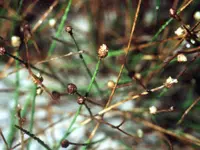
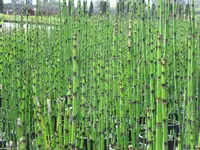
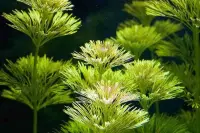
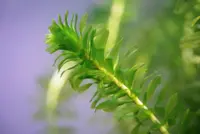
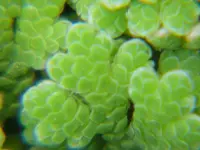
Dwarf spikerush (Eleocharis parvula) is a very low, grass-like aquatic plant often used as a foreground carpet in aquariums and shallow water gardens. It forms dense mats of fine, bright green stems that spread by short runners, giving a soft, lawn-like look under water.

In nature, it occurs along shorelines, mudflats, and shallow freshwater habitats in many temperate regions. Its compact size and relatively slow, steady growth make it manageable, but stable water conditions and adequate light are important. Understanding how to care for Dwarf spikerush helps keep its growth even and prevents thinning or dieback over time.

It prefers clean, nutrient-rich substrates, consistent moisture, and unobstructed light, making it best suited to carefully maintained aquariums or controlled wetland-style setups.


Main Plant Requirements

Care Difficulty

Moderate Care

Light Preference

Full Sun

Water Requirements

Aquatic

Temperature Preference

Cool Climate

Hardiness Zone

4–10

Soil Texture

Sandy, Loamy, Silty

Soil pH

Acidic (5.5–6.5), Slightly acidic (6.5–7.0)

Soil Drainage

Waterlogged tolerant

Fertilization

Light (every 4–6 weeks)

Get Personalized Care Plan

Scan your plant to receive care tips personalized for your specific plant

Personalized Care in the App

Available on iOS and Android

How to Care for the Dwarf spikerush

This small aquatic sedge prefers bright, gentle light to form a dense, healthy carpet.

  • Provide 4–8 hours of light daily, with morning sun and afternoon filtered light to prevent leaf tip burn.
  • In ponds or aquaria, position Dwarf spikerush where it receives open light from above but is shaded from harsh midday summer sun.
  • If stems elongate and thin, light is too low; move to a brighter spot or increase artificial lighting intensity and duration.

This species thrives with consistently saturated conditions and quickly declines if allowed to dry.

  • Maintain soil or substrate constantly wet; in ponds or riparian edges, ensure the crown stays at or just below the waterline.
  • If grown in shallow containers, never let the top layer dry; refill when water drops more than 1–2 cm below the soil surface.
  • Signs of underwatering include yellowing and crisp tips, while foul smell, slimy roots, or algae blooms indicate poor drainage and chronic overwatering conditions.

This plant prefers mild to warm conditions and tolerates cool water, but it is sensitive to hard frost and extreme heat.

  • Aim for 68–78Β°F (20–26Β°C) in aquaria or shallow water features for best growth and compact form.
  • It can tolerate down to about 50Β°F (10Β°C), but repeated exposure below this, especially near freezing, causes dieback and thinning.
  • Above 82–86Β°F (28–30Β°C), provide more shade and strong water circulation, since stagnant hot water stresses plants and encourages algae.

This species prefers consistently high humidity similar to shallow wetland margins.

  • Aim for 60–90% humidity, as Dwarf spikerush naturally grows in saturated, moisture-heavy air environments.
  • Dry air causes browning tips, slower spreading, and finer blades collapsing or becoming brittle.
  • Increase humidity by keeping the container in a tray of shallow water, grouping aquatic plants, or using a humidifier nearby.

This plant thrives in saturated, fine-textured substrates rather than typical potting soil.

  • Use a mix of fine sand and aquatic plant substrate or loamy garden soil with high organic matter, kept constantly wet.
  • Aim for pH 6.0–7.5, avoiding strongly acidic or alkaline conditions that reduce nutrient availability.
  • Soil should be dense enough to anchor roots but not compacted; gently break up clods before planting to improve aeration.
  • Avoid coarse, fast-draining mixes with a lot of perlite or bark, which dry out quickly and prevent stable, submerged growth for Eleocharis parvula.

This species is very suitable for container growing, especially in shallow aquatic or bog-style setups.

  • Choose a wide, shallow container to allow lateral spread of the root system and even turf-like coverage.
  • Use a stable, heavier container material if the setup is flooded, so the pot does not float or tip as plants spread.
  • If using an inner planting pot, select one with many side perforations to let water exchange freely while keeping the substrate contained.

This small wetland sedge benefits from light, consistent nutrition but is sensitive to excess salts.

  • Use a diluted balanced NPK aquatic or general-purpose liquid fertilizer at 1/4–1/2 strength for caring for Dwarf spikerush.
  • Feed every 4–6 weeks during the active growing season if growth appears pale or weak.
  • Avoid heavy compost or rich slow-release pellets that can foul water or oversupply nutrients.
  • Stop feeding in winter or dormancy, when growth slows sharply.

Pruning Eleocharis parvula is mainly cosmetic and helps maintain a neat, low mat of foliage.

  • Best time for light trimming is during the active growing season, spring through early fall.
  • Use sharp scissors or aquascaping shears to clip back tall, uneven, or damaged shoots above the substrate line.
  • Remove brown, decaying, or crowded clumps to reduce algae buildup and improve water flow around the plants.
  • Occasional trimming encourages denser, shorter growth and a more uniform carpet appearance.

This species is usually grown as small clumps or plugs that are transplanted rather than traditionally repotted.

  • Transplant when clumps overrun their area, growth slows, or roots form a dense mat at the substrate surface.
  • Best timing is in spring or early summer, when Eleocharis parvula resumes strong growth and recovers faster.
  • Divide the mat into small plugs, keeping roots and a portion of substrate attached to limit transplant shock.
  • Replant plugs shallowly into fine, nutrient-rich substrate and keep water conditions stable for 1–2 weeks.

Propagation of this plant is commonly done by division of its creeping rhizomes rather than by seed.

  • Divide mature clumps in spring or early summer, when new shoots are actively emerging.
  • Lift the mat gently and tear or cut it into small plugs, each with roots and several healthy shoots.
  • Replant plugs a short distance apart in suitable substrate under good light and stable water conditions.
  • Maintain consistent moisture and moderate water flow to encourage quick establishment and lateral spread.

In many temperate climates this aquatic sedge is fairly cold hardy and often needs minimal winter care.

  • In outdoor ponds, it usually tolerates light frost if roots remain submerged and do not freeze solid.
  • In very cold regions, move containers to a frost-free garage or indoor tank to keep water above freezing.
  • Trim heavily browned foliage in late winter, leaving living bases to reshoot in spring.

Care Tips

Substrate Slope Management

Create a gentle slope in the foreground toward the glass so older clumps can be periodically trimmed back and re-planted higher on the slope, which keeps the carpet dense and prevents shaded, decomposing patches at the back.

Controlled Carpet Expansion

Plant small plugs in a loose grid and, once runners appear, selectively remove or relocate fast-spreading clumps to open areas to avoid overcrowding that can trap debris and reduce water circulation at the substrate surface.

Debris Vacuum Technique

During water changes, hover a narrow siphon tip just above the foliage to remove trapped mulm and fish waste without uprooting the fine roots, which reduces algae risk and keeps the carpet photosynthetically efficient.

Targeted CO2 Distribution

Position the filter outlet or flow nozzle so that fine CO2 mist or enriched water passes horizontally over the grass tops, ensuring even access to dissolved carbon and avoiding weak, patchy growth on the down-current side of the tank.

Routine Patch Renewal

Every few months lift and thin older, yellowing sections with aquascaping tweezers, then replant the healthiest shoots as small plugs so the stand stays young, vigorous, and easier to manage when growing Dwarf spikerush.

Common Pests and Diseases

Algae overgrowth

Symptoms include green, slimy coatings on the substrate and hardscape that compete with the grass for light and nutrients. This issue is common in nutrient-rich, high-light aquariums where balance is not yet stable.

Solution

Reduce light intensity or duration to 6–8 hours, limit excess nutrients by moderating fertilization, and increase partial water changes. Improve flow and ensure adequate but not excessive CO2 so the carpeting plants outcompete algae; manually remove visible algae from leaves and substrate with a soft brush or siphon.

Black brush algae

This pest forms short, dark, tuft-like patches on the fine leaves, causing the carpet to look dirty and eventually smothering new growth. This problem is linked to unstable CO2 levels and low flow in high-light tanks.

Solution

Stabilize CO2 levels throughout the photoperiod, increase circulation around the carpet, and remove affected tufts by trimming or spot-treating with targeted liquid carbon products used according to aquarium safety guidelines. Maintain consistent fertilization instead of irregular heavy dosing to prevent regrowth.

Snail grazing damage

This pest causes irregular nibbled tips and thinning patches in the grass when certain snail species consume tender new shoots. This usually appears in tanks with large populations of plant-eating snails and limited alternative food sources.

Solution

Manually remove excess snails, add only plant-safe snail species, and avoid overfeeding fish so snails do not explode in number. Provide alternative food like algae wafers for mixed communities and allow the carpet to regrow by maintaining good light, CO2, and nutrients.

Nutrient deficiency melt

Symptoms include yellowing, transparent, or melting leaves starting from older growth, while water parameters remain otherwise stable. This condition reflects inadequate macro- or micronutrients in relation to light and CO2 levels.

Solution

Adjust fertilization to provide balanced macronutrients (N, P, K) and trace elements, using a consistent dosing schedule suited to tank size and plant mass. Remove severely melted clumps, then allow healthy runners to spread under stable CO2, adequate iron, and good substrate nutrition.

Filamentous algae smothering

This pest appears as fine, hair-like strands that tangle through the grass blades, trapping debris and shading the carpet. This issue often arises from excess light, ammonium spikes, or organic waste in young or overstocked tanks.

Solution

Shorten photoperiod, improve mechanical filtration, and increase water changes to export dissolved organics. Gently twirl a soft brush or skewer through the carpet to lift and siphon out algae, and maintain stable biofiltration while avoiding overfeeding and sudden nutrient swings for better Eleocharis parvula plant care.

Interesting Facts

Natural aquarium lawn

This small sedge forms very dense, low carpets only a few cm tall, which is why it is widely used in freshwater aquascapes as a living β€œlawn” that can cover open substrate in the foreground of tanks.

Amphibious growth habit

In nature it often grows in shallow coastal and estuarine habitats that experience changing water levels, so the same plant can survive both fully submerged and in very wet, periodically exposed mud.

Fine but true stems

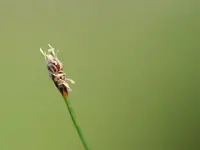
What look like grass blades are actually very slender, cylindrical stems rather than leaves, an adaptation typical of the genus that reduces drag and damage in flowing or moving water.

Botan icon

Did you know?

This species can reproduce not only by seed but also very efficiently by thin underground rhizomes, allowing a single plant to spread into a continuous, uniform mat across large areas of suitable submerged substrate.

FAQs about Dwarf spikerush

This species spreads by short rhizomes and can slowly form a dense mat, especially in shallow water or wet substrates. It is usually manageable, but regular trimming and dividing clumps prevents it from overtaking small tanks or water features.

Grow Healthy Plants with Botan Care

Keep your plants happy and healthy with plant identification, disease detection, and easy care guidance.

Botan plant care app β€” identify plants on mobile

Explore More Plants