Chase the Color
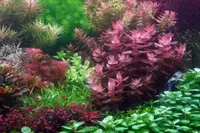
Good light levels and sufficient iron in the soil give the plant a rich and vibrant color. Soft water also contributes to this.
Without all three factors, the leaves turn pale and become simply green.

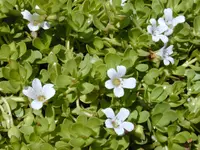
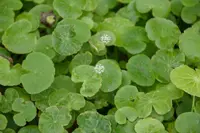
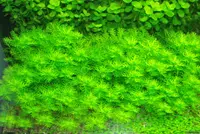
Lemon Bacopa is a wetland herb. It spends its entire life underwater or on moist soil near the edge of a pond. Aquarists grow it as a submerged stem plant. Outdoors, it grows along the edges of ponds, with its stems above the surface. The leaves are thick, succulent, and almost round. When you crush one, it smells strongly of lemon — this scent gives the plant its name.
In the wild, this is a common marsh plant in the southern United States. Its range extends from the southeastern United States to Cuba. Small blue flowers appear in the warmer months. The plant tolerates various conditions, so it rarely dies. Care for Lemon Bacopa requires maintaining a constant level of humidity, moderate lighting, and some warmth.

Care Difficulty
Moderate Care

Light Preference
Partial Sun

Water Requirements
Aquatic

Temperature Preference
Tropical / Frost Sensitive

Hardiness Zone
8–11

Soil Texture
Sandy, Loamy, Organic-rich

Soil pH
Acidic (5.5–6.5), Slightly acidic (6.5–7.0)

Soil Drainage
Waterlogged tolerant

Fertilization
Moderate (every 2–4 weeks)
Scan your plant to receive care tips personalized for your specific plant
Available on iOS and Android
Light plays a crucial role in the growth and appearance of this plant.
Lemon Bacopa requires simple water conditions, as it grows either in water or in consistently moist soil.
Warm water promotes plant growth, but the process slows as temperatures get colder.
Humidity only matters when you grow the plant above the waterline, such as in a paludarium or shallow container.
Most types of substrate are suitable for Bacopa caroliniana.
Note: In a well-planted aquarium, Lemon Bacopa thrives alongside Cryptocoryne wendtii and Dwarf Spikerush (Eleocharis parvula).
This plant grows well in containers, aquariums, tubs or water gardens on the patio.
Feeding helps if you want fast and vibrant growth, the plant develops slowly without it.
Note: Pale young leaves usually indicate low iron levels in Lemon Bacopa.
This species grows quickly, so expect frequent pruning once it is established.
Bacopa caroliniana transplants easily — rooted stems and cuttings establish in a new spot within a few days.
For propagation, you can select any pruned tip, which will then grow into a new plant.
When growing indoors, winter has little impact on Bacopa carolinica care. Outdoor plants require protection as soon as frosty days approach. In a heated aquarium, growth slows and requires little care.
Before a hard freeze, move the pots with pond water indoors and maintain a temperature of 55-65°F (13-18°C). Water the indoor plant so that the substrate remains soaked, and check this every 3-4 days.

Plant Health Check
Not sure what's wrong with your plant? Check your plant's health inside the app.
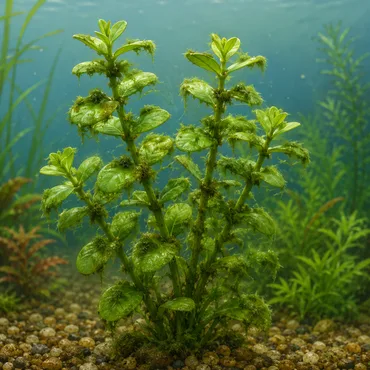
Algae can accumulate on stems and old leaves with low CO2 levels.
You'll first see fuzzy green or black spots at the base of Bacopa caroliniana.
Solution
Lower the light to 6 to 8 hours a day.
Raise the water flow too — a few shrimp or snails clean up the rest.
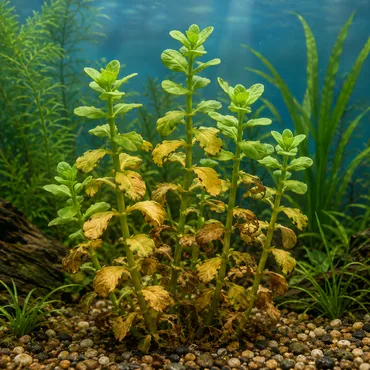
Many commercial plants grow above water.
Once submerged, older leaves will rot within a few days, and this is a normal process.
Solution
Trim soft dying leaves and maintain stable water parameters.
New submerged leaves will grow and adapt to the aquarium.
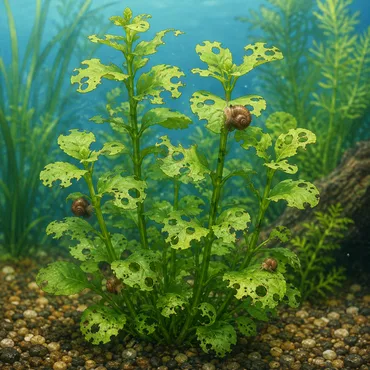
Snail pests appear on new plants of Bacopa caroliniana and eat soft young leaves.
They reproduce quickly in a warm aquarium.
Solution
Before adding new plants, soak them in a weak salt solution. Remove adult snails by hand.
A few assassin snails will also help.
If you rub the leaves, you'll smell a strong lemon-mint scent.
Gardeners use this smell to distinguish Lemon bacopa from Water Hyssop (Bacopa monnieri), a very similar plant.
This plant tolerates both fresh and slightly salty water.
It grows in the Everglades, where floods and storms annually disrupt the integrity of the shallow waters.
Bacopa caroliniana is also important for wildlife. It grows in southeastern marshes and coastal shores.
This species also harbors the larval habitat of the white peacock butterfly.

Its blue flowers attract small pollinators in the wild. Escaped populations have even spread to South Korea.
Yes. It is non-toxic and provides good hiding places for shrimp and fry. Shrimp eat the biofilm on the stems. Small fish can easily hide among the dense leaves.
Keep your plants happy and healthy with plant identification, disease detection, and easy care guidance.