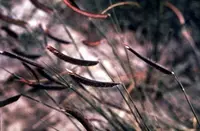
Needle Spikerush Care (Eleocharis acicularis)

Also known as: needle spikesedge, Needle Grass, Spike Rush

About Needle Spikerush

Needle spikerush (Eleocharis acicularis) is a small, grass-like aquatic plant often used in aquariums, ponds, and very wet garden areas. It forms low, dense clumps of fine, bright green stems that resemble a soft underwater lawn.

In nature, it grows along the edges of slow streams, lakes, and marshes across cooler regions of North America, Europe, and parts of Asia. It spreads by short rhizomes, creating a carpet over mud or shallow substrates.

This species prefers constant moisture, clean water, and good light, so stable conditions make it easier to care for Needle Spikerush, especially in tanks and water gardens.

Main Plant Requirements

Care Difficulty

Moderate Care

Light Preference

Full Sun

Water Requirements

Aquatic

Temperature Preference

Cold Hardy

Hardiness Zone

4–11

Soil Texture

Loamy, Silty, Organic-rich

Soil pH

Acidic (5.5–6.5), Slightly acidic (6.5–7.0)

Soil Drainage

Waterlogged tolerant

Fertilization

Light (every 4–6 weeks)

Get Personalized Care Plan

Scan your plant to receive care tips personalized for your specific plant

Personalized Care in the App

Available on iOS and Android

How to Care for the Needle Spikerush

This small rush prefers bright light that mimics open, shallow-water habitats.

  • Provide 6–8 hours of sun daily; morning sun with light afternoon shade helps reduce stress in hot summers.
  • Tolerates partial shade (around 3–4 hours of direct sun), but dense shade leads to weak, elongated shoots and thinner clumps in Needle Spikerush.
  • In full sun, especially in warm climates, ensure constantly wet soil or shallow submersion to prevent leaf tip scorch and mid-summer dieback.

This species is adapted to consistently wet to submerged conditions rather than fluctuating moisture.

  • Maintain soil saturated or keep the plant in 2–10 cm of shallow water; do not allow the substrate surface to dry out visibly or crack.
  • In warm weather, check moisture daily; slowing growth, browning tips, and wilting tufts indicate underwatering, while foul odor and mushy bases suggest prolonged stagnation without oxygen exchange.
  • Use a fine-textured, nutrient-poor, non-compacted substrate that holds moisture but allows some water movement to reduce anaerobic rot in Eleocharis acicularis.

This rush is hardy but grows best in moderate temperatures with cool to mild water conditions.

  • Optimal growth occurs around 60–75°F (16–24°C), with steady conditions supporting dense, upright shoots in shallow water or saturated soil.
  • It tolerates down to about 32°F (0°C) if submerged or in unfrozen mud, but repeated hard freezes in exposed, drained areas can damage or kill above-ground foliage.
  • Heat tolerance extends to about 86°F (30°C) if water remains cool, well-oxygenated, and constant; very warm, stagnant water increases stress and dieback risk.

This species prefers consistently high humidity similar to bog or shallow-water conditions.

  • Aim for 60–90% humidity and keep the root zone constantly wet, as drying out quickly damages fine shoots.
  • Dry indoor air causes browning tips, thinning clumps, and stalled new growth on Needle Spikerush.
  • Increase humidity by using trays of water around the planting area, grouping aquatic pots, or partially submerging containers.

Eleocharis acicularis grows best in saturated, fine-textured, organic-rich substrate rather than standard potting mixes.

  • Use a mix of 60–80% fine sand with 20–40% peat, coco coir, or loam to create a dense, moisture-holding base.
  • Keep the substrate waterlogged or under shallow water; allow no dry periods but avoid loose, fast-draining gravel alone.
  • Target slightly acidic to neutral conditions around pH 6.0–7.2 for reliable growth and root function.
  • Avoid chunky bark-heavy mixes, highly alkaline media, and thick layers of anaerobic black sludge by limiting decomposing debris.

This species is well suited to container culture, especially in bog gardens, trays, or shallow water pots.

  • Choose wide, shallow containers to support spreading rhizomes while keeping the entire substrate zone evenly saturated.
  • Use heavy ceramic or weighted plastic pots so the container does not tip or float when placed in trays or ponds.
  • Drill or use side holes near the rim if needed to control maximum water height and prevent the plant crown from submerging too deeply.

This aquatic sedge has modest nutrient needs, so light feeding supports healthy, dense growth without stressing the roots.

  • Use a dilute balanced aquatic fertilizer (around 10-10-10) or low-nutrient substrate rather than rich compost, which can foul water.
  • Feed every 4–6 weeks during the main growing season, monitoring for algae as a sign of excess nutrients.
  • Apply at 1/4–1/2 strength, targeting the substrate near the clumps rather than the water column when possible.
  • Stop or greatly reduce feeding in late fall and winter when Needle Spikerush growth slows.

Pruning Eleocharis acicularis is mainly hygienic and helps maintain a neat, low carpet.

  • Trim browned, algae-covered, or damaged shoots at the base using clean, sharp scissors or aquascaping shears.
  • Thin out crowded patches in late spring or summer to improve light penetration and water flow around the stems.
  • Cut taller tufts slightly shorter if a more even lawn effect is desired, avoiding removal of more than 1/3 of shoot height at once.
  • Remove decaying material promptly to reduce organic buildup and stabilize water quality in aquaria or ponds.

Transplanting is more relevant than classic repotting, since this species is often grown as a mat in aquaria or shallow ponds.

  • Plan division and transplanting in spring or early summer, when growth is active and recovery is faster.
  • Look for slow spread, thinning patches, or dense root mats lifting from the substrate as signals that sections should be lifted and replanted.
  • Gently tease the Eleocharis acicularis mat into smaller plugs, keeping roots and attached substrate intact to limit shock.
  • Replant plugs at the same depth, water gently to settle substrate, and avoid major water chemistry changes for several days.

Propagation of this species is commonly done by division of its dense root mats and rhizomes.

  • Divide healthy clumps in spring or early summer, when plants root and reestablish most quickly.
  • Lift sections of the mat and split into small plugs, each with roots and several shoots attached.
  • Plant plugs into fine-grained, nutrient-moderate substrate and keep water clear, stable, and well lit for steady growth.
  • Seed propagation is possible but slow; seeds need constant moisture, fine substrate, and stable conditions to germinate.

This plant is quite cold hardy in many regions, but mild winter care improves survival and regrowth, especially in containers.

  • In ponds, allow Eleocharis acicularis to overwinter submerged if water does not freeze solid; foliage may brown but roots remain viable.
  • For container-grown plants in cold climates, sink pots into the ground or move them to a frost-free but cool, bright space.
  • Apply a thin mulch around marginal plantings in late fall to insulate the root zone without burying the crowns.

Care Tips

Substrate Depth Control

Maintain a shallow, even substrate layer of about 2–4 cm so the fine roots can anchor well without being smothered, and periodically top up thin spots to prevent bare patches from forming.

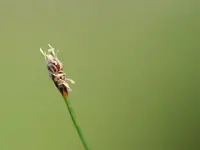
Regular Lawn Trimming

Trim the foliage lightly with sharp scissors every 4–8 weeks to encourage denser, carpet-like growth and remove older, yellowing shoots before they break down and foul the water or substrate.

CO₂ And Oxygen Balance

In aquaria, pair moderate CO₂ injection or a stable carbon source with good surface agitation or filtration to support steady growth while avoiding oxygen drops that can cause dieback in dense mats.

Prevent Algae Smothering

Reduce direct light intensity over the carpet area and increase water flow across the leaves if filamentous algae begin to appear, then manually remove any strands before they shade and weaken the fine foliage.

Safe Division And Replanting

When thinning or propagating clumps, gently tease them apart into small plugs and replant with fine tweezers, spacing each plug 1–2 cm apart so they can fill in evenly without competing too heavily at the start of growing Needle Spikerush.

Common Pests and Diseases

Algae overgrowth

Symptoms include bright green film or tufts coating the foliage and substrate, competing with the plant for light and nutrients. This problem is common in nutrient-rich, high-light aquariums or shallow water trays.

Solution

Reduce light intensity or duration to 6–8 hours, cut back on excess nutrients, and increase water changes to limit algae growth. Manually remove algae from leaves and substrate with a soft brush or siphon, and use fast-growing aquatic plants or floating plants to outcompete algae if tank conditions allow.

Blue-green cyanobacteria

This disease appears as slimy, dark green to blue-black sheets or mats covering the substrate and creeping up the thin stems. This organism is actually a photosynthetic bacteria that thrives in low-flow, nutrient-imbalanced water.

Solution

Siphon or gently peel off as much of the cyanobacteria as possible, then improve circulation and ensure consistent filtration. Reduce excess nutrients, avoid overfeeding fish, and if the problem persists, use an aquarium-safe cyanobacteria treatment while closely monitoring water parameters.

Aquatic snails

These pests sometimes nibble tender new shoots and can uproot small clumps while grazing on biofilm and decaying matter. Damage appears as missing tips, ragged edges, and disturbed substrate around the planting area.

Solution

Manually remove snails, bait and trap with blanched vegetable pieces, or introduce natural predators such as suitable snail-eating fish where appropriate. Maintain good tank hygiene, promptly remove decaying leaves, and replant disturbed clumps more deeply into the substrate to stabilize the root systems.

Hair algae

This pest forms fine, thread-like green strands that entangle around the thin leaves, blocking light and reducing water flow. Heavy infestations can smother growth and make maintenance difficult.

Solution

Manually twirl and remove hair algae with a toothbrush or fine stick, then adjust light, nutrients, and CO2 to restore balance. Increase water changes and consider adding compatible algae-eating species; keep Needle Spikerush growth dense and healthy to prevent recolonization as part of broader Eleocharis acicularis plant care.

Interesting Facts

Tiny underwater lawn

This species naturally forms low, grass-like carpets in shallow freshwater, which is why it is widely used as a foreground “lawn” plant in aquariums and paludariums.

Amphibious growth form

It is an amphibious sedge that can grow both fully submerged and emersed, changing leaf length and density depending on water depth and light.

Global cool‑water native

This plant has a broad native range across cool and temperate regions of North America, Europe, and parts of Asia, where it often colonizes nutrient-poor, clean lakes and slow streams.

Botan icon

Did you know?

In natural habitats this species helps stabilize fine sediments and can slightly improve water clarity by slowing water movement at the substrate surface, which encourages particles to settle out of the water column.

FAQs about Needle Spikerush

This species spreads by short rhizomes and self-seeding, forming low, dense mats rather than long-distance runners. In contained ponds or planters it is easy to manage. In large, muddy shallows it can gradually carpet suitable areas.

Grow Healthy Plants with Botan Care

Keep your plants happy and healthy with plant identification, disease detection, and easy care guidance.

Botan plant care app — identify plants on mobile

Explore More Plants