Cardinal flower Care (Lobelia cardinalis)

About Cardinal flower

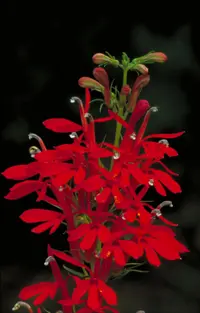
Cardinal flower, Lobelia cardinalis, is a moisture-loving perennial native to wetlands, stream banks, and damp meadows across much of North America. It is grown mainly for its tall spikes of vivid red, tubular flowers that attract hummingbirds. The plant forms upright clumps with leafy stems and usually blooms in late summer. It prefers consistently moist soil, full sun to light shade, and benefits from cool roots. With the right moisture and siting, it is not difficult to grow, but drying out quickly weakens the plant. Gardeners who learn how to care for Cardinal flower often use it to bring strong color to rain gardens and pond edges.

Main Plant Requirements

Care Difficulty

Moderate Care

Light Preference

Full Sun

Water Requirements

Aquatic

Temperature Preference

Cool Climate

Hardiness Zone

3–9

Soil Texture

Loamy, Clay, Organic-rich

Soil pH

Acidic (5.5–6.5), Slightly acidic (6.5–7.0)

Soil Drainage

Waterlogged tolerant

Fertilization

Minimal (feed rarely)

Get Personalized Care Plan

Scan your plant to receive care tips personalized for your specific plant

Personalized Care in the App

Available on iOS and Android

How to Care for the Cardinal flower

This species thrives in bright conditions with consistent moisture around the roots.

  • Provide 4–6 hours of direct morning sun with light afternoon shade; full sun all day suits only consistently wet soil near ponds or streams.
  • Tolerates partial shade (2–4 hours sun), but Cardinal flower may produce fewer blooms and taller, weaker stems in deep shade.
  • In hot summers, protect from intense sun after 2–3 p.m. to reduce leaf scorch and drying; adjust positioning seasonally as nearby trees leaf out.

This wetland perennial prefers constantly moist to saturated soil rather than intermittent drying.

  • Outdoors in the ground, keep soil consistently damp; in rich garden beds, do not let the top 1–2 cm fully dry between rains or waterings.
  • Suitable for shallow water edges where the crown stays just above water; Lobelia cardinalis tolerates short periods of standing water if roots are oxygenated.
  • Wilting, crisp leaf edges, or stunted growth indicate underwatering, while yellowing lower leaves and foul-smelling, mushy roots point to poor drainage and overwatering.

This plant handles a wide outdoor temperature range but has specific limits for growth and survival.

  • Active growth and flowering occur best at 65–80°F (18–27°C), with cooler nights helpful for sturdy stems and strong color.
  • Hardy in many temperate climates, overwintering in the ground down to about -20°F (-29°C) when crowns are well mulched and soil does not heave.
  • New shoots are sensitive to late frosts below 32°F (0°C), while prolonged heat above 90°F (32°C) can cause stress, so provide extra moisture and some shade in heatwaves.

This species prefers consistently moist air but usually manages in typical outdoor humidity if soil stays wet.

  • Aim for 60–80% humidity in boggy or pond-edge plantings to match its natural habitat.
  • Dry, hot air combined with drying soil causes limp leaves, browning edges, and stalled flower spikes.
  • To boost humidity, site Cardinal flower near a pond, water feature, or grouped plantings that keep the microclimate damp.

This wetland perennial needs constantly moist to saturated, nutrient-rich soil to thrive and flower well.

  • Use a deep, organic-rich loam or clay-loam that holds water yet does not smell sour or stagnant.
  • Aim for slightly acidic to neutral pH around 6.0–7.0, which supports nutrient uptake for Lobelia cardinalis.
  • Blend heavy garden soil with compost and a small amount of sand to create a dense, moisture-retentive mix for bog-like conditions.
  • Avoid dry, sandy, or fast-draining raised beds, since repeated drying of the root zone weakens plants and shortens lifespan.

This species can grow well in containers, especially as a bog or water-garden plant.

  • Choose a deep, heavy pot to anchor tall flower spikes and prevent tipping in wind or shallow water.
  • Use a solid container or one with minimal drainage holes so the mix can stay consistently saturated without drying between waterings.
  • Set the pot inside a watertight outer cachepot or shallow tub, maintaining water just at or above soil level for true bog conditions.

This native perennial benefits from modest feeding in richer garden soils but does not require heavy fertilization.

  • Apply a balanced, water-soluble fertilizer (for example 10-10-10) diluted to 1/2 strength every 4–6 weeks during active growth in spring and summer.
  • In lean soils, work a thin layer of compost into the surface in early spring to support blooming.
  • Avoid high-nitrogen products that push soft foliage instead of flowers, especially in wet sites.
  • Stop feeding Cardinal flower in late summer and do not fertilize during winter dormancy.

Thoughtful pruning supports healthy structure and sustained flowering in Lobelia cardinalis.

  • Deadhead spent flower spikes in summer by cutting them back to a strong leaf node to encourage additional blooms.
  • Remove dead, damaged, or diseased stems at the base using clean, sharp hand pruners to limit disease spread.
  • In late fall or very early spring, cut back old, browned stems to just above the crown to tidy growth.
  • Avoid heavy midsummer cutting that removes too much foliage, as this can reduce flowering and stress the plant.

This species is more often transplanted in garden beds or wetland edges than grown long term in containers.

  • Transplant clumps in early spring or early fall when temperatures are mild and soil is evenly moist.
  • Move plants if growth declines, crowns become crowded, or stems lean and flower poorly due to congestion.
  • Lift the root mass carefully, keeping as much soil as possible around the roots to reduce disturbance.
  • Replant at the same depth, firm soil gently, then water thoroughly and shade lightly for a few days to limit stress.

Lobelia cardinalis is commonly propagated by division and seed under controlled, moist conditions.

  • Divide mature clumps in early spring, separating offsets with several shoots and healthy roots, then replant promptly.
  • Sow fresh seeds on the surface of a moist, fine seed mix; do not cover, as they need light to germinate.
  • Maintain 65–70°F and constant, gentle moisture for seed trays or cuttings to avoid drying out.
  • If using cuttings, select non-flowering shoots, trim below a node, and root in a sterile, moist medium under high humidity.

This hardy perennial survives typical winters in much of its range with minimal intervention when sited correctly.

  • In USDA zones roughly 3–9, crowns usually overwinter outdoors if soil remains moist but not waterlogged ice.
  • After frost blackens foliage, cut stems back close to the ground to reduce disease carryover.
  • Apply a 5–8 cm mulch of shredded leaves or compost around the crown in colder areas to buffer freeze–thaw cycles.
  • Move container-grown plants into a sheltered, frost-free but cool location, keeping the root ball just slightly moist.

Care Tips

Aquatic Edge Planting

In water gardens, plant at the very edge of a pond or in a shallow shelf (2–5 cm of water above the crown) to keep roots consistently wet while avoiding full submersion of the foliage and flowers.

Cool-Season Mulching

Apply a 3–5 cm layer of fine, moisture-retentive mulch such as composted bark or leaf mold in late spring to keep the root zone cool and prevent soil from drying between waterings.

Staggered Division Renewal

Divide and replant only a portion of the clump every 2–3 years, leaving some mature crowns in place so flowering continues while younger divisions establish and extend the life of the planting.

Slug And Snail Barriers

Place rough barriers such as crushed gravel bands or copper tape around small groups of plants, and set out evening beer traps nearby, since tender rosettes are highly attractive to slugs and snails.

Wind And Lean Support

In windy or very lush sites, insert discreet slender stakes behind tall stems and loosely tie them with soft garden twine to prevent lodging and keep the spires upright and visible when growing Cardinal flower.

Common Pests and Diseases

Slugs and snails

These pests are strongly attracted to the moist soil and tender shoots of cardinal flower, chewing irregular holes in leaves and sometimes cutting off young stems at ground level.

Solution

Hand-pick in the evening, use iron-phosphate slug bait around but not touching the stems, and reduce hiding spots such as dense mulch or boards near the plants; for heavy pressure, place beer traps or copper barriers along bed edges to protect young Lobelia cardinalis plants.

Aphids

These insects cluster on young stems and flower spikes, sucking sap and causing curling or distortion of foliage and reduced flowering, often leaving sticky honeydew on the plant.

Solution

Spray stems and undersides of leaves with a strong stream of water to dislodge colonies, then treat remaining aphids with insecticidal soap or a light horticultural oil, repeating weekly until populations stay low and avoiding treatment during very hot or sunny periods.

Leaf spot

This disease causes small water-soaked or brown spots on leaves that can enlarge, merge, and lead to premature leaf yellowing and drop, especially in dense, wet plantings.

Solution

Remove and discard affected leaves, avoid overhead watering that keeps foliage wet, and thin or space plants to improve air flow; in recurrent cases, apply a labeled copper or chlorothalonil fungicide at the first sign of spotting, following all label directions for ornamental perennials.

Powdery mildew

Symptoms include white or grayish powdery patches on leaf surfaces and stems, which can cause leaf distortion, reduced vigor, and early decline of foliage late in the season.

Solution

Increase spacing and air movement, water at soil level instead of on leaves, and remove heavily infected foliage; if needed, use a sulfur or potassium bicarbonate fungicide labeled for ornamentals at the first appearance of the white growth to slow spread as part of broader Lobelia cardinalis care.

Interesting Facts

Hummingbird specialist

The bright red tubular flowers are morphologically matched to hummingbird bills, making hummingbirds the primary and often exclusive effective pollinators in many populations.

Wetland affinity

This species is naturally found along stream banks, seeps, and wet meadows, where its root system is adapted to saturated, low-oxygen soils that would stress many other perennials.

Toxic but unpalatable

The plant contains alkaloids that make its tissues bitter and toxic to many herbivores, which is why deer and rabbits typically avoid browsing it even when other plants are eaten heavily.

Botan icon

Did you know?

In parts of its native range in eastern North America, this species often acts as a visual indicator of natural springs and groundwater seepage, because stable moisture from subsurface water flow creates the precise microhabitats where it can form striking, localized colonies.

FAQs about Cardinal flower

Non-flowering is usually caused by too much shade, dry soil, or nutrient-poor conditions. Ensure consistently moist ground, at least partial sun, and avoid cutting back young rosettes. Division every few years also supports reliable flowering when growing Cardinal flower.

Grow Healthy Plants with Botan Care

Keep your plants happy and healthy with plant identification, disease detection, and easy care guidance.

Botan plant care app — identify plants on mobile

Explore More Plants