


Rotate For Symmetry
Turn the pot 90° every 2–3 weeks so the leaves and flower stalks develop evenly and the plant does not lean permanently toward the strongest light source.

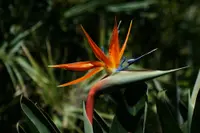
The bird of paradise plant, Strelitzia reginae, is an evergreen perennial from South Africa valued for its bold, architectural foliage and striking orange and blue flowers. It naturally grows in warm, frost-free regions and forms dense clumps of upright, paddle-shaped leaves.
Flowers emerge on tall stalks and resemble a bird in flight, making it a popular statement plant in bright indoor spaces and subtropical gardens. It is moderately easy to grow if given strong light, stable warmth, and free-draining soil.
This species tolerates short dry periods but prefers regular moisture without waterlogging. Understanding how to care for Bird of paradise plant helps maintain compact growth and reliable flowering over many years.

Care Difficulty
Moderate Care

Light Preference
Full Sun

Water Requirements
Moderate Water

Temperature Preference
Tropical / Frost Sensitive

Hardiness Zone
10–12

Soil Texture
Sandy, Loamy, Organic-rich

Soil pH
Acidic (5.5–6.5), Slightly acidic (6.5–7.0)

Soil Drainage
Moist but well-drained

Fertilization
Light (every 4–6 weeks)
Scan your plant to receive care tips personalized for your specific plant
Available on iOS and Android
This species needs abundant light to form strong leaves and reliable flowers.
Watering should balance consistent moisture with fast drainage to protect the roots.
This plant prefers warm, frost-free conditions for steady growth and flowering.
This species grows best with moderate humidity but usually tolerates typical indoor air.
Strelitzia reginae prefers deep, aerated, freely draining soil that stays evenly moist but never waterlogged.
This species is well suited to container growing when the pot supports its tall, heavy foliage.
Strelitzia reginae benefits from moderate, consistent feeding during its active growing season for strong foliage and flowering.
Strelitzia reginae responds well to light, corrective pruning that focuses on cleanliness rather than reshaping the plant.
Container-grown plants appreciate occasional repotting to refresh soil and manage root crowding.
Strelitzia reginae is most reliably propagated by division of mature clumps rather than by seed at home.
This species is frost-sensitive and needs protection in regions with cold winters, especially in containers.

Plant Health Check
Not sure what's wrong with your plant? Check your plant's health inside the app.
The flowers are adapted for bird pollination, especially by sunbirds in its native South Africa. When a bird lands on the horizontal petal, the petal opens like a hinge and dusts the bird’s feet and chest with pollen.
Each flower emerges from a hard, boat-like bract called a spathe that sits at a right angle to the stem. This structure both protects developing flowers and acts as a landing perch for visiting birds.
This species grows as a long-lived, evergreen clump with leaves arising from an underground rhizome rather than a woody trunk. Individual clumps can expand slowly over many years, forming dense stands in suitable climates.

In its native range around the Eastern Cape of South Africa, this species often flowers during the cooler local winter season, providing a reliable nectar source for birds when other floral resources are relatively scarce.
Lack of flowers usually comes from insufficient light, a pot that is too small or rootbound, or a plant that is still immature. Consistent warmth, steady nutrients, and patience are essential when learning how to take care of Bird of paradise plant.
Keep your plants happy and healthy with plant identification, disease detection, and easy care guidance.

Philodendron 'Burle-Marx'
Philodendron 'Burle-Marx'
Mexican shrubby spurge
Euphorbia cotinifolia
sweet-Nancy
Achillea ageratum
 POPULAR
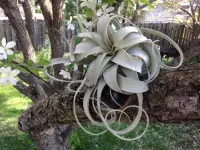
Xerographica Air Plant
Tillandsia xerographica
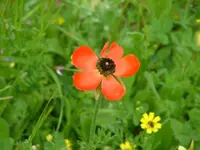
Persian buttercup
Ranunculus asiaticus
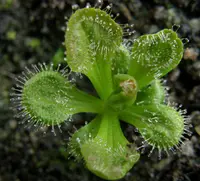
Whittaker's sundew
Drosera whittakeri
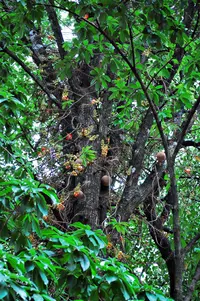
cannonball tree
Couroupita guianensis
 POPULAR
Hoya linearis
Hoya linearis