Ghost orchid Care (Dendrophylax lindenii)

About Ghost orchid

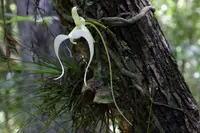
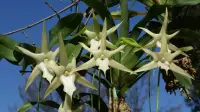
The ghost orchid, Dendrophylax lindenii, is a leafless, epiphytic orchid that grows attached to tree bark. Its green roots handle both photosynthesis and anchoring. The plant produces striking white flowers with long, flowing petals that seem to float in the air, especially against dark trunks. Flowering is sporadic and often short-lived. This species is native to humid, shaded swamps and forests of southern Florida and parts of Cuba. It prefers warm, stable conditions with high humidity and constant air movement. Because it lacks leaves and cannot tolerate drying out or root damage, it is considered very challenging to grow, and only advanced growers usually attempt to care for Ghost orchid.

Main Plant Requirements

Care Difficulty

Hard Care

Light Preference

Partial Shade

Water Requirements

Regular Water

Temperature Preference

Tropical / Frost Sensitive

Hardiness Zone

11–12

Soil Texture

Organic-rich, Peaty

Soil pH

Strongly acidic (4.5–5.5)

Soil Drainage

Moist but well-drained

Fertilization

Light (every 4–6 weeks)

Get Personalized Care Plan

Scan your plant to receive care tips personalized for your specific plant

Personalized Care in the App

Available on iOS and Android

How to Care for the Ghost orchid

This leafless epiphytic orchid needs bright but very controlled light to photosynthesize through its roots.

  • In habitat, the Ghost orchid grows under a dense canopy with dappled light, equivalent to bright shade with brief early-morning sun.
  • Aim for 8–10 hours of bright, filtered light daily; protect it from direct midday and afternoon sun, which can burn roots and bleach tissues.
  • If roots turn dark green and growth slows, light is likely too low; if roots yellow or show dry patches, reduce light intensity or duration.

This species relies on frequent moisture around its exposed roots but is very sensitive to stagnant water.

  • Water when surface roots feel just slightly dry and silvery, then mist or drench so water runs off freely without pooling.
  • Use a very open, fast-draining mount; roots should dry to almost dry within 4–6 hours after watering to prevent rot.
  • Increase misting frequency in hot, dry weather; if roots wrinkle or shrink it is too dry, while soft, brown, mushy roots indicate overwatering.

This orchid is a warm to hot grower that declines quickly outside its preferred temperature band.

  • Target 70–85°F (21–29°C) by day and 65–72°F (18–22°C) at night for steady growth.
  • Avoid letting temperatures drop below 55°F (13°C); short dips to 50°F (10°C) may be survived but can stress roots and slow recovery.
  • The plant tolerates brief highs up to 90–95°F (32–35°C) if humidity is high and air moves constantly, but prolonged heat with still air increases disease risk.

This species demands very high, stable humidity to thrive in cultivation.

  • Aim for 75–90% humidity, using an enclosed orchid case or terrarium rather than open-room conditions.
  • Dry air below about 60% quickly dehydrates the exposed roots, leading to shriveling and stalled growth.
  • Humidity stress shows as wrinkled, dull roots and failure to produce new root tips or leaves on the Ghost orchid.
  • Increase humidity with ultrasonic humidifiers, covered tanks, and open water trays combined with strong, moving air to prevent rot.

Dendrophylax lindenii is leafless and normally epiphytic, so it must be mounted rather than planted in conventional soil.

  • Use a mount of cork bark or hardwood with a thin layer of long-fiber sphagnum moss to provide moisture without smothering roots.
  • Keep the moss airy and loose, never packed, so roots receive constant oxygen and can attach firmly to the mount surface.
  • Ensure rapid drainage; the mount should dry slightly between waterings, as prolonged saturation promotes root rot and suffocation.
  • Avoid dense mixes, fine peat, or standard potting soil, which hold too much water and restrict the specialized roots.

This species can be grown in containers only when mounted on bark or wood inside a pot or tank, rather than potted in mix.

  • Use a narrow, tall container or vase to support the mount vertically while allowing roots to hang freely without kinking.
  • Choose inert supports like expanded clay pellets or large rock pieces at the base to stabilize the mount without retaining excess moisture around roots.
  • Select clear or open-sided containers when possible so you can monitor root color and hydration while maintaining high humidity around the mount.

This epiphytic orchid is very light-feeding, so any nutrition must be gentle and carefully controlled.

  • Use a balanced orchid fertilizer at 1/8–1/4 strength, applied as a very dilute solution in rainwater or distilled water.
  • Feed during active growth only, typically spring to early fall, every 3–4 weeks if the plant is vigorous.
  • Avoid slow-release pellets and compost, which can burn exposed roots and encourage rot on Ghost orchid mounts.
  • Flush the mount with plain water between feedings to prevent salt buildup on the bare roots.

Pruning needs for Dendrophylax lindenii are minimal and focus on hygiene rather than shaping.

  • Limit work to removing dead or clearly rotted roots using small, sharp, sterilized scissors.
  • Carry out any trimming in warm, dry weather so cut surfaces dry quickly and are less prone to infection.
  • Avoid cutting healthy green roots or the growing tip, as this directly reduces photosynthesis and long-term vigor.
  • Inspect mounts periodically and remove decaying organic material nearby rather than trimming living plant tissue.

Handling and transplanting this leafless, epiphytic orchid should be rare and very cautious.

  • Look for signs such as roots completely outgrowing the mount, detaching, or medium breaking down and staying soggy.
  • If needed, move the plant in late spring to early summer, when warm, stable conditions help recovery.
  • Transplant by tying the entire root mass onto a fresh, moisture-retentive but airy mount without stripping old material.
  • Keep roots evenly humid and movement minimal for several weeks after mounting to reduce mechanical stress and shock.

Practical home propagation of this species is highly specialized and not typically successful for hobby growers.

Cold conditions are dangerous for this tropical, leafless orchid, so winter care focuses on stable warmth and humidity.

  • Keep temperatures above 60°F, aiming for 65–75°F with high humidity and gentle air movement.
  • For mounted plants outdoors, move indoors to a warm greenhouse, grow tent, or bright bathroom before nights cool.
  • Avoid cold drafts, window glass contact, and rapid temperature swings that chill exposed roots.

Care Tips

Host selection

Mount the plant only on long‑lived, textured hosts such as rough‑barked oak or cork that will not rot quickly and allow roots to grip firmly over many years.


Root hydration check

Before misting, look at root color; hydrate only when most roots appear silvery rather than green to reduce the risk of rot on this leafless orchid.

Airflow management

Position fans or vents so that air moves gently but continuously across the roots without blowing directly and drying them out within minutes.

Shaded mounting angle

Mount the plant slightly on the underside or side of a branch or slab so roots stay cooler and less exposed to direct overhead light spikes in summer.

Observation log

Keep a simple log of root growth, bud formation, and any shriveling, then adjust humidity and misting frequency gradually based on trends rather than single‑day changes when growing Ghost orchid.

Common Pests and Diseases

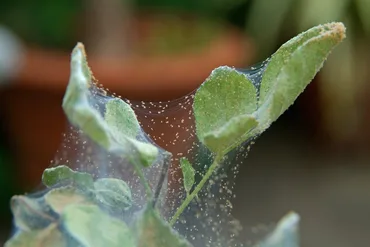
Spider mites

This pest feeds on the orchid’s exposed photosynthetic roots, especially in dry, stagnant air, causing silvery stippling and fine webbing. Symptoms include dulled root surface, reduced vigor, and eventual root tip dieback.

Solution

Increase humidity to 60–80% and improve air movement, then gently rinse roots with lukewarm water to remove mites and webbing. Follow with targeted applications of insecticidal soap or a neem-based product on the exposed roots and mounting surface, repeating every 5–7 days until no new webbing appears.

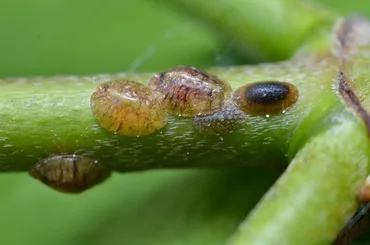
Scale insects

These insects attach to the exposed roots and mount, sucking sap and producing sticky honeydew that encourages sooty mold. Symptoms include small, dome-shaped bumps on roots and a general decline in plant vigor.

Solution

Manually remove visible scale with a cotton swab dipped in isopropyl alcohol, focusing on crevices in the mount and root forks. After mechanical removal, use a horticultural oil spray directed at the roots and mounting surface, applied in several light treatments rather than one heavy application to avoid suffocating the roots.

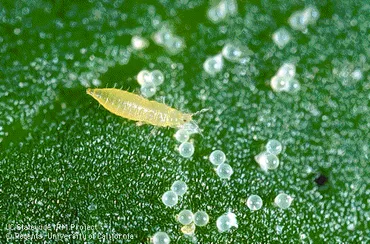
Thrips

This pest can rasp and feed on tender root tips and developing inflorescences, disrupting flowering and causing browning or scarring. Symptoms include distorted flower spikes, aborted buds, and fine dark flecks on affected tissue.

Solution

Trim and discard badly damaged spikes or root tips, then gently rinse the plant and surrounding area. Use a low-toxicity systemic or contact insecticide labeled for orchids, applied according to label directions, and maintain higher humidity with good air movement to reduce future thrips outbreaks, which is key when growing Ghost orchid under indoor conditions.

Bacterial soft rot

This disease, often caused by Erwinia species, attacks damaged root tissue under warm, stagnant, overly wet conditions, leading to rapidly collapsing, foul-smelling root sections. Symptoms include wet, translucent areas on roots that quickly turn brown and mushy.

Solution

Promptly cut away all affected root tissue with sterile tools and discard any water-retentive packing around the damaged area. Improve air movement, reduce misting frequency, and ensure the mount dries slightly between waterings; disinfect tools and nearby surfaces, and avoid overhead watering late in the day.

Fungal leaf and root spots

This disease complex, usually caused by opportunistic fungi on stressed plants, produces small dark lesions or dry patches on roots and occasionally on any small leaf-like structures or new growth. Symptoms include slowly expanding spots and reduced overall vigor in poorly ventilated, constantly damp setups.

Solution

Remove and discard severely spotted tissue and adjust watering so the mount alternates between moist and slightly dry with strong air movement. Apply a preventive, broad-spectrum fungicide labeled for epiphytic orchids at low strength, and avoid crowding plants to reduce humidity spikes and condensation on roots.

Interesting Facts

Leafless photosynthesizing roots

This orchid lacks normal leaves as an adult and performs nearly all photosynthesis through its flattened green roots, which are spread over tree bark and contain chlorophyll-rich tissues.

Specialized moth pollination

Its long nectar spur is adapted to the proboscis of the giant sphinx moth (Cocytius antaeus), so successful pollination in the wild depends on the presence and activity of this specific nocturnal pollinator.

Strict habitat specialist

In nature it occurs in very limited areas of south Florida, western Cuba, and the Bahamas, growing on trunks of specific swamp trees such as pond apple and pop ash in warm, humid, shaded swamp forests.

Botan icon

Did you know?

This species became widely known outside botany after inspiring the orchid theft case described in Susan Orlean’s book The Orchid Thief and its film adaptation Adaptation, which highlighted its rarity and the conservation challenges of protecting wild populations.

FAQs about Ghost orchid

This species often needs many years to reach flowering size and is highly sensitive to root disturbance. Insufficient humidity, unstable warm temperatures, or lack of strong filtered light commonly delay spikes. Stable, mature conditions matter more than fertilizer for flowering.

Grow Healthy Plants with Botan Care

Keep your plants happy and healthy with plant identification, disease detection, and easy care guidance.

Botan plant care app — identify plants on mobile

Explore More Plants