Provide Climbing Support
Install a sturdy moss pole or coco pole and gently tie young vines with soft ties, as this encourages larger leaves, stronger stems, and more upright growth over time.

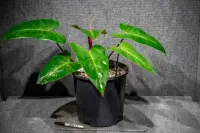
Blushing philodendron (Philodendron erubescens) is a climbing aroid grown mainly for its glossy, heart-shaped leaves with red to burgundy tones on stems and undersides. It naturally occurs in tropical rainforests of Central and South America, where it grows as an understory vine on trees.
In homes, it is usually trained on a moss pole or allowed to trail, making it suitable for both tabletops and floor planters. Its steady growth and tolerance of typical indoor humidity make it approachable for beginners.
This species prefers bright, indirect light, evenly moist but not waterlogged soil, and a well-draining potting mix. Once basic needs are met, it is relatively simple to care for Blushing Philodendron.

Care Difficulty
Easy Care

Light Preference
Bright Indirect Light

Water Requirements
Moderate Water

Temperature Preference
Tropical / Frost Sensitive

Hardiness Zone
10–11

Soil Texture
Loamy, Peaty, Organic-rich

Soil pH
Acidic (5.5–6.5), Slightly acidic (6.5–7.0)

Soil Drainage
Moist but well-drained

Fertilization
Light (every 4–6 weeks)
Scan your plant to receive care tips personalized for your specific plant
Available on iOS and Android
Philodendron erubescens prefers bright, indirect light that mimics dappled tropical shade.
Philodendron erubescens needs evenly moist but not saturated soil to maintain healthy roots and foliage.
This species grows best in stable, warm conditions without sudden temperature swings.
This species prefers moderately high humidity and reacts to very dry indoor air.
Use a loose, airy, organic-rich mix that drains quickly but holds some moisture.
This species adapts very well to container growing for both indoor and sheltered outdoor use.
Philodendron erubescens benefits from moderate, consistent feeding during active growth in spring and summer.
Philodendron erubescens responds well to light, targeted pruning that maintains size and encourages bushier growth.
Container-grown Philodendron erubescens thrives when repotted thoughtfully to relieve root crowding and refresh the potting mix.
Most home growers multiply Philodendron erubescens using stem cuttings taken from healthy, actively growing vines.
This tropical species has low cold tolerance and needs indoor-style winter care in most temperate climates.

Plant Health Check
Not sure what's wrong with your plant? Check your plant's health inside the app.
Young leaves and petioles of this species often show a distinct reddish or pinkish flush due to higher concentrations of anthocyanin pigments, which can help protect tender tissues from strong light while they expand.
In the wild, this species typically starts life on the ground and then climbs tree trunks as a hemiepiphyte, gradually shifting much of its root system onto the host surface while still keeping some roots in the soil.
Wild-type plants can show considerable variation in leaf size, shape, and coloration depending on light and support availability, and many popular cultivars with striking colors are selections derived from this naturally variable species.

This species was originally described from Colombian material in the 19th century and has since become a key parent in breeding programs, contributing its red pigmentation and climbing habit to many modern ornamental philodendron hybrids used in Philodendron erubescens plant care and display collections.
This species rarely flowers indoors and often needs very high humidity, mature age, and stable warmth to bloom. Consider the foliage as the main ornamental feature rather than expecting regular flowering in typical home conditions.
Keep your plants happy and healthy with plant identification, disease detection, and easy care guidance.