Strategic trellising
Guide the flexible vines along a thin wire, hoop, or mesh rather than a thick stake so the plant forms a dense curtain of foliage that supports more flower clusters along the stems.

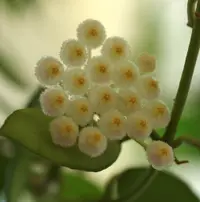
Hoya lacunosa is a compact, vining epiphyte from Southeast Asia, often found growing on trees in warm, humid forests. It belongs to the Apocynaceae family, the same group as many popular indoor hoyas.
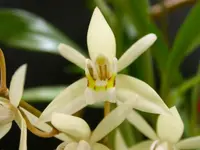
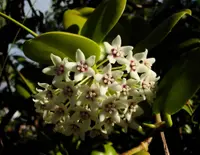
The plant has narrow, slightly dimpled leaves and produces clusters of small, fuzzy, star-shaped flowers with a noticeable scent. Its naturally trailing growth makes it well suited to hanging baskets and shelves.
Hoya lacunosa is considered moderately easy indoors when its basic needs are met. It prefers bright, indirect light, a well-draining mix, and light but regular moisture, which guides how to care for Hoya lacunosa.

Care Difficulty
Moderate Care

Light Preference
Bright Indirect Light

Water Requirements
Moderate Water

Temperature Preference
Tropical / Frost Sensitive

Hardiness Zone
11–12

Soil Texture
Sandy, Loamy, Organic-rich

Soil pH
Acidic (5.5–6.5), Slightly acidic (6.5–7.0)

Soil Drainage
Well-drained

Fertilization
Light (every 4–6 weeks)
Scan your plant to receive care tips personalized for your specific plant
Available on iOS and Android
This species prefers bright, filtered light that mimics dappled forest shade.
Watering should balance moderate moisture with very good drainage.
Stable, warm conditions support steady growth and flowering.
This plant prefers moderately humid air but usually adapts to typical indoor conditions.
Hoya lacunosa grows best in a loose, airy, sharply draining mix that resists compaction.
This species is very suitable for container growing due to its compact, trailing habit.
Feeding supports steady, compact growth and flowering in Hoya lacunosa during the active season.
Pruning is mainly used to manage size and keep Hoya lacunosa tidy and flowering well.
Repotting is infrequent, as this species tolerates slightly root-bound conditions in containers.
Stem cuttings are the most practical method for growing Hoya lacunosa at home.
This tropical species is frost-sensitive and needs mild, stable conditions in winter.

Plant Health Check
Not sure what's wrong with your plant? Check your plant's health inside the app.
This species produces small star-shaped flowers with a strong, sweet fragrance that is usually most intense in the evening and at night, reflecting its adaptation to nocturnal pollinators in its native range.
Its foliage has shallow depressions between the veins, creating a textured, dimpled surface that increases leaf surface area slightly without producing large, thin leaves, which may help limit water loss in its epiphytic habitat.
In the wild it typically grows as an epiphyte on trees in humid Southeast Asian forests, anchoring to bark with roots that absorb moisture and nutrients from rainwater, debris, and surrounding organic matter rather than from soil alone.

In some wild populations, individual flower clusters of this species can produce copious amounts of nectar that drip from the umbels, which attracts ants that may help deter herbivores from damaging the leaves and stems.
Lack of flowering is often due to insufficient light, overly frequent repotting, or removing old spurs where flowers form. Stable conditions, a slight root-bound state, and consistent, bright light usually restore blooming over time.
Keep your plants happy and healthy with plant identification, disease detection, and easy care guidance.