Rotate for symmetry
Rotate the pot 1/4 turn every 1–2 weeks so the segmented stems receive light from all sides and develop an even, balanced form instead of leaning toward one direction.

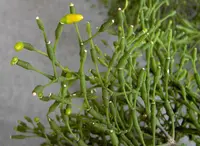
Dancing bones cactus (Hatiora salicornioides) is a small epiphytic cactus native to Brazil’s coastal forests, where it often grows on trees or rocks. It forms many thin, jointed, cylindrical stems that branch freely and can create a tangled, arching mound or a softly cascading hanging plant.
New stems are often bright green and may develop small yellowish flowers at the tips in good conditions. The plant prefers bright, indirect light, a fast-draining potting mix, and light but regular watering with good drying between. These traits, along with its modest growth rate, make it relatively easy to care for Dancing bones cactus indoors if extremes of drought and overwatering are avoided.

Care Difficulty
Moderate Care

Light Preference
Bright Indirect Light

Water Requirements
Moderate Water

Temperature Preference
Tropical / Frost Sensitive

Hardiness Zone
11–12

Soil Texture
Sandy, Loamy, Organic-rich

Soil pH
Acidic (5.5–6.5), Slightly acidic (6.5–7.0)

Soil Drainage
Well-drained

Fertilization
Light (every 4–6 weeks)
Scan your plant to receive care tips personalized for your specific plant
Available on iOS and Android
This epiphytic cactus prefers bright, gentle light rather than intense, direct sun.
Watering should balance moisture with sharp drainage to protect the fine roots from rot.
Stable, mild temperatures support healthy growth and flowering for this cactus.
This epiphytic cactus prefers moderately humid air but copes well with typical indoor conditions.
This species needs a very fast-draining, airy mix that mimics loose, organic forest debris.
This species grows very well in containers, including hanging pots.
Hatiora salicornioides benefits from light, consistent feeding during active growth in spring and summer.
Pruning Hatiora salicornioides is mainly used to control size, keep a tidy form, and encourage branching.
This cactus prefers slightly snug pots and only occasional repotting to refresh the mix and manage roots.
Hatiora salicornioides is most often propagated from short stem cuttings taken during warm, active growth.
This subtropical cactus is not frost hardy and needs mild, dry conditions through winter.

Plant Health Check
Not sure what's wrong with your plant? Check your plant's health inside the app.
The plant’s bottle-shaped, jointed stems closely resemble the segmented stems of some salt-tolerant coastal plants, which inspired the species name salicornioides, meaning “Salicornia-like.”
In its native Brazilian habitat, this cactus often grows as an epiphyte on trees, using them only as support while collecting moisture and nutrients from rain, organic debris, and the air rather than from the host tree itself.
In cultivation and in habitat, it typically flowers in late winter to spring, producing small, tubular yellow to orange blooms at stem tips that can cover the plant when conditions are stable.

This species was historically shuffled between several genera and could be found under names like Rhipsalis salicornioides and later Hatiora salicornioides before molecular studies clarified its relationships within the cacti, illustrating how DNA evidence has significantly reshaped understanding of epiphytic cactus lineages.
Lack of blooms usually comes from insufficient light, no cool dry rest in winter, or heavy fertilizing. Provide bright indirect light, a slightly cooler, drier winter period, and avoid high-nitrogen fertilizer to support flower formation.
Keep your plants happy and healthy with plant identification, disease detection, and easy care guidance.