Philodendron Cobra Care (Monstera standleyana)

About Philodendron Cobra

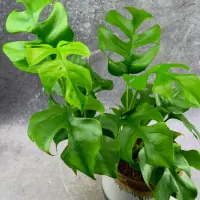
Philodendron Cobra is a climbing aroid grown mainly for its narrow, glossy green leaves streaked or spotted with creamy white. It stays fairly compact indoors but can climb tall supports over time.

Despite the common name, this plant is usually listed as Monstera standleyana and is native to Central America, where it grows in warm, humid forests as a vine on trees. It is considered moderately easy to grow if its basic needs are met.

Stable warmth, bright indirect light, and evenly moist but well-drained soil make it easier to care for Philodendron Cobra and keep its variegation attractive.

Main Plant Requirements

Care Difficulty

Moderate Care

Light Preference

Bright Indirect Light

Water Requirements

Moderate Water

Temperature Preference

Tropical / Frost Sensitive

Hardiness Zone

11–12

Soil Texture

Loamy, Peaty, Organic-rich

Soil pH

Acidic (5.5–6.5), Slightly acidic (6.5–7.0)

Soil Drainage

Moist but well-drained

Fertilization

Light (every 4–6 weeks)

Get Personalized Care Plan

Scan your plant to receive care tips personalized for your specific plant

Personalized Care in the App

Available on iOS and Android

How to Care for the Philodendron Cobra

Monstera standleyana prefers bright, filtered light that mimics forest understory conditions.

  • Provide 6–8 hours of bright, indirect light daily, such as near an east or north window or under sheer curtains facing south or west.
  • Tolerates partial shade (3–4 hours of indirect light), but growth and variegation may slow; similar conditions suit Philodendron Cobra indoors.
  • Avoid harsh midday sun, which can scorch leaves; in summer, move slightly farther from windows, and in winter, shift closer or supplement with a grow light.

This species prefers evenly moist but not saturated soil, with brief dry periods between waterings.

  • Let the top 2–4 cm of soil dry before watering, using a finger or moisture meter to check rather than relying on a fixed schedule.
  • Use a free-draining mix and a container with drainage holes to prevent standing water, root rot, and yellowing, mushy leaves.
  • In spring and summer, expect more frequent watering as growth and evaporation increase; in fall and winter, extend the drying period and monitor for drooping, curling leaves as a sign of thirst.

Steady, warm conditions support strong growth and stable variegation in this plant.

  • Aim for 65–80°F (18–27°C) for active growth; short dips outside this range slow development but are usually not harmful if brief.
  • Protect from temperatures below 55°F (13°C); prolonged exposure near or below this level can cause leaf yellowing, dark patches, and tissue damage.
  • Avoid placing the plant near heaters, cold drafts, or air-conditioning vents; above 85°F (29°C), increase air movement and check soil moisture more often to prevent heat stress.

This species prefers moderate to high humidity but usually adapts to typical home air if not extremely dry.

  • Aim for 50–70% humidity to keep foliage smooth and variegation crisp.
  • Dry air below ~40% can cause brown tips, curled edges, and slowed growth, similar to caring for Philodendron Cobra.
  • Increase humidity with a nearby humidifier, grouped plants, or a pebble tray rather than frequent misting.

Monstera standleyana grows best in a loose, airy mix that drains quickly yet retains some moisture.

  • Use a chunky mix of roughly 40% peat or coco coir, 30% pine bark, 20% perlite, and 10% compost for organic matter.
  • Aim for slightly acidic to neutral pH, around 6.0–7.0, which supports nutrient uptake and root health.
  • Ensure water drains through in seconds, not minutes; heavy, compacted, or clay-based substrates increase risk of root rot.
  • Improve aeration by adding extra bark or perlite if the mix feels dense or stays wet longer than 3–4 days.

This species is well suited to container growing due to its climbing, moderate root system.

  • Choose a pot just 3–5 cm wider than the root mass so the mix dries evenly between waterings.
  • Use a stable, heavier container or cachepot if a support pole makes the plant top-heavy.
  • Select slightly porous materials like unglazed clay when extra evaporation is needed, or glazed/plastic pots where moisture retention is a concern.

Monstera standleyana benefits from light, consistent nutrition during its active growing season.

  • Use a balanced liquid fertilizer (such as 10-10-10 or 20-20-20) diluted to 1/4–1/2 strength for Monstera standleyana care instructions.
  • Feed every 4–6 weeks in spring and summer, after watering, to avoid root burn.
  • Pause feeding in winter or when growth slows noticeably, since the plant uses fewer nutrients.
  • Alternatively, apply a slow-release fertilizer or a thin layer of high-quality compost at the start of spring.

Monstera standleyana responds well to light structural pruning to maintain a compact, healthy vine.

  • Carry out pruning in spring or early summer when the plant is actively growing.
  • Remove yellowing, dead, or damaged leaves first, then thin crowded or tangled stems.
  • Shorten overly long vines to promote branching and a fuller, bushier shape.
  • Use clean, sharp scissors or pruners, cutting just above a node to encourage new growth.

This species performs well in containers and benefits from timely repotting to refresh soil and manage root growth.

  • Check for roots circling the pot, growing through drainage holes, or slowed growth as signs repotting is needed.
  • Repot every 2–3 years in late spring, moving to a container only 2–5 cm wider with fresh, airy aroid mix.
  • Water lightly before repotting, gently loosen the root ball, and trim only rotten or dead roots to limit stress.
  • After repotting, keep in bright, indirect light, maintain slightly higher humidity, and water modestly until growth resumes.

Monstera standleyana is commonly propagated from stem cuttings taken during the active growing season.

  • Take 10–15 cm stem cuttings in late spring or summer, each with at least 1 node and preferably 1 leaf.
  • Root in water or a moist, well-draining mix at 70–80°F with bright, indirect light and good humidity.
  • Keep the rooting medium barely moist, not wet, and avoid disturbing cuttings until new roots reach 2–5 cm.
  • Pot rooted cuttings into small containers and resume gentle feeding once new leaf growth appears.

This tropical species is frost sensitive and requires indoor conditions or protection in cold climates.

  • Keep plants above 55°F; aim for a stable 65–75°F room away from drafts and cold windows.
  • Move outdoor containers indoors before nights drop below 55°F, providing bright, indirect light.
  • Reduce watering in winter, allowing the top soil to dry more, and avoid repotting or heavy feeding until spring.
  • In cool rooms, place the pot on an insulating surface and keep foliage away from single-pane glass to prevent chilling injury.

Care Tips

Use Climbing Support

Provide a moss pole or slim trellis and loosely tie stems with soft plant ties to encourage upright, stronger growth and larger, better-patterned leaves.

Rotate For Even Variegation

Turn the pot 90° every 2–3 weeks so all sides receive similar light exposure, which helps reduce one-sided growth and keeps variegation more evenly distributed.

Strategic Stem Pruning

If vines become bare at the base, prune back to just above a healthy node and root the cuttings in water or moist mix to replant and thicken the pot.

Node-Based Propagation

When taking cuttings, always include at least one node with a leaf and, ideally, a small aerial root, then keep the node just at or slightly below the surface of a loose, airy mix for reliable rooting.

Prevent Pot Instability

Use a heavier ceramic or clay pot or add a layer of clean stones at the bottom to counterbalance tall vines on a support, reducing the risk of tipping as you focus on Monstera standleyana plant care.

Common Pests and Diseases

Spider mites

This pest thrives on Monstera standleyana in warm, dry indoor air and causes fine stippling, dull leaves, and fine webbing along leaf edges and undersides.

Solution

Rinse foliage thoroughly in the shower or with a hose, focusing on leaf undersides, then repeat every 5–7 days for several cycles; follow with a neem oil or insecticidal soap spray, and increase humidity and air movement to make conditions less favorable for mites.

Mealybugs

These insects often nest in leaf axils and along stems, sucking sap and leaving white, cottony clusters and sticky honeydew that can attract sooty mold.

Solution

Isolate the plant, dab visible clusters with cotton swabs dipped in 70% isopropyl alcohol, then spray the plant with insecticidal soap or neem oil weekly until no new mealybugs appear, checking especially between petiole bases and along climbing supports.

Scale insects

This pest appears as small, brown or tan bumps on stems and leaf veins, causing yellowing, reduced vigor, and sticky residue on nearby surfaces.

Solution

Gently scrape or lift individual scales off with a fingernail or soft tool, wipe infested areas with a cloth lightly moistened with 70% isopropyl alcohol, then use repeated applications of horticultural oil or insecticidal soap while improving light and general plant health to help the plant outgrow damage.

Bacterial leaf spot

This disease produces water-soaked, translucent spots that may turn brown with yellow halos, often starting on lower or crowded leaves where moisture lingers.

Solution

Remove and discard affected leaves, avoid wetting foliage, water at the soil level in the morning, and increase airflow around the plant; in severe or recurring cases, discard heavily affected specimens and propagate only from symptom-free cuttings to maintain healthy Monstera standleyana plant care.

Edema

Symptoms include small, corky or blister-like spots on leaves caused by the roots taking up water faster than the plant can transpire, often after sudden overwatering or sharp humidity changes.

Solution

Allow the potting mix to dry more between waterings, use a well-draining aroid mix, avoid sudden shifts from very dry to very wet soil, and maintain stable humidity and moderate light to minimize stress and prevent new lesions from forming.

Interesting Facts

Unusual genus assignment

Despite the common name cobra philodendron, this species is not a true Philodendron. It belongs to the genus Monstera and is closely related to other Monstera species rather than to Philodendron.

Naturally a climbing aroid

In its native Central American habitats, this plant grows as a hemi-epiphyte, starting life on the ground and then climbing tree trunks to access brighter light in the forest canopy.

Variable leaf variegation

The creamy striping and speckling on the leaves is highly variable from leaf to leaf, and even on the same plant, due to uneven distribution of chlorophyll-free tissue along the leaf blade.

FAQs about Philodendron Cobra

Yellowing leaves usually come from inconsistent moisture, excess water causing root stress, or natural aging of older foliage. Check that the pot drains well, empty saucers, and adjust watering so the top layer of mix dries slightly between waterings.

Grow Healthy Plants with Botan Care

Keep your plants happy and healthy with plant identification, disease detection, and easy care guidance.

Botan plant care app — identify plants on mobile

Explore More Plants