Song of India Care (Dracaena reflexa)

Also known as: Pleomele

About Song of India

Song of India, Dracaena reflexa, is a tropical evergreen shrub grown mainly as a houseplant. It is valued for its narrow, arching leaves with yellow or lime-green edges that create a layered, almost spiral look. In the wild, it is native to Madagascar and nearby Indian Ocean islands, where it grows as a small tree in warm, humid habitats.

Indoors it stays compact and bushy, adapting well to containers and indoor light levels. Its slow to moderate growth and tolerance of occasional neglect make it suitable for many homes and offices. To care for Song of India, provide bright, indirect light, a well-drained potting mix, and moderate watering that allows the top of the soil to dry slightly between waterings.

Main Plant Requirements

Care Difficulty

Easy Care

Light Preference

Bright Indirect Light

Water Requirements

Moderate Water

Temperature Preference

Tropical / Frost Sensitive

Hardiness Zone

11–12

Soil Texture

Loamy, Sandy, Organic-rich

Soil pH

Acidic (5.5–6.5), Slightly acidic (6.5–7.0)

Soil Drainage

Well-drained

Fertilization

Light (every 4–6 weeks)

Get Personalized Care Plan

Scan your plant to receive care tips personalized for your specific plant

Personalized Care in the App

Available on iOS and Android

How to Care for the Song of India

Dracaena reflexa prefers bright, indirect light to maintain strong growth and good leaf color.

  • Provide 6–8 hours of bright, filtered light each day, such as near an east- or north-facing window or under light shade outdoors.
  • Tolerates partial shade, but variegation on Song of India may fade and growth may slow if light is too low for long periods.
  • Protect from harsh midday and afternoon sun, which can cause brown leaf edges and scorch, especially in summer or through hot west windows.

Watering for Dracaena reflexa should aim for evenly moist but never soggy soil.

  • Let the top 2–5 cm of soil dry before watering again, using your finger to check rather than following a fixed schedule.
  • Reduce watering in fall and winter when growth slows, but do not allow the root zone to stay completely dry for many days.
  • Watch for soft, yellowing, dropping leaves as a sign of overwatering, and crisp brown tips plus curling leaves as signs of underwatering or very dry soil.

Stable, warm temperatures support steady growth and reduce stress for this species.

  • Aim for 65–80°F (18–27°C) for best growth, avoiding frequent swings of more than 10°F (6°C) within a day.
  • Keep above 55°F (13°C); brief dips lower can cause leaf drop, and the plant is not frost tolerant at or below 32°F (0°C).
  • In hot periods above 85°F (29°C), increase air movement and shade from intense sun, and avoid placing it near heaters, cold drafts, or air conditioner vents.

This species prefers moderately humid air but usually tolerates typical indoor levels.

  • Aim for 40–60% humidity to keep foliage tips smooth and margins from browning.
  • Dry air may cause brown, crispy leaf tips on Song of India, especially near heating or AC vents.
  • Increase humidity by grouping plants, using a room humidifier nearby, or placing the pot on a pebble tray above (not in) water.

This plant prefers a loose, fast-draining, slightly acidic to neutral potting mix.

  • Use a peat- or coco-based mix amended with perlite and fine bark to create a light, airy structure.
  • Target pH around 6.0–7.0, avoiding strongly alkaline mixes that can cause nutrient lockout and leaf yellowing.
  • Improve drainage by ensuring at least 30–40% of the mix is coarse material such as perlite, pumice, or bark chips.
  • Avoid dense garden soil, clay-heavy mixes, or pots that stay wet for more than 2–3 days after watering, as Dracaena reflexa is prone to root rot.

This species is well suited to container growing in homes and offices.

  • Choose a container with a weighted base or wide footprint to stabilize the tall, top-heavy stems against tipping.
  • Select a pot depth that allows the root mass to spread horizontally rather than stacking roots tightly at the bottom.
  • Use thicker-walled ceramic or terracotta when extra moisture buffering is needed, especially in warm, dry rooms.

Dracaena reflexa benefits from light, consistent feeding during active growth but reacts poorly to overfertilization.

  • Use a balanced liquid fertilizer (around 10-10-10 or 20-20-20) diluted to 1/4–1/2 strength for Song of India in spring and summer.
  • Apply every 4–6 weeks during the growing season on already moist soil to reduce root burn risk.
  • Avoid organic compost-heavy mixes in pots; instead, use synthetic or well-filtered liquid fertilizers that do not clog the soil.
  • Stop or reduce feeding to once in 8–10 weeks in fall and winter when growth slows.

Pruning helps keep Dracaena reflexa compact, balanced, and free of damaged growth.

  • Carry out most pruning in spring or early summer when the plant resumes active growth.
  • Remove dead, yellowing, or damaged leaves and cut back weak, spindly, or crossing stems to a node.
  • Use clean, sharp pruning shears and make straight, clean cuts just above leaf nodes or branch points.
  • Tip-prune tall canes to encourage branching and a fuller, bushier indoor shape.

This species prefers slightly snug pots and only needs repotting when clearly rootbound.

  • Look for roots circling the pot, pushing through drainage holes, or noticeably slowed growth as signs to repot.
  • Plan to repot Dracaena reflexa every 2–3 years in late spring, using a fresh, free-draining potting mix.
  • Choose a container 2–5 cm wider than the old one and keep the root ball at the same soil level as before.
  • Water thoroughly after repotting, then keep the plant in bright, indirect light and avoid heavy fertilizing for 4–6 weeks to limit transplant stress.

New Dracaena reflexa plants are most commonly produced from stem cuttings rather than seed.

  • Take 7–15 cm stem or cane cuttings in late spring or early summer from healthy, non-flowering shoots.
  • Allow cut ends to dry for 1–2 hours, then insert into moist, well-draining medium such as perlite and peat or coco coir.
  • Keep cuttings in bright, indirect light with high humidity and temperatures around 70–80°F for best rooting.
  • Optionally use a rooting hormone on the cut surfaces to reduce rot risk and improve root initiation.

This tropical plant is frost-sensitive and needs controlled indoor conditions in cold climates.

  • Maintain indoor temperatures above 60°F and avoid cold drafts from windows or doors in winter.
  • Move outdoor containers indoors before temperatures drop below 55°F and provide bright, indirect light.
  • Reduce watering, letting the top 3–5 cm of soil dry out to prevent root rot in cooler conditions.
  • Do not fertilize or repot in winter unless correcting acute problems, as growth is naturally slower.

Care Tips

Quarterly root check

Slide the root ball partly out of the pot every 3–4 months to look for circling roots or sour smells so you can repot or trim early before stress shows in the foliage.

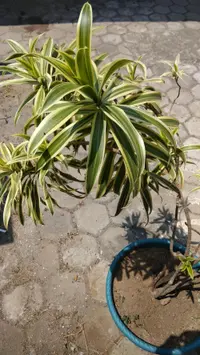
Rotate for symmetry

Turn the pot 90° every 2–3 weeks to keep stems upright and prevent leaning or one-sided growth, especially if the main light source comes from a single window.

Cane stabilization

If tall canes wobble, anchor them with a discreet stake and soft ties at 2–3 points, then gradually loosen the ties over several months as new roots and lignified tissue provide stronger support.

Selective cane renewal

Every 1–2 years, cut 1 old, bare cane back to 10–15 cm above the soil and keep it slightly drier for a few weeks so new shoots form near the base and the plant stays dense over time.

Systematic pest monitoring

Inspect leaf undersides, cane joints, and pot rims with a hand lens every 2–3 weeks and wipe foliage with a damp cloth, which removes dust and catches early mealybug or scale issues before they spread when growing Song of India.

Common Pests and Diseases

Mealybugs

This pest appears as white, cottony clumps in leaf axils and along stems, often causing yellowing and sticky honeydew on Dracaena reflexa. Infestations are common on plants grown in warm, dry indoor conditions.

Solution

Isolate the plant, then dab visible insects with cotton swabs dipped in 70% isopropyl alcohol and wipe affected areas. Follow with a thorough leaf wash using lukewarm water and a few drops of mild liquid soap, and repeat treatments weekly until no new mealybugs appear; for heavy infestations, use a labeled insecticidal soap or neem oil spray on all leaf surfaces.

Spider mites

These insects are actually tiny arachnids that create fine webbing between leaves and cause stippled, faded foliage, especially in dry heated rooms. Symptoms include dull, speckled leaves that may eventually dry at the tips and margins.

Solution

Increase humidity around the plant and rinse leaves under a gentle shower or with a handheld sprayer, focusing on leaf undersides. For ongoing control, apply insecticidal soap or neem oil every 7–10 days for several cycles, and keep the plant away from hot, dry air sources to reduce reinfestation risk.

Soft scale

This pest shows up as small, tan to brown, dome-shaped bumps on stems and leaf midribs, often accompanied by sticky honeydew and black sooty mold. Infestations can weaken Dracaena reflexa and slow new growth.

Solution

Gently scrape or wipe off individual scales with a soft cloth or fingernail, then clean stems and leaves with a dilute solution of mild liquid soap and water. Follow with repeated applications of horticultural oil or neem oil, thoroughly coating stems where scales hide, and monitor closely for several weeks for new insects.

Leaf spot disease

This disease causes brown or tan spots with darker borders on leaves, sometimes with a yellow halo, and is favored by high humidity with poor air movement. Spots may merge, leading to larger dead patches and premature leaf drop.

Solution

Remove and discard affected leaves, avoid wetting the foliage when watering, and improve air circulation around the plant. Allow the top of the soil to dry slightly between waterings, and in severe or persistent cases use a copper-based or broad-spectrum houseplant fungicide according to label directions.

Fluoride toxicity

Symptoms include brown leaf tips and margins on otherwise green leaves, often progressing slowly from older leaves upward, and are linked to fluoride in tap water or high-fluoride phosphate fertilizers. Dracaena reflexa is notably sensitive to this form of chemical injury.

Solution

Switch to distilled, rain, or filtered water low in fluoride and allow water to stand overnight before use when possible. Trim only the dead brown tips, avoid superphosphate fertilizers, flush the potting mix thoroughly with clean water to leach accumulated salts, and adjust fertilization to a balanced, low-fluoride product suitable for Dracaena reflexa plant care.

Interesting Facts

Native island habitat

This species is naturally found on islands in the western Indian Ocean, especially Madagascar, Mauritius, and nearby islands, where it grows as a small tree or shrub in coastal and lowland forests.

Distinct variegated form

The popular houseplant known as song of India is a variegated cultivar of this species, typically with yellow or cream margins on narrow leaves arranged in dense spirals along the stems.

Slow, woody growth

In suitable conditions this plant gradually forms a woody trunk and branching structure, allowing it to develop into a small indoor tree over many years when grown in containers.

Botan icon

Did you know?

In its native range, this species can reach 3–6 m tall and is sometimes used as a living fence or boundary plant, pruned regularly to form dense, long‑lasting hedges in tropical landscapes.

FAQs about Song of India

Brown leaf tips usually come from low humidity, underwatering, or fluoride/salt buildup from tap water and fertilizer. Use filtered water, flush the pot occasionally, and maintain stable moisture to prevent further browning of the foliage.

Grow Healthy Plants with Botan Care

Keep your plants happy and healthy with plant identification, disease detection, and easy care guidance.

Botan plant care app — identify plants on mobile

Explore More Plants