Zebra Plant Care (Alocasia zebrina)

Also known as: zebrina alocasia

About Zebra Plant

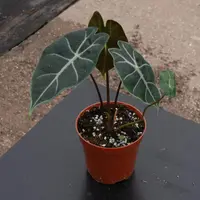
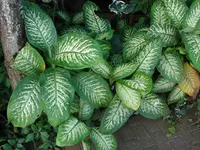
The zebra plant, Alocasia zebrina, is a tropical aroid grown mainly for its striking foliage and patterned stems. It forms upright, arrow-shaped leaves on tall petioles with bold, zebra-like striping.

This species comes from humid forests in the Philippines, where it grows in bright, filtered light under taller trees. It can be demanding indoors because it reacts quickly to low humidity, cold drafts, and irregular watering.

When learning how to care for Zebra Plant, it helps to remember its jungle origin: it prefers warm conditions, consistent moisture without waterlogging, and an airy, well-draining potting mix.

Main Plant Requirements

Care Difficulty

Moderate Care

Light Preference

Bright Indirect Light

Water Requirements

Keep Soil Moist

Temperature Preference

Tropical / Frost Sensitive

Hardiness Zone

10–12

Soil Texture

Loamy, Peaty, Organic-rich

Soil pH

Acidic (5.5–6.5), Slightly acidic (6.5–7.0)

Soil Drainage

Moist but well-drained

Fertilization

Moderate (every 2–4 weeks)

Get Personalized Care Plan

Scan your plant to receive care tips personalized for your specific plant

Personalized Care in the App

Available on iOS and Android

How to Care for the Zebra Plant

This species prefers bright, filtered light that mimics a forest understory.

  • Provide 6–8 hours of bright, indirect light daily; early morning sun is acceptable, but avoid direct midday and afternoon rays to prevent leaf scorch.
  • Place Zebra Plant where light passes through sheer curtains or dappled shade; outdoors, use light shade under taller plants or structures.
  • In winter, move it closer to bright windows or a brighter outdoor spot, as low light causes leggy growth and smaller, dull leaves.

Alocasia zebrina prefers evenly moist, not soggy, soil with slight drying between waterings.

  • Water when the top 2–3 cm of soil feels dry, using enough water so excess drains freely, then discard any runoff to avoid root rot.
  • Reduce watering in fall and winter as growth slows; allow the top 3–5 cm to dry and monitor for softer, slower-growing leaves before increasing water again in spring.
  • Watch for yellowing, mushy stems as a sign of overwatering and for curling, dry, or drooping leaves plus very light soil as signs of underwatering.

This plant thrives in warm, stable temperatures with no drafts or sudden drops.

  • Aim for 70–80°F (21–27°C) for active growth; it tolerates short periods up to about 86°F (30°C) if humidity and watering are well managed.
  • Keep it above 60°F (16°C); growth slows below this, and damage can occur under 55°F (13°C), especially with cold, wet soil.
  • Protect from frost at all times; move containers or garden plants indoors or to shelter before nights approach 50°F (10°C) and avoid hot, drying air near heaters.

This species needs consistently high humidity to maintain large, healthy leaves.

  • Aim for 60–80% humidity; levels below 50% often lead to leaf edge crisping.
  • In dry air, expect drooping, brown tips, slowed growth, and increased spider mite issues.
  • Increase humidity with a nearby humidifier, grouped plants, and a pebble tray, but avoid misting that leaves foliage wet for long.

Alocasia zebrina grows best in a loose, airy, organic-rich mix that drains quickly but does not dry out instantly.

  • Use a base of peat or coco coir with added fine bark, perlite, and some compost to create a chunky, moisture-retentive structure.
  • Ensure excess water runs through within seconds; mix in more perlite or bark if water pools on the surface.
  • Keep pH slightly acidic to neutral, around 5.5–7.0, which supports nutrient uptake and root health.
  • Avoid heavy garden soil, pure compost, or dense peat blocks that compact, exclude air, and promote root rot.

This species is very suitable for container growing due to its clumping root system and upright growth.

  • Choose a wide, stable pot to counterbalance the tall, top-heavy stems and prevent tipping when the mix is moist.
  • Select slightly porous materials like terracotta if the mix stays wet too long, or plastic if it dries too fast in your conditions.
  • Leave 2–3 cm between root mass and pot wall to keep enough substrate for moisture storage without creating a cold, wet outer ring.

Balanced feeding supports strong foliage and root growth in Alocasia zebrina during the warm growing season.

  • Use a balanced liquid fertilizer (for example 10-10-10 or 20-20-20) diluted to 1/4–1/2 strength.
  • Apply every 2–4 weeks in spring and summer when growth is active.
  • Stop or reduce feeding to once every 6–8 weeks in fall and winter as growth slows.
  • Flush the pot with plain water every 4–6 weeks to reduce salt buildup from fertilizer.

Pruning focuses on hygiene and maintaining a neat shape rather than controlling size in Alocasia zebrina.

  • Carry out light pruning during active growth in spring and summer.
  • Remove yellowing, dead, or damaged leaves at the base with clean, sharp scissors or pruners.
  • Cut away crowded or crossing stems only if they trap moisture or limit airflow.
  • Disinfect tools before and after use to lower the risk of spreading disease.

Container-grown plants benefit from occasional repotting to support healthy root development and stable growth.

  • Check for roots circling the pot, emerging from drainage holes, or slowed growth as signs it needs a larger container.
  • Plan to repot every 1–2 years in spring, choosing a pot 2–5 cm wider with drainage holes.
  • Gently loosen circling roots and remove some old soil, keeping the root ball as intact as possible.
  • Water thoroughly after repotting, then keep the plant in bright, indirect light for 1–2 weeks to reduce transplant stress.

New plants are most reliably produced by division of the underground rhizomes rather than by seed.

  • Divide clumps in late spring or early summer when growth is active and conditions are warm.
  • Lift the plant, gently remove soil, and separate rhizomes, ensuring each division has at least 1 healthy growth point and roots.
  • Plant divisions in a well-draining, airy mix and keep the medium slightly moist, not waterlogged.
  • Provide warm temperatures (70–80°F), high humidity, and bright, indirect light to support rooting and establishment.

This tropical species is frost-sensitive and needs thoughtful winter management in most temperate climates.

  • Move container plants indoors before temperatures drop below 55°F, providing bright, indirect light.
  • Reduce watering, allowing the top 2–3 cm of soil to dry between waterings, since growth slows in cooler months.
  • If leaves die back, keep the soil lightly moist and the pot in a warm spot to preserve the living rhizome.

Care Tips

Support tall stems

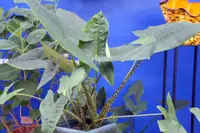
Install a discreet plant stake and loosely tie the petioles with soft plant tape to prevent top-heavy stems from snapping, especially as leaves enlarge between repots.

Rotate for even growth

Turn the pot 90° every 1–2 weeks so all sides receive similar light, which keeps petioles straight and reduces leaning or twisting toward the brightest side.

Use warm water

Water with room-temperature to slightly warm water (around 70–80°F) to avoid chilling the roots, which helps reduce stress and leaf droop in sensitive specimens.

Quarantine and inspect

Keep new plants isolated for 2–3 weeks and inspect leaf undersides and petiole joints with a magnifier to catch spider mites and scale before they spread, an important habit when caring for Zebra Plant in mixed collections.

Seasonal root check

During spring or early summer, gently slip the root ball out of the pot to check for circling roots and compacted mix, then lightly tease and refresh the outer layer instead of waiting for severe root binding.

Common Pests and Diseases

Spider mites

This pest often appears in warm, dry indoor air and targets the thin, patterned stems and undersides of leaves. Symptoms include fine webbing, tiny pale speckles, and a dull, dusty look on foliage.

Solution

Rinse leaves and petioles thoroughly with a firm stream of lukewarm water, including the undersides, then repeat every few days to break the life cycle. Increase humidity around the plant, isolate it from others, and apply a neem oil or insecticidal soap spray labeled for spider mites, making sure to coat both sides of each leaf and all joints along the stems.

Mealybugs

These insects feed on sap and commonly hide in the junctions where the striped petioles meet the leaf blades or emerge from the rhizome. Symptoms include cottony white clusters, sticky honeydew, and distorted or yellowing growth.

Solution

Remove visible insects with a cotton swab dipped in isopropyl alcohol, focusing on leaf bases, petiole joints, and emerging shoots. Follow up with insecticidal soap or neem oil sprays every 7–10 days and improve plant inspection routines as part of regular Alocasia zebrina care to catch re‑infestations early.

Aphids

These insects are attracted to the tender new leaves and emerging petioles of this species. Symptoms include curling or misshapen new growth, sticky residue, and sometimes sooty mold on leaves.

Solution

Shower the plant gently but thoroughly to dislodge colonies from new leaves and stems, then spray with an insecticidal soap solution that fully wets the growing tips. Repeat treatments weekly until no new aphids appear and avoid overfertilizing, which can stimulate the soft growth aphids prefer.

Bacterial leaf spot

This disease causes water-soaked, translucent spots on leaves that may turn brown with a yellow halo, often starting where water sits on the surface. Symptoms include spreading lesions that can merge and cause sections of the large leaves to collapse.

Solution

Remove and discard affected leaves promptly, sterilizing scissors between cuts, and avoid overhead watering or water sitting on foliage. Improve air movement around the plant, reduce leaf crowding, and allow the top of the soil to dry slightly between waterings to limit bacterial spread.

Fungal leaf blight

This disease produces irregular brown patches that may have darker edges and can start at the leaf margin or along damaged areas. Symptoms include progressive tissue collapse, especially in conditions of high humidity with poor air circulation.

Solution

Cut away and dispose of all seriously affected leaves, ensuring clean tools and avoiding contact with healthy foliage. Provide better spacing and airflow, keep leaves dry when possible, water at the soil level, and if spread continues, use a houseplant-safe fungicide according to label directions while adjusting humidity to a moderate, stable range.

Interesting Facts

Striped petiole camouflage

The dark-and-light banding on its petioles closely resembles the patterning of some arboreal snakes, and botanists have proposed this as a possible visual deterrent to herbivores in its native habitat in the Philippines.

Ephemeral leaf strategy

Each leaf typically has a limited lifespan, and the plant regularly sheds older leaves as new ones emerge, a growth pattern that helps it redirect resources to actively photosynthesizing foliage under shifting forest light conditions.

Tuber-based survival

It grows from an underground tuber that stores water and carbohydrates, allowing the plant to survive short periods of unfavorable conditions and then push out new growth when the environment improves.

Botan icon

Did you know?

In its native range in the Philippines, this species is considered locally threatened in the wild due to habitat loss and overcollection, so many plants in cultivation now originate from tissue-cultured stock rather than being taken directly from natural populations.

FAQs about Zebra Plant

Brown leaf edges usually result from low humidity, underwatering, or salt buildup from fertilizer. Check soil moisture, flush the pot with clean water occasionally, and increase humidity with pebble trays or a nearby humidifier.

Grow Healthy Plants with Botan Care

Keep your plants happy and healthy with plant identification, disease detection, and easy care guidance.

Botan plant care app — identify plants on mobile

Explore More Plants