


Rhizome Positioning
Set the creeping rhizomes on or just barely pressed into the substrate surface rather than buried, so they stay aerated and less prone to rot while still producing new fronds and roots effectively.


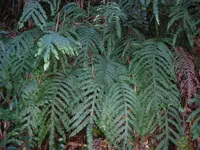
Blue star fern is an epiphytic fern, meaning it often grows on trees rather than in soil. It is valued as a houseplant for its soft, bluish-green fronds with a slightly wavy, finger-like shape.
Phlebodium aureum comes from tropical and subtropical forests in Central and South America, as well as parts of the Caribbean. It forms loose, arching clumps that give a relaxed, slightly wild look indoors.
This fern is considered moderately easy to grow when its basic needs are met. It prefers bright, indirect light, evenly moist but not waterlogged substrate, and good air circulation. These traits guide how to care for Blue star fern in most homes.

Care Difficulty
Moderate Care

Light Preference
Bright Indirect Light

Water Requirements
Keep Soil Moist

Temperature Preference
Tropical / Frost Sensitive

Hardiness Zone
9–11

Soil Texture
Loamy, Peaty, Organic-rich

Soil pH
Acidic (5.5–6.5), Slightly acidic (6.5–7.0)

Soil Drainage
Moist but well-drained

Fertilization
Light (every 4–6 weeks)
Scan your plant to receive care tips personalized for your specific plant
Available on iOS and Android
This fern prefers bright, indirect light that mimics filtered forest shade.
Phlebodium aureum prefers evenly moist but not waterlogged soil.
This fern thrives in warm, stable temperatures similar to a mild, frost-free forest climate.
This fern prefers consistently moist air and reacts quickly to dry indoor conditions.
Phlebodium aureum grows best in loose, airy, organic-rich media that drains quickly yet holds some moisture.
This species is well suited to container growing, including hanging pots and elevated planters.
Phlebodium aureum benefits from light, consistent feeding during its active growing season.
Phlebodium aureum needs only light pruning to keep fronds healthy and the plant tidy.
This fern prefers slightly snug pots and only needs repotting when clearly root-bound.
Phlebodium aureum is most reliably propagated by rhizome division rather than from spores.
This fern is frost-sensitive and in most climates is best treated as an indoor or protected plant in winter.

Plant Health Check
Not sure what's wrong with your plant? Check your plant's health inside the app.
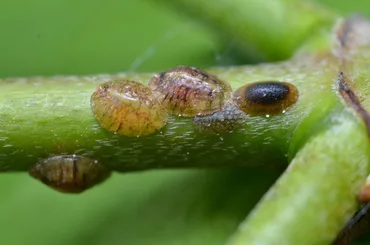
These insects appear as small, tan to brown bumps along frond midribs and undersides, sucking sap and causing yellowing, sticky honeydew, and frond decline.
Solution
Manually remove scales with a cotton swab dipped in isopropyl alcohol, then wash fronds with lukewarm water and mild soap.
Repeat checks weekly and, if needed, apply horticultural oil or insecticidal soap to thoroughly coat the insects while protecting the sensitive fronds from direct sun after treatment.
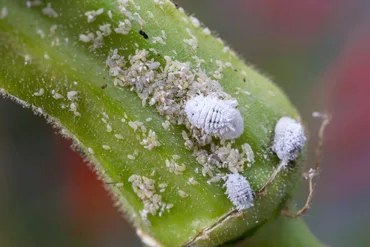
These insects form white, cottony clusters at frond bases, along the rhizome, and in protected crevices, causing stunted growth and sticky residue.
Solution
Isolate the plant, then wipe or dab visible mealybugs with cotton swabs dipped in isopropyl alcohol and rinse gently with lukewarm water.
Inspect weekly and repeat treatment; for persistent infestations, use insecticidal soap or horticultural oil, ensuring full coverage of hidden areas along the rhizome.
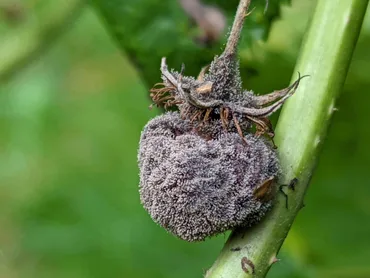
This disease produces soft, water-soaked spots on fronds that develop a fuzzy gray mold, especially under cool, humid, stagnant conditions.
Solution
Remove and discard all affected fronds and any fallen debris, then increase air movement and avoid water sitting on fronds for long periods.
Keep humidity moderate rather than extreme and, in recurring cases, apply a labeled ornamental fungicide for Botrytis, taking care not to overdose sensitive fern tissue.
In the wild, this fern commonly grows as an epiphyte on tree trunks and branches, anchoring to bark rather than rooting in soil, and gathers leaf litter to create its own small pockets of substrate.
This tree-dwelling habit is also characteristic of mounted ferns such as the Staghorn Fern, although the two species have very different frond shapes.
Its blue-green color comes from a fine waxy coating on the frond surface that scatters light.
It may help protect the leaf tissue from intense tropical sun and water loss.
The plant forms thick, golden to light brown creeping rhizomes that sit on top of the substrate or bark and slowly spread.
They produce new fronds along their length.

Phlebodium aureum often forms natural canopy gardens in tropical forests, where multiple ferns cluster together on a single branch; these clusters trap falling debris and moisture, creating miniature hanging soil islands that also provide habitat for insects and small invertebrates.
Yellowing fronds usually result from overwatering, poor drainage, or low light. Check that the pot drains well, let the top layer of mix partially dry between waterings, and remove old, naturally aging fronds at the base.
Keep your plants happy and healthy with plant identification, disease detection, and easy care guidance.

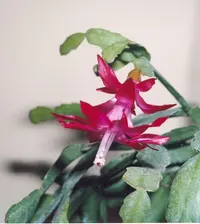
Schlumbergera × buckleyi
Schlumbergera × buckleyi
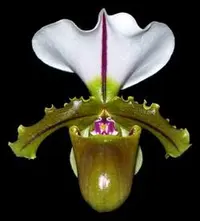
Spicer’s Paphiopedilum
Paphiopedilum spicerianum
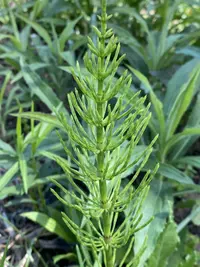
field horsetail
Equisetum arvense

Annona foetida
Annona foetida

Philodendron
Philodendron 'Jose Buono'
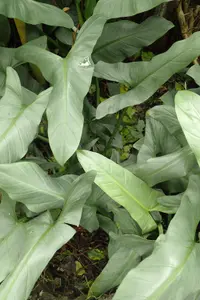
Silver Sword
Philodendron hastatum
Christmas fern
Polystichum acrostichoides
 POPULAR
Friendship Plant
Pilea involucrata