Alocasia melo Care

About Alocasia melo

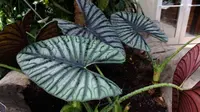
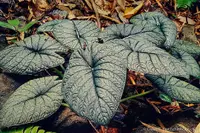
Alocasia melo is a compact aroid grown mainly for its striking, deeply textured foliage. It forms a low clump of thick, leathery leaves that look almost stone-like. The leaves are usually blue-green to gray-green with pronounced veins and a slightly metallic appearance.

This species is native to Borneo, where it grows in warm, humid forest environments with filtered light. Its thick leaves and short, chunky stems reflect its adaptation to protected understory conditions.

Alocasia melo is considered moderately challenging, as it reacts poorly to cold, low humidity, and inconsistent watering. It prefers bright, indirect light, evenly moist but airy soil, and stable warmth, which guides how to care for Alocasia melo indoors.

Main Plant Requirements

Care Difficulty

Hard Care

Light Preference

Bright Indirect Light

Water Requirements

Keep Soil Moist

Temperature Preference

Tropical / Frost Sensitive

Hardiness Zone

11–12

Soil Texture

Loamy, Peaty, Organic-rich

Soil pH

Acidic (5.5–6.5), Slightly acidic (6.5–7.0)

Soil Drainage

Moist but well-drained

Fertilization

Light (every 4–6 weeks)

Get Personalized Care Plan

Scan your plant to receive care tips personalized for your specific plant

Personalized Care in the App

Available on iOS and Android

How to Care for the Alocasia melo

This plant prefers bright, filtered conditions similar to a shaded rainforest floor.

  • Provide 6–8 hours of bright, indirect light daily; light through a sheer curtain or under dappled shade suits Alocasia melo well.
  • Allow gentle early morning sun in east-facing exposure but avoid direct midday or afternoon sun, which can scorch and fade leaves.
  • In winter, move closer to a bright window or use supplemental grow lights if leaves stretch, lean strongly, or new growth emerges small and pale.

This species prefers evenly moist but never waterlogged soil around its roots.

  • Water when the top 2–3 cm of soil feel dry, using enough water to hydrate the full root zone, then let excess drain away completely.
  • Reduce watering in cooler, low-light months when growth slows; increase slightly in warm, bright conditions if the surface dries faster.
  • Watch for yellowing, mushy stems or a sour smell as signs of overwatering, and curling, crisp edges, or drooping leaves as signs of underwatering in Alocasia melo.

Stable, warm conditions support strong growth and reduce stress in this tropical aroid.

  • Aim for 70–80°F (21–27°C) for active growth; it can tolerate short periods at 65°F (18°C) but growth slows noticeably below this.
  • Protect from cold; avoid temperatures below 60°F (16°C), and do not expose the plant to frost or cold drafts near windows or doors.
  • In hot weather above 85°F (29°C), increase airflow and shade from direct sun to prevent heat stress, leaf scorch, and faster moisture loss.

This species needs consistently high humidity to maintain firm, textured leaves and steady growth.

  • Aim for 60–80% humidity; leaf edges crisp or curling inward indicate air that is too dry.
  • Brown tips, stalled new leaves, or spider mite outbreaks often signal chronic low humidity.
  • Increase humidity with a nearby humidifier, grouped plants, or a pebble tray placed directly under Alocasia melo.

This species prefers a loose, airy, organic-rich substrate that drains quickly yet retains moderate moisture.

  • Use roughly 40% peat or coco coir, 30% fine bark, 20% perlite, and 10% compost to balance moisture and aeration.
  • Choose a mix that feels chunky rather than compact; roots need air spaces to prevent suffocation and rot.
  • Keep pH slightly acidic to neutral, around 6.0–7.0, avoiding strongly alkaline mixes that can lock out nutrients.
  • Never use heavy garden soil or pure potting compost, which hold water too long and promote rhizome rot.

This species is well suited to container growing due to its compact but rhizomatous root system.

  • Select a slightly wider rather than deep pot so the shallow rhizomes can spread without staying waterlogged at the base.
  • Use a pot material that matches your watering habits, such as terracotta to dry faster or plastic to retain more moisture.
  • Ensure the container has multiple drainage holes so excess water exits quickly instead of pooling around the rhizomes and lower roots.

This guide focuses on Alocasia melo care instructions related to nutrition for steady foliage growth in containers.

  • Use a balanced liquid fertilizer around 10-10-10 or 20-20-20, diluted to 25–50% strength, to avoid root burn.
  • Feed every 2–4 weeks during spring and summer while the plant is actively producing new leaves.
  • Pause or reduce to monthly feeding in fall and winter when growth slows or the plant enters partial dormancy.
  • Optionally supplement with a small amount of slow-release fertilizer or fine compost on the soil surface at the start of the growing season.

Alocasia melo benefits mainly from light, hygienic pruning rather than reshaping.

  • Carry out pruning in spring or early summer when the plant is actively growing and recovers faster.
  • Remove yellowing, dead, or mechanically damaged leaves at the base with clean, sharp scissors or pruners.
  • Cut back crowded or inward-facing leaves to improve air circulation and reduce fungal problems.
  • Disinfect blades before and after use to limit the spread of bacteria and fungal spores.

Container-grown Alocasia melo needs periodic repotting to refresh soil and support root health.

  • Check for roots circling the pot, emerging from drainage holes, or unexplained slow growth as signals to repot.
  • Plan repotting for spring, about every 1–2 years, when new growth begins and recovery is strongest.
  • Move the plant only 2–5 cm up in pot size, using a chunky, fast-draining aroid mix to prevent waterlogging.
  • Water lightly after repotting, keep in bright indirect light, and maintain high humidity to reduce root stress.

Propagation of Alocasia melo is most reliable through division rather than from seed or leaf cuttings.

  • Schedule propagation in late spring or early summer, when roots are actively growing and divisions establish faster.
  • Unpot the plant, gently remove soil, and separate natural clumps, ensuring each division has roots and at least 1 healthy growth point.
  • Plant divisions in a small, well-draining mix, then keep humidity high and temperatures around 70–80°F.
  • Maintain evenly moist but not waterlogged soil and avoid strong direct sun until new leaves appear.

Alocasia melo is tropical and needs careful indoor winter care in most temperate climates.

  • Keep plants above 60°F; exposure to frost can kill foliage and severely damage rhizomes.
  • Move outdoor containers indoors before nights drop below 55°F, placing them in bright, indirect light.
  • Avoid cold drafts from windows and doors, and do not let soil stay waterlogged in cooler conditions.

Care Tips

Acclimate After Purchase

After bringing the plant home, keep it in its nursery pot for 2–3 weeks so it can acclimate to your indoor conditions before repotting, which reduces stress and leaf loss when caring for Alocasia melo.

Use Support Stakes

Insert a slim, smooth stake near the base and loosely tie the petioles with soft plant ties to keep the heavy, textured leaves upright and reduce the risk of petiole breakage.

Rotate For Even Growth

Turn the pot 90° every 1–2 weeks so all sides receive similar light exposure, which helps maintain a compact, symmetrical rosette and prevents leaning toward the window.

Warm Root Zone

Place the pot on a wooden board, cork mat, or insulated tray rather than directly on cold floors or window sills to keep the root zone warmer and reduce the risk of root stress.

Quarantine New Plants

Keep new plants in a separate area for 2–3 weeks and inspect the thick leaves and undersides regularly so potential pests or diseases are detected before the plant joins an existing collection.

Common Pests and Diseases

Spider mites

This pest thrives in the warm, dry air often used for Alocasia, causing stippled, dull leaves and fine webbing, especially on the undersides. Symptoms include slowed growth and leathery foliage, which show strongly on the textured leaves of this species.

Solution

Rinse foliage thoroughly with a strong but gentle stream of lukewarm water, then wipe both leaf surfaces to remove mites and webbing. Increase humidity to 60–70%, isolate the plant, and apply a neem oil or insecticidal soap spray every 5–7 days for 3–4 cycles, ensuring full coverage of leaf undersides and petioles.

Rhizome rot

This disease affects the thick, short rhizome that stores water and nutrients, causing it to soften, darken, and eventually collapse. Symptoms include yellowing leaves that droop from the base and a sour or musty smell from the potting mix.

Solution

Remove the plant from the pot, cut away all mushy, dark tissue with a sterile blade, and dust cuts with a fungicidal powder or ground cinnamon. Repot into a small container with fresh, very airy aroid mix, keep the substrate slightly moist rather than wet, and adjust watering so the top 3–4 cm of mix dry between waterings to support long-term Alocasia melo plant care.

Pythium root disease

This disease is caused by water-mold pathogens that spread quickly in constantly wet, poorly aerated substrates, which Alocasia melo is especially sensitive to. Symptoms include sudden wilt despite moist soil, blackened fine roots, and rapid decline of lower leaves.

Solution

Discard saturated soil, trim off all affected roots, and repot into a sterile, chunky mix with excellent drainage in a pot with large drain holes. Reduce watering frequency, improve airflow, and, if the plant is valuable, drench the new substrate once with a labeled systemic fungicide following package directions.

Mealybugs

These insects nest in tight crevices around the petiole bases and leaf undersides, appearing as white, cottony clumps and leaving sticky honeydew. Symptoms include distorted new leaves, slow growth, and sometimes sooty mold growing on the honeydew.

Solution

Dab visible mealybugs with cotton swabs dipped in 70% isopropyl alcohol, then rinse the plant thoroughly after treatment. Repeat spot treatment every few days and use an insecticidal soap or neem oil spray weekly for several weeks, paying special attention to leaf joints, petiole bases, and the rim of the pot where insects often hide.

Xanthomonas leaf spot

This disease produces water-soaked, translucent patches that turn brown and may develop yellow halos, particularly visible on the thick, corrugated leaf blades. Symptoms include irregular lesions that can merge, causing sections of the leaf to die and weaken the plant.

Solution

Promptly prune and discard affected leaves in household trash, disinfecting tools with 70% alcohol between cuts. Avoid wetting foliage, reduce overhead misting, improve air movement, and keep leaves dry while the potting mix is allowed to dry slightly between waterings; in severe or recurring cases, consider using a copper-based bactericide labeled for indoor ornamentals, following label directions carefully.

Interesting Facts

Thick, stone-like leaves

The leaves of Alocasia melo are unusually thick and rigid for an aroid, with a strongly bullate (blistered) surface that gives them a stone- or armor-like appearance and helps reduce water loss in their native habitat.

Endemic Bornean species

This species is naturally found only on the island of Borneo, where it grows on moist, shaded forest floors and rocky slopes, making it a true geographical specialist within the genus.

Naturally compact growth

Unlike many other Alocasia species that reach large sizes, Alocasia melo remains relatively small and compact, an adaptation to its understory environment where lower light and space limitations favor shorter, broad-leaved plants.

Botan icon

Did you know?

Alocasia melo was formally described to science only in the late 20th century, and its striking leaf texture and restricted range quickly made it a sought-after example of Bornean aroid diversity in botanical collections.

FAQs about Alocasia melo

Brown, crisp edges usually come from low humidity, excess fertilizer salts, or letting the potting mix dry out too far. Flush the soil occasionally, maintain higher humidity, and keep moisture more consistent to prevent further damage.

Grow Healthy Plants with Botan Care

Keep your plants happy and healthy with plant identification, disease detection, and easy care guidance.

Botan plant care app — identify plants on mobile

Explore More Plants