Encourage Tight Rosettes
Rotate the pot 90° every 1–2 weeks so all sides receive similar light, which keeps rosettes compact and prevents the stems from stretching unevenly.

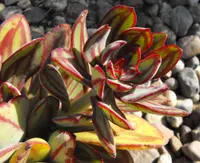
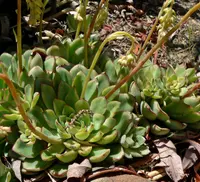
Painted echeveria (Echeveria nodulosa) is a compact, slow-growing succulent known for its striking green leaves marked with deep red lines and edges. The rosettes stay relatively small and often branch over time, forming low, sculptural clumps.
This species comes from arid regions of Mexico, so it is adapted to strong light, dry air, and brief periods of drought. Its fleshy leaves store water, which makes it more forgiving if watering is occasionally missed.
Because it prefers bright light, fast-draining soil, and careful watering, it suits beginners who want to learn how to care for Painted Echeveria without demanding complex routines.

Care Difficulty
Easy Care

Light Preference
Full Sun

Water Requirements
Low Water

Temperature Preference
Tropical / Frost Sensitive

Hardiness Zone
10–11

Soil Texture
Sandy, Loamy, Rocky

Soil pH
Slightly acidic (6.5–7.0), Neutral (7.0)

Soil Drainage
Well-drained

Fertilization
Minimal (feed rarely)
Scan your plant to receive care tips personalized for your specific plant
Available on iOS and Android
This succulent thrives in bright conditions with several hours of direct sun each day.
This species prefers infrequent, deep watering followed by thorough drying of the soil.
Stable, warm conditions help this succulent maintain compact growth and clear leaf markings.
Humidity is a minor factor for Echeveria nodulosa, which prefers dry air.
Echeveria nodulosa needs a very fast-draining, gritty mineral substrate to prevent root rot.
This species is well suited to container culture when excess moisture is tightly controlled.
This succulent benefits from light feeding, especially during active growth in spring and summer.
Echeveria nodulosa needs only light, targeted pruning to stay compact and healthy.
This species prefers slightly tight pots and only occasional repotting in a gritty mix.
New plants are commonly produced from offsets, leaf cuttings, or stem cuttings.
This succulent is not frost hardy and needs protection in regions with cold winters.

Plant Health Check
Not sure what's wrong with your plant? Check your plant's health inside the app.
This species develops olive-green leaves marked with deep burgundy to purple-red lines and bands that remain visible even in strong light, which is why it is commonly called painted echeveria.
Unlike many compact rosette succulents, it often forms branched, semi-woody stems up to several tens of cm tall, creating a loose, shrubby silhouette rather than a single low rosette.
It is native to arid and semi-arid regions of Mexico, where it grows on rocky slopes and well-drained hillsides, adapted to intense sun, high drainage, and irregular rainfall.

In its native range in Mexico, this species often grows in crevices and on very thin, mineral soils, anchoring itself with relatively shallow but wide-spreading roots that quickly capture brief desert rainfall before it evaporates.
Lack of bloom is usually due to insufficient light, overly rich fertilizer, or absence of a cool, bright winter rest. Plants also need to be mature; young rosettes often focus on leaf growth first.
Keep your plants happy and healthy with plant identification, disease detection, and easy care guidance.