Mother of Thousands Care (Kalanchoe daigremontiana)

Also known as: Alligator Plant, Mother of Thousands

About Mother of Thousands

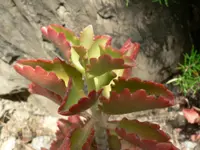
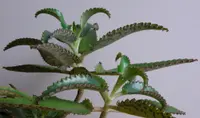
Mother of thousands (Kalanchoe daigremontiana) is a succulent from Madagascar, valued for its unusual, architectural look and easy growth in containers. It forms upright, fleshy stems with narrow, gray-green leaves edged with many tiny plantlets. These baby plants drop off, root easily, and can quickly fill nearby pots or soil. This rapid self-propagation is the main trait that makes it both rewarding and sometimes hard to control indoors. It prefers bright, indirect light, well-draining soil, and infrequent watering. Understanding how to care for Mother of Thousands helps prevent overwatering and unwanted spread while keeping the plant healthy.

Main Plant Requirements

Care Difficulty

Easy Care

Light Preference

Partial Sun

Water Requirements

Low Water

Temperature Preference

Tropical / Frost Sensitive

Hardiness Zone

9–11

Soil Texture

Sandy, Loamy, Rocky

Soil pH

Slightly acidic (6.5–7.0), Neutral (7.0)

Soil Drainage

Well-drained

Fertilization

Minimal (feed rarely)

Get Personalized Care Plan

Scan your plant to receive care tips personalized for your specific plant

Personalized Care in the App

Available on iOS and Android

How to Care for the Mother of Thousands

This succulent needs bright light but benefits from some protection from intense midday sun.

  • Provide 6–8 hours of bright light daily, with morning sun and afternoon filtered light, especially in hot climates.
  • Plant outdoors in full sun to light partial shade; in very strong sun, pale, scorched patches on leaves indicate too much exposure.
  • If stems stretch, lean, or leaves lose color, light is too low; move Mother of Thousands to a brighter, but still sheltered, position.

This drought-tolerant succulent prefers thorough but infrequent watering in fast-draining soil.

  • Water only when the top 3–5 cm of soil are completely dry; in warm growing seasons this may range from several days to 2–3 weeks depending on climate and soil.
  • Use sharply draining, gritty soil so water runs through quickly and does not pool around the roots or crown.
  • Wrinkling, soft leaves that drop easily suggest overwatering, while thin, limp, downward-curving leaves point to prolonged dryness for Kalanchoe daigremontiana.

This plant thrives in warm conditions and is sensitive to cold and frost.

  • Aim for 65–80°F (18–27°C) for active growth, as this range supports steady leaf and plantlet development.
  • Protect from temperatures below 40°F (4°C); prolonged exposure near this level can cause leaf damage, and light frost can kill tender tissue.
  • Tolerates short heat spikes up to about 95°F (35°C) if shaded during peak afternoon sun and given good air movement to reduce stress.

This species handles typical indoor humidity well, so moisture in the air is rarely a concern.

This succulent needs a fast-draining, airy mix that prevents water from sitting around the roots.

  • Use a gritty, sandy structure such as cactus mix blended with extra mineral material for faster drainage.
  • Aim for slightly acidic to neutral pH, roughly 6.0–7.0, which suits most Kalanchoe daigremontiana plants.
  • Combine 50–60% commercial cactus mix with 20–30% perlite or pumice and up to 20% coarse sand.
  • Avoid heavy, compacted, or peat-only substrates that stay wet for long periods and limit root aeration.

This species is very suitable for container growing.

  • Choose a pot only 2–4 cm wider than the root ball to limit excess wet substrate around the roots.
  • Select a heavy or wide-based container to keep the tall, offsetting stems from tipping over as they mature.
  • Use pots with multiple drainage holes and elevate them slightly so excess water escapes quickly rather than pooling under the base.

Kalanchoe daigremontiana grows well with modest feeding under bright, warm conditions.

  • Use a balanced liquid fertilizer (around 10-10-10 or 20-20-20) diluted to 25–50% strength for Mother of Thousands.
  • Feed every 4–6 weeks during spring and summer when growth is active.
  • Avoid fertilizing dry soil; water lightly first, then apply fertilizer to reduce root burn risk.
  • Stop or greatly reduce feeding in fall and winter, limiting to 1 very light dose if growth continues under strong indoor light.

Kalanchoe daigremontiana benefits from light, targeted pruning to maintain shape and plant health.

  • Prune in late winter or early spring before strong new growth starts.
  • Use clean, sharp scissors or pruners to remove dead, damaged, or leggy stems at their base.
  • Pinch or cut back tall, weak shoots to encourage branching and a more compact form.
  • Regularly remove unwanted plantlets and crowded stems to prevent top-heaviness and improve light penetration.

This species prefers tight pots and usually needs repotting only when clearly rootbound.

  • Check for roots circling the pot, emerging from drainage holes, or slow, weak growth as signs it needs a larger container.
  • Plan to repot every 2–3 years in spring, using a fast-draining cactus or succulent mix and a pot just 2–3 cm wider.
  • Gently loosen outer roots, keep the root ball mostly intact, and avoid heavy disturbance to reduce transplant shock.
  • Water lightly after repotting, then allow the mix to dry partly before the next watering while the roots re-establish.

This plant is commonly propagated and spreads mainly through its leaf-edge plantlets.

  • For Kalanchoe daigremontiana plant care, collect tiny plantlets that form along leaf margins in spring or summer.
  • Place plantlets on barely moist, gritty succulent mix under bright, indirect light and warm temperatures (70–80°F).
  • Press plantlets gently into the surface so their tiny roots contact the soil; avoid burying them deeply.
  • Stem cuttings also root well if allowed to callus for 1–2 days, then set into dry, well-drained mix and watered sparingly.

This succulent is frost-tender and needs protection in regions with cold winters.

  • Move container plants indoors before temperatures drop below 40°F, placing them in bright, indirect light.
  • Keep indoor temperatures around 60–75°F with low to moderate humidity to prevent rot.
  • Reduce watering in winter, allowing the mix to dry well between waterings, and withhold most fertilizer.
  • In mild climates, grow in pots rather than in-ground so plants can be relocated during unexpected cold snaps.

Care Tips

Control Plantlets

Regularly remove excess plantlets from leaf edges and soil surface to prevent overcrowding and nutrient competition, keeping only the strongest ones you intend to grow Mother of Thousands from.

Use Weighted Pots

Choose a relatively heavy, wide-based pot or add a top layer of coarse gravel so the tall, top-heavy stems are less likely to tip over as the plant matures.

Timed Stem Renewal

Every 1–2 years, intentionally restart the colony by rooting a few healthy plantlets and discarding old, woody stems, which helps maintain compact, vigorous growth.

Sun-Hardening Routine

When moving a plant from indoors to a brighter outdoor site, increase direct sun exposure by 30–60 minutes every few days to avoid leaf scorch and stem stress.

Mealybug Monitoring

Inspect leaf bases and the underside of older leaves every 1–2 weeks, and isolate the plant promptly if cottony white clusters appear, then treat with isopropyl alcohol swabs or a labeled succulent-safe insecticide.

Common Pests and Diseases

Aphids

These insects cluster on tender stems and undersides of leaves, feeding on sap and causing curled, distorted growth and sticky honeydew on Mother of Thousands plants.

Solution

Rinse colonies off with a firm stream of water, then treat remaining insects with insecticidal soap or a ready-to-use neem oil spray every 5–7 days until new growth appears clean; also remove heavily infested shoots to reduce reinfestation when caring for Mother of Thousands.

Mealybugs

These insects appear as white, cottony masses in leaf axils, along stems, and near plantlets, sucking sap and slowing growth.

Solution

Isolate the plant, then dab visible mealybugs with cotton swabs dipped in 70% isopropyl alcohol and follow with repeated applications of insecticidal soap or neem oil, ensuring spray coverage into crevices where insects hide.

Spider mites

This pest thrives on dry, sunny windowsills, causing fine webbing, tiny pale speckles on leaves, and a dull, dusty appearance of the foliage.

Solution

Increase local humidity slightly, rinse the plant thoroughly under lukewarm water, then apply insecticidal soap or neem oil to both upper and lower leaf surfaces, repeating weekly until no new webbing or stippling is visible.

Powdery mildew

This disease shows as white, powdery patches on leaves and stems, which can lead to yellowing and premature leaf drop if conditions stay humid and stagnant.

Solution

Improve airflow, avoid overhead watering, remove the worst-affected leaves, and treat remaining foliage with a sulfur-based fungicide or a potassium bicarbonate product, applying according to label directions until new growth remains clean.

Oedema

Symptoms include corky, brown or translucent blisters on leaf undersides when roots absorb more water than the leaves can transpire, a problem seen when this succulent is overwatered or kept too cool and wet.

Solution

Allow the potting mix to dry more thoroughly between waterings, use a fast-draining cactus or succulent mix, and keep the plant in a warm, bright spot so excess moisture leaves the leaves through normal transpiration; damaged areas will not heal but new growth should appear normal.

Interesting Facts

Plantlet-bearing leaf edges

This species produces tiny clonal plantlets along the margins of its leaves, each already equipped with roots and able to detach and establish as a new genetically identical plant when it falls onto suitable substrate.

Tetraploid hybrid origin

Genetic studies indicate it is a tetraploid hybrid, most likely derived from crosses between Kalanchoe daigremontiana and Kalanchoe rosei, which helps explain its vigorous growth and unusual reproductive strategy.

Crassulacean acid metabolism

The plant uses crassulacean acid metabolism (CAM), a photosynthetic pathway where stomata open mostly at night to take in carbon dioxide, which helps reduce water loss in arid or strongly sun-exposed environments.

Botan icon

Did you know?

In several regions with warm climates, this species has become invasive, forming dense stands that can displace native vegetation because its leaf-borne plantlets root so efficiently in disturbed or rocky soils.

FAQs about Mother of Thousands

Flowering is irregular and often sparse indoors. Blooming is more likely when the plant is slightly root-bound, receives strong seasonal light changes, and experiences cooler, drier winter conditions. Age, stress, and genetics also influence flower production.

Grow Healthy Plants with Botan Care

Keep your plants happy and healthy with plant identification, disease detection, and easy care guidance.

Botan plant care app — identify plants on mobile

Explore More Plants