


Rotate For Symmetry
Turn the pot 90° every 2–3 weeks so the rosette stays compact and evenly colored instead of leaning and stretching toward a single light source when growing Desert Surprise.

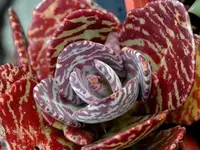
Desert Surprise (Kalanchoe humilis) is a compact succulent shrub with thick, gray-green leaves marked by purple stripes and spots. It forms low, branching clumps that stay tidy in containers. Native to arid regions of East Africa, it is adapted to strong light, high temperatures, and infrequent rainfall. These traits make it generally forgiving as a houseplant if overwatering is avoided. It suits beginners learning how to care for Desert Surprise, since it tolerates some neglect but declines quickly in soggy soil. Bright light, well-draining gritty mix, and light, occasional watering match its natural conditions.

Care Difficulty
Easy Care

Light Preference
Partial Sun

Water Requirements
Low Water

Temperature Preference
Tropical / Frost Sensitive

Hardiness Zone
10–12

Soil Texture
Sandy, Loamy, Rocky

Soil pH
Slightly acidic (6.5–7.0), Neutral (7.0)

Soil Drainage
Well-drained

Fertilization
Minimal (feed rarely)
Scan your plant to receive care tips personalized for your specific plant
Available on iOS and Android
Kalanchoe humilis prefers bright, indirect light that mimics open, lightly shaded desert habitats.
Kalanchoe humilis stores water in its leaves and needs infrequent, thorough watering.
This succulent prefers warm, dry conditions and is sensitive to cold and frost.
This succulent tolerates a wide humidity range and usually does not need special humidity management indoors.
This species needs a very fast-draining, mineral-rich mix to keep roots dry between waterings.
This compact succulent is well suited to container growing both indoors and outdoors.
This succulent benefits from light feeding during active growth but does not need heavy fertilization.
Pruning Kalanchoe humilis is mainly used to keep a compact shape and remove weak growth.
This species prefers slightly tight pots and only occasional repotting into fresh, very free-draining soil.
Kalanchoe humilis is commonly propagated from stem cuttings taken during the warm growing season.
This succulent is tender and needs protection from freezing temperatures in most climates.

Plant Health Check
Not sure what's wrong with your plant? Check your plant's health inside the app.
This species is naturally found on rocky outcrops and cliffs in Tanzania and Malawi, often anchoring itself in shallow crevices where many other succulents cannot persist.
Its grey-green leaves carry irregular maroon to purple banding that helps break up the leaf outline, likely providing some camouflage against the mottled backgrounds of lichen-covered rock.
In habitat it typically flowers at the end of the dry season into the early rainy season, producing upright stems with small tubular, pale greenish to pinkish flowers that are adapted to insect pollination.

This species is a parent of the popular hybrid Kalanchoe 'Desert Surprise', where its characteristic banded foliage pattern is passed on and selectively enhanced by breeders.
Slow growth usually comes from low light, cool temperatures, or a pot that is too large and stays wet. Check that the plant has bright conditions, a snug container, and well-drained soil free of root rot.
Keep your plants happy and healthy with plant identification, disease detection, and easy care guidance.

silvery stelis
Stelis argentata
 POPULAR
Panda Plant
Kalanchoe tomentosa

Philodendron
Philodendron 'Jose Buono'
splendens
Haworthia magnifica
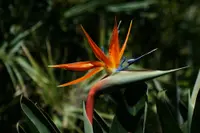 POPULAR
Bird of paradise plant
Strelitzia reginae
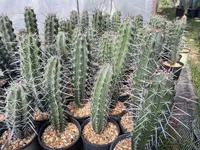
Stenocereus chacalapensis
Stenocereus chacalapensis
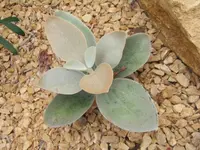
Copper Spoons
Kalanchoe orgyalis
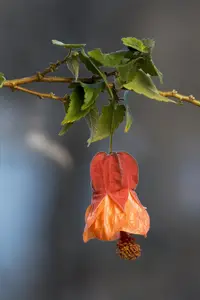
Abutilon x Hybridum Group
Abutilon × hybridum