Council Tree Care (Ficus altissima)

Also known as: Mountain Fig

About Council Tree

Council tree, Ficus altissima, is a large tropical fig species that often grows as a canopy tree in its native range across parts of South and Southeast Asia. In nature it can start life as an epiphyte, rooting on other trees before developing a thick trunk and broad, spreading crown.

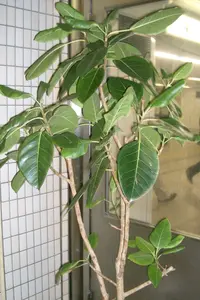
Its foliage is dense, with oval green leaves that may show pale midribs and subtle variegation in cultivated forms. Indoors it is usually grown as a tall, architectural houseplant rather than a full-sized tree.

This species prefers bright, indirect light, evenly moist but not waterlogged soil, and stable indoor conditions. With consistent conditions and moderate attention, it is generally not difficult to care for Council Tree.

Main Plant Requirements

Care Difficulty

Moderate Care

Light Preference

Bright Indirect Light

Water Requirements

Moderate Water

Temperature Preference

Tropical / Frost Sensitive

Hardiness Zone

10–12

Soil Texture

Loamy, Sandy, Organic-rich

Soil pH

Acidic (5.5–6.5), Slightly acidic (6.5–7.0)

Soil Drainage

Moist but well-drained

Fertilization

Light (every 4–6 weeks)

Get Personalized Care Plan

Scan your plant to receive care tips personalized for your specific plant

Personalized Care in the App

Available on iOS and Android

How to Care for the Council Tree

Ficus altissima grows best with bright, indirect light that mimics high, filtered forest canopies.

  • Provide 6–8 hours of bright, indirect light daily; morning sun from an east window or light filtered through sheer curtains suits Council Tree well.
  • Tolerates light shade for part of the day, but growth slows and variegation may fade if kept in low light for long periods.
  • Avoid harsh midday or afternoon sun through glass, which can scorch leaves; in winter, move it closer to the light source or supplement with a grow light.

Ficus altissima prefers evenly moist but never saturated soil, with short dry periods between waterings.

  • Water when the top 2–4 cm of soil feels dry, using enough water so some drains out, then let excess escape completely.
  • Reduce watering in cooler, darker months when growth slows; increase slightly in warm, bright seasons as evaporation rises.
  • Watch for yellowing, mushy leaves and a sour smell as signs of overwatering, and crisp edges or drooping, dry leaves as signs of underwatering; well-draining, aerated soil helps prevent root rot.

This species thrives in warm, stable conditions and reacts poorly to cold drafts or sudden temperature swings.

  • Aim for 65–80°F (18–27°C) for steady growth, keeping day and night temperatures relatively consistent.
  • Avoid exposing the plant to temperatures below 55°F (13°C); brief dips near this level can stress leaves and roots.
  • Protect from frost at all times and from blasts of hot, dry air above 90°F (32°C); in heat waves, increase shade and humidity to limit leaf scorch.

This species prefers moderate indoor humidity but usually tolerates typical home air if other conditions are stable.

  • Aim for 40–60% humidity; values toward the higher end reduce leaf browning on Council Tree.
  • Crisp edges, curling, and slow new growth often indicate humidity stress or very dry air.
  • Increase humidity with a nearby humidifier, grouping plants, or placing the pot above (not in) a pebble tray with water.

This ficus grows best in a loose, aerated, fast-draining mix that still holds moderate, even moisture.

  • Use a mix of roughly 50% peat- or coco-based potting mix, 25% perlite, and 25% fine bark to balance moisture retention and air spaces.
  • Ensure water drains freely within seconds; if water pools on the surface, add more perlite or bark to increase drainage and aeration.
  • Keep pH slightly acidic to neutral, around 6.0–7.0, which supports nutrient availability for Ficus altissima.
  • Avoid compacted, clay-heavy, or waterlogged substrates, which promote root rot and reduce oxygen to the root system.

This species is well suited to container growing when the pot supports its strong, upright woody growth.

  • Choose a wide, weighty container that reduces tipping risk as the plant becomes tall and top-heavy.
  • Select slightly porous materials like unglazed clay if you need faster moisture loss in cool or low-light rooms.
  • Use a deep pot that allows a stable, spreading root system rather than a shallow, squat container.

Ficus altissima responds well to modest, consistent feeding during its active growing season.

  • Use a balanced liquid fertilizer (for example 10-10-10) diluted to 1/2 strength every 4–6 weeks in spring and summer.
  • Alternatively, apply a slow-release balanced fertilizer at the start of spring for container Council Tree plants.
  • Hold fertilizer in autumn and winter or reduce to 1/4 strength if growth continues under warm, bright indoor conditions.
  • Avoid fertilizing very dry or stressed plants; water first, then apply fertilizer to moist soil.

Pruning Ficus altissima helps manage size, structure, and overall health.

  • Best time is late winter to early spring, before vigorous new growth starts.
  • Remove dead, diseased, crossing, or inward-growing branches to open the canopy and improve air flow.
  • Shorten overlong shoots to shape the plant and encourage denser branching.
  • Use clean, sharp bypass pruners and make slightly angled cuts just above a node or side branch.

Container-grown plants benefit from thoughtful repotting to support steady growth.

  • Repot every 2–3 years in spring when roots circle the pot, push through drainage holes, or growth slows.
  • Move up 1 pot size only, using a well-drained, high-quality potting mix to limit waterlogging risk.
  • Water thoroughly before and after repotting, handling the root ball gently to reduce disturbance.
  • Keep the plant in bright, indirect light and slightly drier soil for 1–2 weeks afterward to limit transplant shock.

Ficus altissima is most commonly propagated from stem cuttings taken during active growth.

  • Take 10–15 cm semi-hardwood tip cuttings in late spring or early summer, including 2–3 nodes.
  • Remove lower leaves, optionally dip the cut end in rooting hormone, and place in a moist, well-aerated mix.
  • Maintain high humidity, gentle bottom warmth around 70–75°F, and bright, indirect light for rooting.
  • Air layering of thicker stems in spring is another reliable method for larger new plants.

This species is frost sensitive and needs protection wherever winter temperatures fall below 40°F.

  • For outdoor containers, move plants indoors before nights reach 40°F, placing them in bright, indirect light.
  • Maintain indoor temperatures around 60–75°F with no cold drafts near windows or doors.
  • Water less in winter, allowing the top layer of soil to dry more between waterings.
  • In mild climates, mulch the root zone of in-ground plants with 5–8 cm of organic material to buffer temperature swings.

Care Tips

Early structural training

Start shaping young stems with a soft tie and a central stake, adjusting monthly, so the plant develops a single strong leader instead of multiple weak, leaning trunks as it gains height.

Root system management

Every 1–2 years, lift the plant from its pot, slice away 10–20% of the outer root mass with a clean knife, and repot into fresh mix to control size and keep roots fibrous rather than circling.

Leaf hygiene routine

Wipe leaves monthly with a damp, soft cloth and support each leaf from beneath to avoid cracking, which improves light capture and makes it harder for scale and spider mites to establish.

Pest monitoring zone

Place a yellow sticky trap at canopy height and inspect the undersides of leaves during each watering, so scale, thrips, or mites are caught and treated at a very early stage.

Seasonal light rotation

Rotate the pot 90° every 2–3 weeks and shift it slightly closer to the brightest window during winter, which keeps the canopy balanced and reduces legginess when growing Council Tree indoors.

Common Pests and Diseases

Scale insects

This pest feeds on sap and appears as small, dome-shaped bumps on stems and leaf undersides, often causing yellowing leaves and sticky honeydew. Sooty mold may develop on the honeydew, giving leaves a black, dusty coating.

Solution

Remove heavily infested stems or leaves and gently scrape or wipe remaining scale off with a cotton pad dipped in 70% isopropyl alcohol. For larger plants, use repeated applications of horticultural oil or insecticidal soap, ensuring thorough coverage of stems and leaf undersides every 7–10 days until new growth is clean.

Spider mites

These insects thrive in warm, dry indoor air and cause fine stippling, pale patches, and a dull, dusty look to the foliage, sometimes with fine webbing between leaves and stems. Symptoms include slowed growth and premature leaf drop if populations become high.

Solution

Shower the plant with lukewarm water to wash off mites, then increase humidity and avoid very dry air near heating vents. Follow with several rounds of insecticidal soap or a light horticultural oil spray, applied to both upper and lower leaf surfaces every 5–7 days until no new damage appears, which is a key part of effective Ficus altissima care.

Mealybugs

This pest appears as white, cottony clusters in leaf axils, along stems, and on roots, and feeds on sap, leading to distorted new growth and sticky honeydew. Heavy infestations can cause leaf yellowing and stunted growth.

Solution

Isolate the plant, then dab visible mealybugs with cotton swabs dipped in 70% isopropyl alcohol and remove affected plant parts if heavily clustered. Repeat spot treatments weekly and use an overall spray of insecticidal soap or horticultural oil on all foliage and stems, paying special attention to hidden areas where mealybugs shelter.

Edema

Symptoms include corky, blister-like bumps or raised rough spots on leaves caused by the plant taking up water faster than it can transpire it. This physiological disorder is common when soil stays wet in combination with cool temperatures or low light.

Solution

Allow the top layer of soil to dry more between waterings, reduce watering volume, and ensure the pot and mix drain freely. Improve light levels and keep temperatures stable in the 65–80°F range; affected leaves will not heal, but new growth should emerge smooth once conditions are corrected.

Leaf spot

This disease causes brown or tan spots with darker margins on leaves, sometimes surrounded by a yellow halo, and can lead to premature leaf drop under persistently wet conditions. Symptoms include gradual thinning of the canopy if many leaves are affected.

Solution

Remove and discard spotted leaves, including any that have fallen onto the soil surface, and avoid wetting foliage when watering. Improve airflow around the plant, run a fan on low nearby if needed, and, in severe or persistent cases, use a copper-based or other labeled fungicide according to product directions while keeping the plant on a drier leaf surface routine.

Interesting Facts

Natural canopy giant

In its native Southeast Asian forests, this species can grow into a tall canopy tree, often reaching heights over 30 m in the wild, with a broad, dense crown that shades the forest floor.

Striking leaf variegation

Many cultivated forms show stable yellow and light-green variegation, which comes from reduced chlorophyll in parts of the leaf and causes slightly slower growth compared with fully green individuals.

Aerial roots and support

In humid tropical conditions, the tree can form aerial roots along its trunk and branches; these may eventually thicken into supportive structures that help stabilize large, spreading limbs.

Botan icon

Did you know?

Ficus altissima, like many fig species, has a highly specialized relationship with a single primary pollinator wasp (in the genus Eupristina), which can complete its life cycle only inside this tree’s enclosed fig fruits, while the tree depends on the wasp for successful seed production.

FAQs about Council Tree

Growth is moderate rather than fast. In warm climates outdoors, it may add 30–60 cm per year. Indoors, growth is slower. Container size, light level, and nutrition strongly influence height and branching over time.

Grow Healthy Plants with Botan Care

Keep your plants happy and healthy with plant identification, disease detection, and easy care guidance.

Botan plant care app — identify plants on mobile

Explore More Plants