Peace Lily Care (Spathiphyllum wallisii)

About Peace Lily

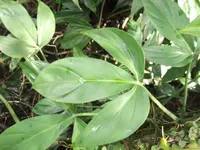
Peace lily, Spathiphyllum wallisii, is a tropical evergreen houseplant grown mainly for its glossy foliage and elegant white flower-like spathes. It forms dense clumps of arching leaves that create a compact, upright habit suitable for indoor spaces.

In the wild it grows on the forest floor of Central and South America, where it receives filtered light and consistently moist, humus-rich soil. This background explains its preference for stable indoor conditions and moderate light.

The plant is considered relatively easy to grow, as it tolerates lower light better than many flowering houseplants and communicates thirst with mild leaf droop. Understanding how to care for Peace Lily largely comes down to providing even moisture and avoiding harsh direct sun.

Main Plant Requirements

Care Difficulty

Easy Care

Light Preference

Bright Indirect Light

Water Requirements

Keep Soil Moist

Temperature Preference

Tropical / Frost Sensitive

Hardiness Zone

11–12

Soil Texture

Loamy, Peaty, Organic-rich

Soil pH

Acidic (5.5–6.5), Slightly acidic (6.5–7.0)

Soil Drainage

Moist but well-drained

Fertilization

Light (every 4–6 weeks)

Get Personalized Care Plan

Scan your plant to receive care tips personalized for your specific plant

Personalized Care in the App

Available on iOS and Android

How to Care for the Peace Lily

This shade-tolerant aroid prefers bright but softened light to maintain healthy leaves and flowering.

  • Provide bright, filtered light or dappled shade; an east-facing window or 2–3 hours of weak morning sun suits a Peace Lily well.
  • Aim for 6–10 hours of indirect daylight; strong midday or afternoon sun can scorch leaves, causing pale patches and dry brown edges.
  • In winter, move the plant closer to bright windows or use sheer curtains instead of blinds to compensate for shorter, weaker light.

This species prefers evenly moist but not saturated soil to support steady growth and flowering.

  • Water when the top 2–3 cm of soil feels dry, using enough water to fully moisten the root zone, then let excess drain away.
  • Reduce frequency in winter when growth slows, but avoid letting the entire root ball dry; slight leaf droop signals the need to water Spathiphyllum wallisii.
  • Watch for yellowing, limp leaves and a sour smell as signs of overwatering, and crisp brown edges or curling as signs of underwatering.

Stable, warm conditions support consistent growth and reduce stress for this tropical plant.

  • Maintain day temperatures around 68–80Β°F (20–27Β°C) for best growth, with only slight drops at night.
  • Avoid exposing the plant to temperatures below 55Β°F (13Β°C); brief dips to 50Β°F (10Β°C) can stunt growth and damage leaves.
  • Protect from cold drafts, heater blasts, and hot, dry air; in summer, shelter from heat above 86Β°F (30Β°C) with shade and increased humidity.

This species prefers moderately high humidity to maintain healthy foliage and flower production.

  • Aim for 50–70% humidity; it will survive brief dips lower but leaf tips may brown in very dry rooms.
  • Dry indoor air causes brown, crispy margins, drooping leaves, and slower growth on Peace Lily.
  • Increase humidity with a nearby humidifier, grouped plants, or a wide pebble tray, rather than misting alone.

Spathiphyllum wallisii prefers loose, moisture-retentive but well-aerated potting media.

  • Use a peat- or coco-based houseplant mix amended with 20–30% perlite and a small amount of fine bark for structure and airflow.
  • Target a slightly acidic pH around 6.0–6.5, which supports nutrient availability and reduces leaf chlorosis risk.
  • Ensure fast drainage so water flows freely from the pot base, preventing waterlogging and root rot in the dense root system.
  • Avoid dense garden soil, pure compost, or mixes heavy in clay that compact, stay saturated, and exclude oxygen from roots.

This species is well-suited to container culture for indoor or sheltered patio use.

  • Choose a pot just 2–5 cm wider than the root mass to keep the mix drying at a steady, predictable rate between waterings.
  • Select a slightly heavier container material, such as ceramic, to stabilize the leafy canopy and reduce tipping risk.
  • Use a saucer that can be emptied quickly so roots do not sit in standing water after deep, thorough irrigation.

Spathiphyllum wallisii benefits from modest, consistent feeding during its active growing period.

  • Use a balanced water-soluble fertilizer, such as 10-10-10 or 20-20-20, diluted to 1/4–1/2 strength.
  • Apply every 4–6 weeks in spring and summer, on already moist soil to reduce root burn risk.
  • In autumn and winter, reduce feeding to 1 light application every 8–10 weeks or stop if growth is very slow.
  • Slow-release granules or a thin layer of fine compost can be used instead of frequent liquid feedings for low-maintenance Peace Lily indoor care.

Pruning Spathiphyllum wallisii focuses on hygiene and maintaining a neat, compact shape rather than size control.

  • Best time is during active growth in spring or early summer, though dead material can be removed year-round.
  • Cut spent flower stalks at the base once the spathes yellow or brown to encourage new blooms.
  • Remove yellowing, torn, or pest-damaged leaves at the base to reduce disease risk and improve appearance.
  • Use sharp, clean scissors or hand pruners, disinfected with alcohol, to make smooth cuts and limit tissue damage.

Repotting keeps Spathiphyllum wallisii healthy and supports ongoing leaf and flower production.

  • Check for roots circling the pot, pushing out of drainage holes, or slow growth despite good care as main signs it needs a larger container.
  • Plan to repot every 2–3 years in spring, choosing a pot 2–5 cm wider with fresh, free-draining, peat-free indoor mix.
  • Slide the plant out gently, loosen circling roots with fingers, and trim only rotten or mushy roots with sterile scissors.
  • After repotting, water thoroughly, keep in bright, indirect light, and maintain steady warmth to reduce transplant shock.

Spathiphyllum wallisii is most reliably propagated by division rather than by seed or leaf cuttings.

  • Divide mature clumps in spring when active growth starts and day length increases.
  • Remove the plant from its pot, gently tease apart the root ball, and separate natural offsets with at least 2–3 leaves and a healthy root section each.
  • Plant divisions in small pots with fresh, well-aerated mix, and water thoroughly to settle roots.
  • Maintain high humidity, steady warmth around 70–75Β°F, and bright, indirect light to support quick establishment of new divisions.

This tropical species has no frost tolerance and needs warm, stable indoor conditions in winter.

  • Keep indoor temperatures around 65–75Β°F and avoid exposure below 55Β°F, including drafts from doors or windows.
  • Move container plants well inside, away from cold glass and unheated rooms, before outdoor temperatures drop in autumn.
  • Increase humidity with trays of water and pebbles or a humidifier if heating systems dry the air below 30–40%.
  • Reduce watering slightly, allowing the top 2–3 cm of mix to dry before rewatering, and pause most feeding until spring.

Care Tips

Regular root checks

Slide the plant gently out of its pot every 6–12 months to check for tight root circling, and move it up one pot size if you see dense white roots wrapping the root ball or pushing against the pot walls.

Controlled leaf washing

Wipe leaves with a damp, soft cloth every 2–4 weeks instead of frequent showers, which keeps stomata clear for gas exchange while avoiding constant wetting of the potting mix and crown.

Targeted flower grooming

Cut spent flowering stalks back to the base with clean pruners rather than only removing the white spathe, which discourages energy waste on old blooms and supports stronger future flowering when growing Peace Lily.

Preventive pest scouting

Inspect the undersides of leaves, midribs, and petiole bases every 1–2 weeks, and at the first sign of pests isolate the plant and treat with insecticidal soap or horticultural oil according to label directions.

Stable placement strategy

Keep the plant in a consistent location away from heater vents, frequently opened exterior doors, and oscillating fans to reduce stress from drafts and rapid humidity or temperature shifts that can suppress flowering and new growth.

Common Pests and Diseases

Mealybugs

This pest appears as small white cottony clusters on leaf undersides, midribs, and at leaf bases, often causing yellowing and distorted growth.

Solution

Isolate the plant, then dab visible insects with cotton swabs dipped in 70% isopropyl alcohol and wipe leaf surfaces thoroughly; repeat weekly until no new insects appear and improve plant vigor with stable light, watering, and fertilizer to reduce reinfestation risk.

Spider mites

These insects create fine webbing between leaves and stems, leading to pale stippling, dull foliage, and eventual leaf drop, especially in warm, dry rooms.

Solution

Rinse foliage under a gentle shower or sink spray, focusing on leaf undersides, then increase humidity to 50–60% and use an insecticidal soap or horticultural oil spray every 7–10 days until new growth appears clean.

Fungus gnat larvae

This pest develops in consistently wet potting mix, where larvae feed on fine roots and can stunt growth, while small black adults hover near the soil surface.

Solution

Allow the top 2–3 cm of soil to dry between waterings, use yellow sticky traps to catch adults, and, if needed, apply a biological control such as Bacillus thuringiensis israelensis (BTI) or replace the top layer of potting mix to lower larval numbers.

Bacterial leaf spot

This disease causes water-soaked translucent spots that turn brown with yellow halos, often starting on lower or crowded leaves and spreading in humid, low-airflow conditions.

Solution

Remove and discard affected leaves, avoid overhead watering, keep foliage dry, space the plant for better air movement, and sterilize scissors between cuts; in severe or recurring cases, discard heavily infected plants to protect nearby specimens.

Cylindrocladium root and crown rot

This disease leads to sudden wilting, blackened roots, and rotting at the crown when soil remains wet and poorly aerated for long periods, a known issue in commercial growing Peace Lily conditions.

Solution

Discard severely affected plants, as recovery is unlikely; for mild, early cases, trim off soft black roots, repot into a fresh, well-draining mix, reduce watering frequency, and ensure the pot has unobstructed drainage holes to prevent standing water.

Interesting Facts

Compact rainforest understory

This species is naturally a small understory herb from lowland tropical rainforests of Colombia and surrounding regions, where it grows on shaded, humid forest floors rather than on trees or rocks.

True flower structure

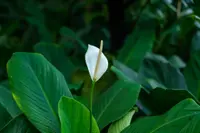
The white β€œflower” is actually a leaf-like spathe surrounding a spadix covered in many tiny, densely packed true flowers, a typical inflorescence form in the arum family Araceae.

Long domestication history

Spathiphyllum wallisii was introduced into European cultivation in the 19th century and has since been used as a parent species in many modern peace lily hybrids selected for compact size and reliable indoor flowering.

FAQs about Peace Lily

Lack of blooms usually comes from insufficient light, an oversized pot, or excess nitrogen fertilizer. Provide bright, indirect light, avoid frequent repotting into large containers, and use a balanced or slightly phosphorus-leaning fertilizer to support flowering.

Grow Healthy Plants with Botan Care

Keep your plants happy and healthy with plant identification, disease detection, and easy care guidance.

Botan plant care app β€” identify plants on mobile

Explore More Plants