


Rotate multi-stem clumps
Rotate the container 90° every 2–3 weeks so all canes receive similar light, which keeps growth upright and prevents the clump from leaning or becoming one-sided.

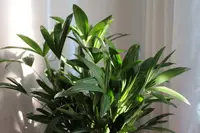
Lady palm, Rhapis excelsa, is a compact, clumping palm grown mainly as an indoor foliage plant. It forms dense clusters of slender canes topped with fan-shaped, glossy green leaves.
In nature it is thought to originate from subtropical woodlands in southern China and surrounding regions, where it grows in shaded, sheltered locations. Its slow growth and tolerance of low to medium indoor light make it suitable for homes and offices.
This species is relatively forgiving if extremes are avoided, so it suits beginners who want to learn how to care for Lady Palm. It prefers stable indoor temperatures, moderate moisture, and a free-draining potting mix.

Care Difficulty
Easy Care

Light Preference
Bright Indirect Light

Water Requirements
Moderate Water

Temperature Preference
Warm Climate

Hardiness Zone
9–11

Soil Texture
Loamy, Peaty, Organic-rich

Soil pH
Acidic (5.5–6.5), Slightly acidic (6.5–7.0)

Soil Drainage
Moist but well-drained

Fertilization
Light (every 4–6 weeks)
Scan your plant to receive care tips personalized for your specific plant
Available on iOS and Android
This palm thrives in bright, indirect light and adapts well to low to medium light levels.
Rhapis excelsa prefers evenly moist, well-drained soil and does not tolerate sitting in water.
This palm grows best in mild, stable temperatures without sudden cold drafts or extreme heat.
This palm prefers moderate humidity but adapts to typical indoor levels if not extremely dry.
Rhapis excelsa grows best in a loose, airy, organic-rich mix that drains freely yet holds some moisture.
This species is very suitable for container growing due to its clumping, shallow-rooted habit.
Balanced, light feeding supports steady growth in Lady Palm without overwhelming its slow root system.
Pruning Rhapis excelsa focuses on hygiene and light shaping rather than size control.
Repotting is infrequent, as this palm tolerates some root crowding and grows slowly in containers.
Propagation of Rhapis excelsa is usually done by division rather than seed in home settings.
This palm tolerates cool conditions but needs protection from hard freezes, especially in containers.

Plant Health Check
Not sure what's wrong with your plant? Check your plant's health inside the app.
Although widely cultivated in China and Japan for centuries, this species is thought to be native to southern China, but its exact wild origin is unclear because it has been grown and moved by people for so long.
This palm forms dense suckering clumps from underground stems, creating multi-stemmed fans that can be divided and propagated as separate plants.
It produces small, pale yellow to cream flowers on short branched stalks, but in indoor conditions flowering is relatively rare and usually seen only on older, well-established specimens.

Lady palm was historically used in East Asia as an elite house and courtyard plant, particularly in Japan and China, where carefully selected forms were grown and passed down as status symbols among nobility and wealthy families.
Brown tips usually come from low humidity, excess fertilizer salts, or inconsistent watering. Hard tap water with high minerals can also scorch margins. Trim damaged tips, leach the potting mix occasionally, and use softer water when possible.
Keep your plants happy and healthy with plant identification, disease detection, and easy care guidance.

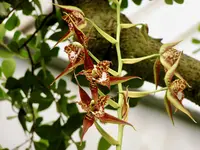
Rhynchostele cordata
Rhynchostele cordata
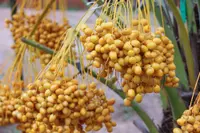
date palm
Phoenix dactylifera
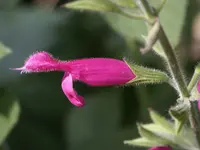
Fruit-scented Sage
Salvia dorisiana
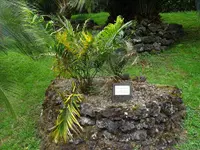
Pineapple Zamia
Macrozamia lucida
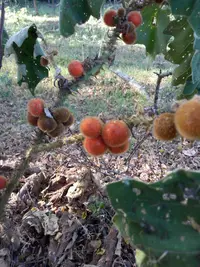
fuzzyfruit nightshade
Solanum candidum

Chambeyronia oliviformis
Chambeyronia oliviformis

Alexandra palm
Archontophoenix alexandrae
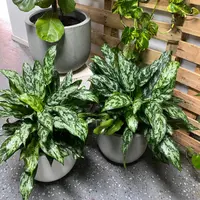
Chinese Evergreen
Aglaonema 'Emerald Beauty'