


Rotate pot regularly
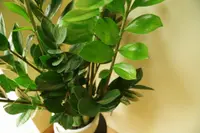
Turn the pot 90° every 1–2 weeks so the foliage receives even light from all sides, which keeps the clump balanced and prevents the leaves from leaning or twisting toward one direction.

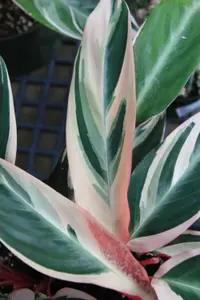
Stromanthe thalia is a tropical, rhizome-forming perennial grown mainly for its striking foliage rather than flowers. It belongs to the prayer plant group, with leaves that subtly move in response to light changes. Leaves are typically elongated, patterned, and held on slender stems that create a dense, low clump, making it suitable as an indoor foliage plant. In nature, it occurs in warm, humid understories of Central and South American forests. Its need for stable warmth, high humidity, and consistently moist but not waterlogged soil makes it moderately demanding for beginners. Understanding how to care for Stromanthe thalia helps prevent common problems such as leaf browning and poor growth.

Care Difficulty
Hard Care

Light Preference
Bright Indirect Light

Water Requirements
Keep Soil Moist

Temperature Preference
Tropical / Frost Sensitive

Hardiness Zone
10–12

Soil Texture
Loamy, Peaty, Organic-rich

Soil pH
Acidic (5.5–6.5)

Soil Drainage
Moist but well-drained

Fertilization
Light (every 4–6 weeks)
Scan your plant to receive care tips personalized for your specific plant
Available on iOS and Android
This plant prefers bright, indirect light that mimics a dappled forest understory.
This species prefers consistently moist but never waterlogged soil.
This plant grows best in warm, stable temperatures without sudden drafts.
This species needs consistently high humidity to maintain healthy foliage and stable growth.
This plant prefers a loose, airy, organic-rich mix that drains quickly yet holds even moisture.
This species grows very well in containers when moisture and stability are managed carefully.
Nutrient support improves foliage color and steady growth in Stromanthe thalia.
Pruning focuses on removing damaged foliage and keeping the clump tidy without heavy shaping.
Container-grown plants benefit from periodic repotting to maintain root health and stable moisture.
Division is the most reliable method for increasing Stromanthe thalia plants.
Indoor plants need warm, stable conditions and careful watering during winter.

Plant Health Check
Not sure what's wrong with your plant? Check your plant's health inside the app.
This species is native to the shaded understory of Brazil’s Atlantic forest, where it grows in warm, humid, low-light conditions beneath taller vegetation.
Its leaves change orientation between day and night through a joint-like structure called a pulvinus, allowing the leaf blades to track light and then fold more upright after dark.
The striking cream and green patterns on the leaves are caused by uneven distribution of chlorophyll and other pigments in different tissue layers, which alters how light is absorbed and reflected.

Stromanthe thalia and its colorful cultivar forms are widely used in tropical landscape design and interior displays because the combination of patterned upper leaf surfaces and deep red undersides provides strong visual contrast even in relatively dim environments.
Brown, crispy leaf edges usually result from low humidity, excess fertilizer salts, or fluoride/chlorine in tap water. Increase humidity, leach the potting mix with plain water occasionally, and use filtered or rested tap water to reduce stress.
Keep your plants happy and healthy with plant identification, disease detection, and easy care guidance.

 POPULAR
Moses-in-the-cradle
Tradescantia spathacea
Dumbcane
Dieffenbachia 'Sterling'
smooth joyweed
Alternanthera paronychioides
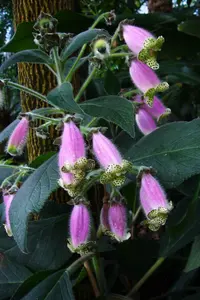
Kohleria warszewiczii
Kohleria warszewiczii
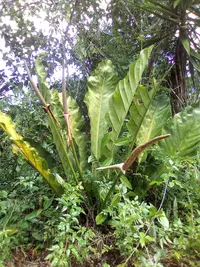
pheasants tail
Anthurium schlechtendalii
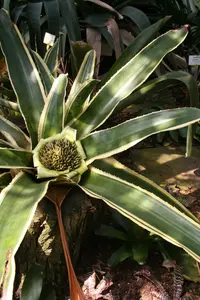
Hohenbergia augusta
Hohenbergia augusta
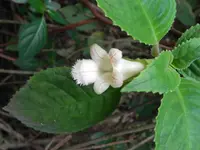
Drymonia serrulata
Drymonia serrulata
 POPULAR
ZZ Plant
Zamioculcas zamiifolia