Monstera pinnatipartita Care

About Monstera pinnatipartita

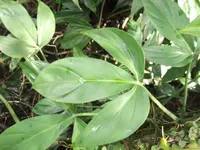
Monstera pinnatipartita is a tropical climbing aroid valued for its dramatic leaf transformation as it matures. Young leaves are oval and simple, while older leaves develop deep, ladder-like splits along a supporting pole or tree.

This species comes from humid forests of Central and South America, where it grows as an understory vine in dappled light. In homes, it is usually grown as an ornamental foliage plant with a compact footprint but strong vertical growth.

Its firm leaves, moderate growth rate, and tolerance of typical indoor humidity make it manageable for many plant owners. Providing bright, filtered light, evenly moist but well-drained soil, and a sturdy support makes it easier to care for Monstera pinnatipartita.

Main Plant Requirements

Care Difficulty

Moderate Care

Light Preference

Bright Indirect Light

Water Requirements

Moderate Water

Temperature Preference

Tropical / Frost Sensitive

Hardiness Zone

11–12

Soil Texture

Loamy, Peaty, Organic-rich

Soil pH

Acidic (5.5–6.5), Slightly acidic (6.5–7.0)

Soil Drainage

Moist but well-drained

Fertilization

Light (every 4–6 weeks)

Get Personalized Care Plan

Scan your plant to receive care tips personalized for your specific plant

Personalized Care in the App

Available on iOS and Android

How to Care for the Monstera pinnatipartita

This species prefers bright, indirect light that mimics a forest understory.

  • Provide 6–8 hours of filtered light daily, such as near an east- or north-facing window or under light shade outdoors, to support steady leaf and fenestration development in Monstera pinnatipartita.
  • Tolerates partial shade (3–4 hours of dappled light), but very low light leads to slow growth, smaller leaves, and stretched stems over time.
  • Avoid harsh midday or afternoon sun; use sheer curtains or dappled shade to prevent leaf scorch, especially in summer or in locations with strong sun.

Watering should keep the root zone slightly moist but never waterlogged.

  • Water when the top 3–5 cm of soil feels dry, using enough water to moisten the whole root area, then allow excess to drain freely from the pot or planting site.
  • In spring and summer, expect more frequent watering as growth and evaporation increase; in fall and winter, extend the interval once growth slows and soil dries more slowly.
  • Watch for yellowing, soft leaves and a musty smell as signs of overwatering, and crisp brown edges or drooping, thin leaves as signs of underwatering; adjust volume and timing accordingly.

Stable, warm temperatures support healthy growth and root function.

  • Aim for 65–80°F (18–27°C) for active growth, as this range supports photosynthesis and new leaf production.
  • Avoid exposing the plant to temperatures below 55°F (13°C); brief drops may be tolerated, but frost will damage foliage and can kill tissues near the soil line.
  • In hot periods above 85°F (29°C), increase airflow and shade to reduce heat stress, and protect from sudden cold drafts near doors, windows, or outdoor night chills.

This species prefers moderately high humidity and reacts quickly to very dry air.

  • Aim for 50–70% humidity to keep leaves expanding fully and fenestrations developing well.
  • Crisping tips, curling edges, and stalled new leaves indicate humidity stress or prolonged dry air exposure.
  • Increase humidity with grouped plants, a nearby humidifier, or a pebble tray, but still provide strong air circulation to prevent leaf disease.

This aroid prefers loose, airy, organic-rich soil that drains quickly but does not dry out instantly.

  • Use a mix such as 40% peat or coco coir, 30% fine bark, 20% perlite, and 10% compost to balance moisture and structure for Monstera pinnatipartita.
  • Aim for slightly acidic to neutral pH, around 6.0–7.0, which supports nutrient availability and healthy root growth.
  • Include chunky components like bark and coarse perlite to increase aeration so roots receive enough oxygen and resist rot.
  • Avoid dense, heavy garden soil or any mix that compacts, stays wet for days, or smells sour after watering.

This species adapts very well to container growing when the pot supports its climbing, root-forming habit.

  • Choose a wide, heavy container that resists tipping once the plant is trained up a moss pole or board.
  • Select a pot material that matches your watering style, such as terracotta for faster drying or plastic for slower moisture loss.
  • Provide a tall, stable support in the same pot so aerial roots can attach, which improves overall plant stability and leaf development.

This tropical aroid benefits from moderate, consistent feeding during active growth for balanced foliage development.

  • Use a balanced liquid fertilizer (for example 10-10-10 or 20-20-20) diluted to 1/4–1/2 strength for Monstera pinnatipartita.
  • Apply every 4–6 weeks in spring and summer when growth is strongest.
  • Pause or reduce feeding to once in 8–10 weeks during fall and winter, when growth slows.
  • Alternatively, use a light top-dressing of compost or a slow-release fertilizer at the start of the growing season.

Thoughtful pruning keeps Monstera pinnatipartita compact, encourages fuller growth, and removes weak tissue.

  • Best time for structural pruning is late spring to early summer, when the plant is actively growing.
  • Remove yellowing, dead, damaged, or crossing stems at the base to reduce disease risk and crowding.
  • Shorten overly long vines just above a node to encourage branching and a denser shape.
  • Use clean, sharp shears or a knife disinfected with alcohol to limit infection entry points.

Container-grown plants benefit from periodic repotting to refresh substrate and give roots more space.

  • Check for roots circling the pot, growing from drainage holes, or unexplained slow growth as signs a Monstera pinnatipartita needs more room.
  • Repot in spring every 2–3 years into a container 2–5 cm wider, using airy, well-draining aroid mix.
  • Water lightly before repotting, gently loosen circling roots, and trim only damaged sections to limit stress.
  • After repotting, keep in bright, indirect light with slightly reduced watering for 1–2 weeks to help recovery.

This species is commonly propagated from stem cuttings taken from healthy, mature vines.

  • Take 1–2 node stem cuttings in late spring or summer, each with at least one node and a leaf.
  • Root in water or moist, well-draining mix at 70–80°F with high humidity and bright, indirect light.
  • Ensure the node is submerged in water or buried in substrate, as this is where roots form.
  • Once roots reach 5–7 cm, pot into a small container and maintain stable moisture without waterlogging.

Indoor plants need cool-season adjustments, while outdoor specimens in mild climates require frost avoidance.

  • Monstera pinnatipartita is frost sensitive and should be kept above 55°F, ideally 60–75°F in winter.
  • Move container plants indoors before night temperatures drop below 55°F and place in bright, indirect light.
  • Reduce watering, allowing the top 3–5 cm of soil to dry, and avoid fertilizing during low-light months.
  • For plants in very mild climates, use a thick mulch layer around the root zone to moderate soil temperature.

Care Tips

Encourage Upright Climbing

Install a sturdy moss pole or fern root to support the plant and gently tie new vines every 10–15 cm, which encourages larger, more fenestrated leaves and a compact vertical form.

Moisture-Checking Routine

Insert a wooden skewer or chopstick 5–8 cm into the pot and only water when it comes out mostly dry, which reduces the risk of chronic overwatering in dense aroid mixes.

Targeted Leaf Cleaning

Wipe both sides of the leaves monthly with a barely damp microfiber cloth, supporting each leaf with your other hand to avoid tearing while removing dust that interferes with light absorption and pest detection.

Root System Monitoring

Check drainage holes every 2–3 months for circling roots or roots pushing out, which signals it is time to up-pot just 2–5 cm wider to prevent stress and maintain steady growth.

Quarantine And Inspection

When caring for Monstera pinnatipartita in a collection, keep new plants isolated for 2–3 weeks and inspect leaf undersides and petioles with a hand lens to catch mealybugs, thrips, or mites before they spread.

Common Pests and Diseases

Spider mites

This pest often appears on Monstera pinnatipartita grown in dry indoor air, causing tiny yellow speckling on leaves and fine webbing along veins and petioles. Symptoms include dull, dusty-looking foliage that may gradually lose vigor.

Solution

Rinse both sides of leaves under a gentle shower or tap to remove mites, then wipe with a soft cloth and increase humidity to above 50%. For persistent infestations, apply insecticidal soap or a ready-to-use miticide to all leaf surfaces every 7–10 days until new growth appears clean and unmarked.

Thrips

These insects scrape and suck sap from young Monstera foliage, leaving silvery streaks, distorted new leaves, and black specks of frass on the undersides. Symptoms include slower growth and bleached-looking patches along leaf edges or between veins.

Solution

Remove heavily damaged leaves, then thoroughly inspect and rinse foliage, especially along midribs and petioles. Use sticky traps to monitor adults and treat all plant surfaces with insecticidal soap or a neem oil solution in repeated applications, keeping the plant slightly isolated from others while new growth recovers.

Mealybugs

This pest hides in Monstera leaf axils, aerial root nodes, and along stems, forming white cottony clusters that excrete sticky honeydew. Symptoms include stunted growth, yellowing leaves, and sooty mold growth on the sticky residue.

Solution

Dab visible clusters with cotton swabs dipped in isopropyl alcohol (70%) and wipe down affected areas, including crevices around aerial roots. Follow with a full-plant treatment using insecticidal soap or a systemic houseplant insect control product, repeating every 2 weeks until no new clusters or sticky residue appear.

Bacterial leaf spot

This disease produces water-soaked, translucent spots on Monstera leaves that later turn brown with yellow halos and may coalesce along the margins. Symptoms include rapid spread in warm, humid conditions and lesions that feel soft or slightly greasy early on.

Solution

Remove and discard affected leaves, sterilizing scissors between cuts with alcohol, and avoid wetting foliage when watering. Improve air circulation around the plant, reduce leaf crowding, and if needed use a copper-based bactericide labeled for houseplants, applied according to label directions while monitoring new growth for clean, unspotted leaves.

Fungal leaf blight

This disease favors dense, climbing Monstera specimens in low airflow, causing irregular tan to dark-brown lesions that start at leaf edges or tips and can progress inward. Symptoms include dry, papery patches, sometimes with darker borders or concentric rings, and premature leaf drop on affected vines.

Solution

Prune out and discard all severely affected leaves and thin congested vines to create better airflow along the trellis or support. Allow the top of the potting mix to dry slightly more between waterings, avoid overhead watering, and if the problem continues apply a broad-spectrum fungicide suitable for indoor foliage plants, treating both upper and lower leaf surfaces while monitoring new leaves for clean, uniform color as part of general Monstera pinnatipartita care instructions.

Interesting Facts

Climbing leaf transformation

This species shows a strong juvenile-to-adult transformation: young plants have small, entire, oval leaves that only develop deep, ladder-like splits and a thicker texture once the vine finds a support and starts to climb.

Highly shingling habit

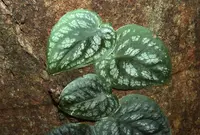
In very low light and tight spaces in the wild, its juvenile leaves can press flat against tree trunks in a pattern called shingling, which helps the plant maximize light capture while it searches for better exposure higher in the canopy.

Distinct from look-alikes

Although often confused with Monstera peru and some Epipremnum species in cultivation, it can be distinguished in adulthood by its elongated, pinnately split leaves that stay solid (not hole-punched) and by its more pronounced, parallel leaf veins.

Botan icon

Did you know?

In its native habitats of western South America, this species is a hemiepiphyte, meaning it can start life either rooted in the ground or on another plant, later shifting its main root system and growth pattern as it ascends toward brighter forest canopy light.

FAQs about Monstera pinnatipartita

Growth is moderately fast in warm, stable indoor conditions. Expect roughly 15–30 cm of new stem per year, more in ideal greenhouse conditions. Consistent moisture, adequate nutrients, and a support to climb noticeably improve growth rate when growing Monstera pinnatipartita.

Grow Healthy Plants with Botan Care

Keep your plants happy and healthy with plant identification, disease detection, and easy care guidance.

Botan plant care app — identify plants on mobile

Explore More Plants