


Rotate For Symmetry
Turn the pot 90° every 2–3 weeks so the plant does not lean toward one light source and develops an even, upright form.

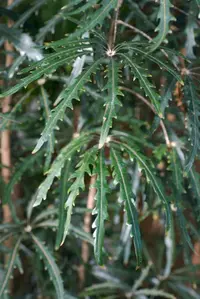
False aralia (Plerandra elegantissima), also sold as Dizygotheca elegantissima, is an evergreen shrub grown indoors for its finely divided, glossy, dark green leaves. The narrow, finger-like leaflets create a delicate, lacy look that suits modern, minimal interiors.
In nature, this species occurs in New Caledonia, where it grows as an understory shrub in warm, humid forests. Indoors it tends to stay slim and upright, making it suitable for small spaces.
This plant is somewhat sensitive to cold drafts, low humidity, and inconsistent watering, so it is not the easiest option for beginners. It prefers bright, filtered light, evenly moist but not soggy soil, and stable indoor conditions, so learning how to care for False Aralia improves long-term success.

Care Difficulty
Moderate Care

Light Preference
Bright Indirect Light

Water Requirements
Moderate Water

Temperature Preference
Tropical / Frost Sensitive

Hardiness Zone
11–12

Soil Texture
Loamy, Peaty, Organic-rich

Soil pH
Acidic (5.5–6.5), Slightly acidic (6.5–7.0)

Soil Drainage
Moist but well-drained

Fertilization
Light (every 4–6 weeks)
Scan your plant to receive care tips personalized for your specific plant
Available on iOS and Android
This species prefers bright, filtered light that mimics a forest understory environment.
Watering should keep the root zone lightly moist but never saturated for this fine-rooted shrub.
This plant prefers stable, warm conditions with no sudden temperature swings or drafts.
This species prefers moderate to high humidity and reacts quickly to very dry air.
This plant prefers a loose, airy substrate that drains quickly yet retains steady moisture.
This species is well suited to container growing due to its upright, relatively slow root expansion.
Plerandra elegantissima benefits from light, consistent feeding during active growth in spring and summer.
Pruning Plerandra elegantissima helps maintain a balanced shape and encourages fuller, bushier growth.
This plant adapts well to containers but prefers thoughtful repotting to avoid root disturbance shock.
Plerandra elegantissima is most commonly propagated from semi-ripe stem cuttings under warm, stable conditions.
This species is frost-sensitive and needs mild, stable conditions through winter, especially in container culture.

Plant Health Check
Not sure what's wrong with your plant? Check your plant's health inside the app.
The narrow, finger-like leaflets of Plerandra elegantissima are actually deeply divided simple leaves, not true compound leaves, giving the foliage its finely textured, lace-like appearance as the plant matures.
This species shows strong leaf heteroblasty, meaning juvenile plants have broader, less divided leaves that gradually become much narrower and more dissected as the plant ages.
Plerandra elegantissima is native to the rainforests of New Caledonia in the southwest Pacific, where it grows as an understory tree in warm, humid, shaded habitats.
Brown leaf edges usually come from low humidity, underwatering, or excess fertilizer salts. Improve room humidity, water thoroughly but less often, and flush the potting mix occasionally. Keep it away from heating vents and cold drafts.
Keep your plants happy and healthy with plant identification, disease detection, and easy care guidance.


Arrowhead Vine
Syngonium podophyllum 'Neon'
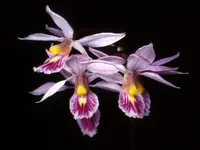
Barkeria shoemakeri
Barkeria shoemakeri
 POPULAR
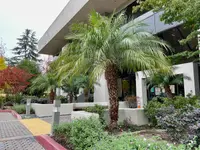
Pygmy Date Palm
Phoenix roebelenii
Arrowhead Plant
Syngonium podophyllum 'Pink Allusion'
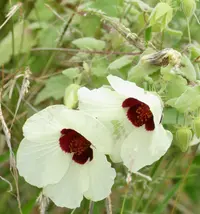
tropical rose mallow
Hibiscus vitifolius
mango tree
Mangifera indica
scrub cherry
Syzygium australe
Rodriguezia bracteata
Rodriguezia bracteata