Avoid Leaf Wetting
Keep water off the leaves when watering, as moisture sitting on foliage encourages spotting or fungal problems.

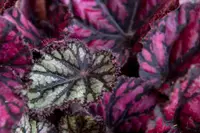
This is a foliage houseplant prized for its striking leaves. It forms compact clumps of large, asymmetrical foliage decorated with swirls of silver, green, purple, and deep red.
Naturally, this plant is native to the humid forest regions of northeastern India. Thus, it grows on shaded forest floors where warmth and moisture are consistent. Indoors, it keeps the same preference for soft light and humid conditions. The main challenge in caring for the king begonia lies in its sensitivity to excess water and dry air. This article will guide you through all aspects of caring for the plant to keep it healthy and happy.

Care Difficulty
Moderate Care

Light Preference
Bright Indirect Light

Water Requirements
Keep Soil Moist

Temperature Preference
Tropical / Frost Sensitive

Hardiness Zone
10–12

Soil Texture
Loamy, Organic-rich

Soil pH
Acidic (5.5–6.5), Slightly acidic (6.5–7.0)

Soil Drainage
Moist but well-drained

Fertilization
Light (every 4–6 weeks)
Scan your plant to receive care tips personalized for your specific plant
Available on iOS and Android
Begonia rex prefers bright conditions without direct sunlight to maintain healthy foliage, as it does in nature.
Note: When plants receive too little light in winter, they often enter dormancy.
Here, you should keep a balance: this species requires moist soil but is sensitive to excess water. Water every 5-7 days during a period of growth. Let the excess water drain fully and watch for yellowing leaves or soft stems as signs of overwatering. At the same time, dry edges indicate the houseplant is not receiving enough water.
Many tropical plants share a love of warmth, and Begonia rex is no exception.
That’s one of the most important aspects when growing king begonia, as it is sensitive to a lack of water and dry air conditions. Try to keep 50-70% humidity, as dry air can cause leaf edges to brown or curl. Next, avoid placing near heaters or drafts that reduce humidity and stress the plant.
Tip: Boost humidity by placing the pot on a shallow tray with damp gravel, clay pebbles, or lightweight aggregate. Make sure the water sits just below the top of the material, not touching the base of the container.
Begonia rex prefers light, airy soil that retains moisture without becoming soggy. As this plant is a bit capricious, make sure you meet its preferences:
Tip: You can make a suitable potting mix for outdoor begonias by combining equal parts coco coir-based planter mix, leaf mold-preferably oak, small orchid bark sized about 1/8 to 1/4 inch, and №2 or coarser perlite.
All begonias grow well in pots, so you can use them with ease. Choose shallow containers with holes so they do not collect water. Choose a shallow pot with drainage holes. Unglazed ceramic can help excess moisture evaporate more easily. The best pot size is about 4-6 inches (10-15 cm) in diameter, on average.
It benefits from light feeding to support steady leaf growth, but overfertilizing can lead to leaf drop. Apply a half-strength, water-soluble fertilizer every 4-6 weeks from February through October. Stop feeding during the colder months, when growth naturally slows, and resume in late winter or February as active growth returns.
You don't need to prune the houseplant often, but sometimes, it is good to keep a compact shape and healthy foliage, best done during active growth in spring and summer. Just trim yellowing, damaged, or wilted leaves and remove overcrowded foliage to improve airflow and minimize the risk of fungal issues.
Repotting is typically needed for container-grown specimens. At the same time, transplanting is less common. Repot your Begonia rex every 1-2 years in spring when roots begin circling. Gently loosen roots and keep the root ball intact to reduce stress during the process.
This process is usually done using leaf cuttings or rhizome division under controlled conditions.
All tropical species, including Begonia rex, are frost sensitive, so keep warmth even in cold seasons. Try to support temperatures above 60°F (16°C) to prevent stress, and keep humidity to prevent leaf edges from drying out in heated indoor air.
This species often enters a natural resting phase during winter, especially in cooler climates like the New York region. As fall progresses, Begonia rex may gradually lose leaves and appear weak or drooping, which is a normal part of dormancy. During this period, reduce watering and remove any fallen foliage to keep the plant clean.
If leaf loss becomes complete, place the king begonia in a cooler, low-light area around 60°F (16°C) until new growth begins in late winter or early spring. Keep the soil slightly moist and avoid excess moisture while the roots remain inactive.

Plant Health Check
Not sure what's wrong with your plant? Check your plant's health inside the app.
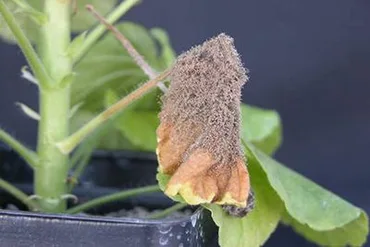
This disease causes soft, gray mold on leaves and stems. It often damages Begonia rex in cool, damp environments.
Solution
Trim infected areas promptly and discard them. Increase ventilation, reduce excess moisture, and keep foliage dry to not allow further spread.
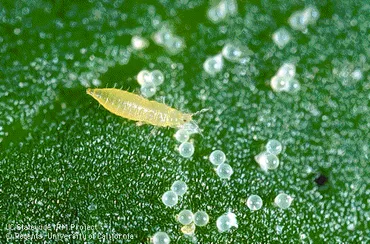
These insects are tiny, slender pests. They feed by piercing leaf tissue and sucking out cell contents, which leads to silvery streaks, fine scarring, and distorted or deformed new growth.
Solution
Isolate your king begonia immediately and remove heavily damaged leaves to reduce the population. Rinse the foliage thoroughly, especially the undersides.
Repeat the treatment every 2-3 days and keep the humidity at a constant level.
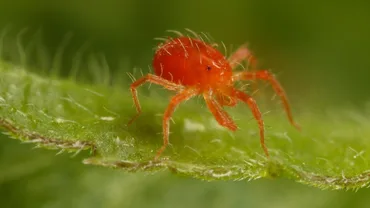
These pests are extremely small and often go unnoticed until damage becomes visible, appearing as tiny yellow or pale speckles across the leaves along with fine webbing.
Solution
Rinse Begonia rex thoroughly with water; focus on the undersides of leaves where mites gather.
Repeat this every 2-3 days to break their life cycle, and wipe leaves if needed.
New plants can grow from a single leaf or even a leaf section. Veins can even produce roots and shoots under the right conditions.
The name “rex” means “king” in Latin, reflecting the plant’s status as one of the most striking ornamental foliage species.
Leaf color can fade due to insufficient light, nutrient imbalance, or seasonal changes. Stable conditions are key when growing Begonia rex for strong pigmentation.
Keep your plants happy and healthy with plant identification, disease detection, and easy care guidance.