Philodendron mayoi Care

About Philodendron mayoi

Philodendron mayoi is a climbing aroid known for its deeply lobed, palm-like leaves and compact, tropical look. It is usually grown as a houseplant on a moss pole or other support.

This species comes from tropical regions of Brazil, where it grows in warm, humid forests with filtered light. Its growth is usually steady rather than fast, which helps it stay manageable indoors.

The plant adapts well to typical indoor conditions, so how to care for Philodendron mayoi is mainly about providing stable warmth, moderate light, and a lightly moist, airy potting mix.

Main Plant Requirements

Care Difficulty

Moderate Care

Light Preference

Bright Indirect Light

Water Requirements

Moderate Water

Temperature Preference

Tropical / Frost Sensitive

Hardiness Zone

10–12

Soil Texture

Loamy, Peaty, Organic-rich

Soil pH

Acidic (5.5–6.5), Slightly acidic (6.5–7.0)

Soil Drainage

Moist but well-drained

Fertilization

Light (every 4–6 weeks)

Get Personalized Care Plan

Scan your plant to receive care tips personalized for your specific plant

Personalized Care in the App

Available on iOS and Android

How to Care for the Philodendron mayoi

This species prefers bright, indirect light that mimics dappled tropical forest conditions.

  • Provide 6–8 hours of bright, filtered light daily, such as near an east- or north-facing window or under light shade outdoors.
  • Tolerates partial shade (around 3–4 hours of indirect light), but growth and leaf size may decrease if kept in low light for long periods.
  • Protect Philodendron mayoi from direct midday or afternoon sun, which can cause leaf scorch, pale patches, and crispy edges, especially in summer.

Watering should aim for moist but never waterlogged soil to protect the roots.

  • Let the top 2–4 cm of soil dry before watering, using a finger test rather than a fixed schedule, since light, pot size, and season change drying time.
  • In spring and summer, expect to water more often as growth and evaporation increase, then reduce frequency in fall and winter when growth slows.
  • Yellowing lower leaves and a sour smell signal overwatering or poor drainage, while limp, curling leaves and very dry soil suggest underwatering or long gaps between waterings.

Consistent warm temperatures support steady growth for this tropical aroid.

  • Aim for 65–80°F (18–27°C) for best growth, avoiding frequent swings of more than 5–10°F (3–6°C) within a short period.
  • Short dips to 55–60°F (13–16°C) are usually tolerated, but growth slows; prolonged exposure below 50°F (10°C) can cause leaf damage and root stress.
  • Protect from frost entirely, and in hot spells above 86°F (30°C), increase shade and airflow to prevent heat stress, wilt, and leaf scorch.

This species prefers moderately high humidity but usually adapts to typical indoor levels.

  • Aim for 50–70% humidity to support steady leaf growth and minimize brown edges.
  • It tolerates short periods of drier air, but persistent levels below 40% often cause crispy tips and slower growth.
  • Increase humidity with a nearby humidifier, grouped plants, or a pebble tray, and avoid misting in stagnant air to reduce leaf disease risk.

This aroid performs best in a loose, airy, organic-rich substrate with fast drainage.

  • Use a mix such as 40% peat or coco coir, 30% fine bark, 20% perlite, and 10% compost to balance moisture and aeration.
  • Structure the soil so roots never sit in water; it should drain in seconds yet feel lightly damp, not compacted, after watering.
  • Aim for slightly acidic to neutral pH around 5.5–7.0, which keeps most nutrients available and reduces leaf yellowing from imbalance.
  • Avoid dense garden soil, heavy clay, or mixes that stay soggy, which promote root rot and limit oxygen reaching Philodendron mayoi roots.

This species is well suited to container growing when the pot supports its vining, somewhat spreading habit.

  • Choose a stable, wider container or add weight to the base so the pot does not tip as stems climb or spread.
  • Select a pot material with moderate moisture retention, such as plastic or glazed ceramic, if indoor air is dry and watering is less frequent.
  • Provide a totem, moss pole, or stake anchored firmly in the pot so new growth directs upward rather than dragging the container sideways.

Consistent but moderate feeding supports healthy foliage and steady growth for this aroid.

  • Use a balanced liquid fertilizer (around 10-10-10 or 20-20-20) diluted to 1/4–1/2 strength for Philodendron mayoi.
  • Feed every 4–6 weeks during the growing season, after thorough watering to reduce root burn risk.
  • Pause or reduce feeding to 1 light application during winter if growth slows significantly.
  • Organic options like worm castings or a mild compost tea can be used sparingly for added micronutrients.

Thoughtful pruning keeps this climbing plant compact, tidy, and encourages new growth points.

  • Plan most pruning for spring or early summer when recovery is fastest.
  • Remove yellowing, dead, diseased, or mechanically damaged leaves at the base of the petiole on Philodendron mayoi.
  • Thin crowded vines to improve airflow and light penetration, guiding the plant into the desired climbing shape.
  • Use clean, sharp scissors or pruners disinfected with alcohol to reduce the risk of infection.

Repotting maintains root health and supports ongoing growth in container-grown plants.

  • Check for roots circling the pot, pushing through drainage holes, or unexplained slow growth as signs Philodendron mayoi needs a larger container.
  • Plan repotting in spring every 2–3 years, or sooner if the root ball becomes very dense.
  • Move into a pot 2–5 cm wider, using fresh, chunky aroid mix, and gently loosen circling roots without tearing.
  • Water lightly after repotting, keep in bright indirect light, and avoid heavy feeding for 3–4 weeks to limit stress.

New plants are most often produced from stem cuttings rather than seeds.

  • Take 1–2 node stem cuttings in late spring or summer from a healthy Philodendron mayoi vine.
  • Ensure each cutting has at least 1 node and preferably an aerial root nub, then remove lower leaves.
  • Root cuttings in water or moist, airy mix at 70–80°F with high humidity and bright indirect light.
  • Once roots reach 3–5 cm, pot into a small container and maintain evenly moist, not waterlogged, substrate.

This species is frost-sensitive and must be kept warm during winter in most climates.

  • Keep Philodendron mayoi above 60°F; prolonged exposure below 50°F can damage foliage and stems.
  • In cold regions, grow in containers and move plants indoors before night temperatures drop in autumn.
  • Indoors, place away from drafts and cold windows, and slightly reduce watering while growth slows.
  • Maintain moderate humidity with a tray of water and pebbles rather than misting heavily in cool rooms.

Care Tips

Provide climbing support

Install a sturdy moss pole or textured stake and gently tie new vines as they extend so the plant can climb and develop larger, more deeply lobed leaves over time.

Rotate for even lobes

Turn the pot 90° every 1–2 weeks so all sides receive similar light exposure, which helps prevent one-sided growth and keeps leaf lobes symmetrical and evenly spaced.

Clean and inspect foliage

Wipe both sides of the leaves every 3–4 weeks with a soft damp cloth to remove dust, then check closely for early signs of pests such as spider mites or scale while you work.

Repot before root binding

Check the root ball once a year for circling or densely packed roots and shift the plant only 1–2 in up in pot size to reduce stress and maintain a stable moisture balance when caring for Philodendron mayoi.

Stabilize tall stems

As vines lengthen, secure them to the support with soft plant ties or garden tape in a loose figure-eight loop to prevent stems from snapping under their own weight or during handling.

Common Pests and Diseases

Spider mites

This pest thrives on Philodendron foliage in warm, dry indoor air and causes tiny pale speckling and dull, dusty-looking leaves. Symptoms include fine webbing on the undersides of leaflets and along petioles, with gradual leaf yellowing and drop if populations build up.

Solution

Rinse leaves thoroughly with a strong, lukewarm shower, focusing on undersides, and repeat every few days for 1–2 weeks. Increase humidity, isolate the plant, and use an insecticidal soap or horticultural oil labeled for mites, applied according to directions and repeated until no new damage appears.

Mealybugs

This pest appears as white, cottony clusters tucked into leaf bases, along stems, and around aerial roots, often where Philodendron mayoi segments and lobes meet. These insects suck sap, causing distorted new growth, sticky honeydew, and sometimes sooty mold on leaves and nearby surfaces.

Solution

Dab visible insects with cotton swabs dipped in isopropyl alcohol 70%, then gently wipe stems and leaf bases to remove residue. Follow with a thorough spray of insecticidal soap or neem oil, repeat weekly until no new clusters form, and inspect any new plants before placing them nearby to limit reinfestation.

Scale insects

This pest presents as small, brown or tan shell-like bumps on stems and leaf midribs, which are easy to miss on the ridged petioles of this species. These insects feed continuously on sap, leading to reduced vigor, yellowing leaves, and sticky honeydew deposits.

Solution

Gently scrape or rub off visible scales with a fingernail or soft cloth, then wash the plant with lukewarm water and mild insecticidal soap. For persistent cases, apply a horticultural oil to thoroughly coat stems and leaf midribs, repeat every 7–10 days, and keep the plant separate from others during treatment.

Bacterial leaf spot

This disease causes water-soaked translucent patches that later turn tan or dark brown, often with a yellow halo around the lesion. Symptoms include rapid spread across lobed leaves, especially where water sits on the foliage and air movement is low.

Solution

Remove and discard all affected leaves, cutting several cm into healthy tissue and sterilizing tools between cuts with alcohol. Improve airflow, avoid wetting leaves, water at the soil level, and if symptoms persist, discard heavily infected plants to prevent spread to other aroids.

Fungal leaf blight

This disease leads to irregular brown or black lesions that can start at leaf edges or tips and quickly merge, causing entire leaf lobes to collapse. Symptoms include rapid deterioration in overly shaded, humid conditions or when foliage stays wet for long periods, which are common mistakes in Philodendron mayoi indoor care.

Solution

Prune out all affected leaves and any soft, blackened tissue, then increase light to bright indirect levels and reduce overhead misting. Allow the top layer of the potting mix to dry slightly between waterings, ensure strong air circulation, and use a fungicide labeled for ornamental foliage plants if new spots continue to appear.

Interesting Facts

Deeply lobed foliage

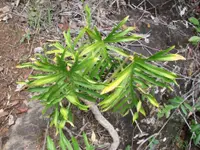
This species develops mature leaves with narrow, deeply cut lobes that can resemble a palm frond, a feature that distinguishes it from many heart-leaved philodendrons.

Climbing growth habit

It is a scandent aroid, meaning it uses aerial roots to climb tree trunks or supports, and its leaf shape becomes more divided as the plant gains height and stability.

Brazilian origin

The species is believed to originate from tropical regions of Brazil, where it grows in warm, humid forests under bright but filtered light conditions.

FAQs about Philodendron mayoi

Brown, crispy edges usually point to low humidity, underwatering, or salt buildup from fertilizer. Check soil moisture, flush the pot occasionally, and raise humidity with a pebble tray or humidifier to stabilize foliage.

Grow Healthy Plants with Botan Care

Keep your plants happy and healthy with plant identification, disease detection, and easy care guidance.

Botan plant care app — identify plants on mobile

Explore More Plants