


Support Early Vines
Install a sturdy trellis or hoop right when new shoots are 10–15 cm long, then gently spiral and tie them with soft ties so the plant develops an even, stable framework that can hold the weight of future flowering growth.

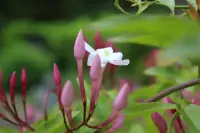
Pink jasmine, Jasminum polyanthum, is a vigorous evergreen vine known for its heavy flushes of scented white flowers from pink buds. It is most often grown on trellises, arches, or in hanging containers, where its long, twining stems can spread and cascade.
In the wild it is native to China and Myanmar, where it grows in mild, frost-free climates. Indoors or in protected outdoor sites, it is considered moderately easy if given bright light, support to climb, and regular moisture in well-drained soil.
Fast growth, strong fragrance, and a brief winter rest period are the main traits that shape how to care for Pink Jasmine.

Care Difficulty
Moderate Care

Light Preference
Partial Sun

Water Requirements
Moderate Water

Temperature Preference
Tropical / Frost Sensitive

Hardiness Zone
9–11

Soil Texture
Sandy, Loamy, Organic-rich

Soil pH
Acidic (5.5–6.5), Slightly acidic (6.5–7.0)

Soil Drainage
Moist but well-drained

Fertilization
Light (every 4–6 weeks)
Scan your plant to receive care tips personalized for your specific plant
Available on iOS and Android
This jasmine prefers bright, gentle sun with some protection from intense midday exposure.
This vine prefers evenly moist, well-drained soil that never stays soggy for long periods.
This jasmine grows best in mild climates without extremes of heat or frost.
This species prefers moderately humid air and may react to prolonged dryness indoors.
This jasmine needs loose, well-aerated, fast-draining soil to maintain healthy roots and flowering.
This species is well suited to container growing and trains easily on supports.
Jasminum polyanthum responds well to moderate feeding during its active growing season.
Pruning helps keep Jasminum polyanthum compact, manageable, and flowering well.
This vine benefits from occasional repotting or transplanting to support vigorous growth.
Jasminum polyanthum is commonly propagated from stem cuttings and simple layering.
This jasmine is frost-sensitive and needs thoughtful winter care in colder climates.

Plant Health Check
Not sure what's wrong with your plant? Check your plant's health inside the app.
The pink flower buds release a strong fragrance even before they open, which is due to high concentrations of volatile aromatic compounds produced at the bud stage.
In many mild-climate regions, this species forms buds in late autumn and flowers in late winter to early spring, responding to cooler temperatures and short day length.
This jasmine is a fast-growing woody vine that climbs by twining its stems around supports, allowing it to quickly cover trellises, fences, and pergolas in suitable climates.

This species, native to southwestern China, has become so widely cultivated for its winter fragrance that it is naturalized and sometimes considered invasive in parts of Australia and New Zealand, where it can escape gardens and smother native vegetation.
Lack of flowers often comes from insufficient winter chill, low light, or heavy feeding with high‑nitrogen fertilizer. Provide bright conditions, a cool, slightly drier winter rest, and use a balanced or bloom‑boosting fertilizer to support bud formation.
Keep your plants happy and healthy with plant identification, disease detection, and easy care guidance.

Singleseed Juniper
Juniperus squamata 'Blue Star'
purple apple-berry
Billardiera longiflora
Guadeloupe peperomia
Peperomia emarginella
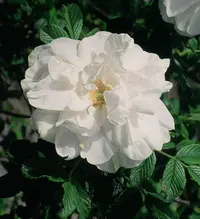
Rose
Rosa 'Blanc Double de Coubert'
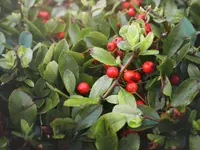
Yerba Maté
Ilex paraguariensis
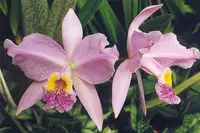
Cattleya lueddemanniana
Cattleya lueddemanniana
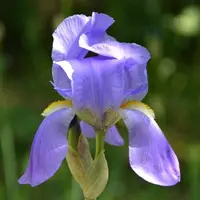
sweet iris
Iris pallida
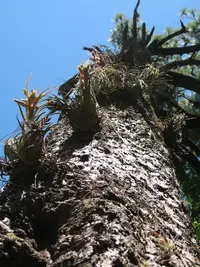
Tillandsia seleriana
Tillandsia seleriana