Optimize pot shape
Use a wide, shallow pot rather than a deep one so the rosette can expand naturally and the shallow root system dries evenly between waterings, which helps prevent basal rot.

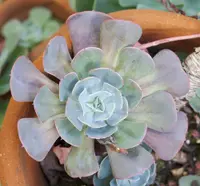
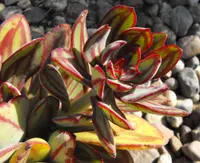
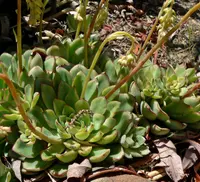
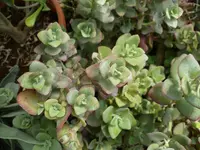
Ghost echeveria, Echeveria lilacina, is a compact rosette-forming succulent from arid regions of northeastern Mexico. It stores water in its thick, spoon-shaped leaves. The leaves are pale silver to lilac-gray with a powdery coating that helps reduce moisture loss and sun stress.
Plants grow slowly and stay low, which makes them suitable for windowsills, containers, and mixed succulent displays. They are generally considered easy for beginners if kept dry, bright, and in fast-draining soil.
Understanding how to care for Ghost Echeveria mainly involves providing plenty of light, avoiding overwatering, and protecting it from prolonged cold or excessive humidity.

Care Difficulty
Easy Care

Light Preference
Full Sun

Water Requirements
Low Water

Temperature Preference
Tropical / Frost Sensitive

Hardiness Zone
9–11

Soil Texture
Sandy, Loamy, Rocky

Soil pH
Slightly acidic (6.5–7.0), Neutral (7.0)

Soil Drainage
Well-drained

Fertilization
Minimal (feed rarely)
Scan your plant to receive care tips personalized for your specific plant
Available on iOS and Android
Echeveria lilacina thrives in bright, direct sun but needs protection from extreme midday intensity.
Echeveria lilacina needs infrequent, deep watering that allows the soil to dry between soakings.
This succulent prefers warm, dry conditions with cool but not freezing nights.
This species prefers relatively dry air and usually stays healthy in 30–50% humidity.
This succulent needs a very fast-draining, mineral-lean substrate to prevent root and crown rot.
This species is very suitable for container growing when drainage and pot size are chosen carefully.
This succulent grows well with light feeding, so focus on modest, targeted nutrition for Echeveria lilacina.
Pruning Echeveria lilacina is minimal and mainly keeps the rosette clean and compact.
Repotting is infrequent but important to maintain healthy roots and a stable rosette.
Propagation of Echeveria lilacina is commonly done from leaves or offsets under warm, bright conditions.
Winter care focuses on keeping Echeveria lilacina dry, cool, and frost free.

Plant Health Check
Not sure what's wrong with your plant? Check your plant's health inside the app.
The leaves are covered in a dense glaucous wax that gives a pale silvery-lilac color and helps reduce water loss and sun damage in its native arid habitat in northeastern Mexico.
This species forms a solitary, symmetrical rosette that enlarges slowly over several years rather than rapidly producing offsets, which is one reason mature specimens are valued in cultivation.
In bright light and cooler, dry conditions, the leaf wax and pigments interact to intensify lilac and pink tones, while in warmer, low-stress conditions the rosette tends toward a more uniform pale gray.

In its native Mexican range, this species often grows on rocky, mineral-poor slopes where its compact roots anchor into shallow crevices, an adaptation that allows it to exploit small pockets of moisture that many other plants cannot use.
Lack of flowering is usually due to insufficient light, very rich fertilization, or absence of a cool, bright winter rest. Moderate nutrients, strong indirect sun, and a slight seasonal temperature drop help trigger blooms and support growing Ghost Echeveria.
Keep your plants happy and healthy with plant identification, disease detection, and easy care guidance.