String of Fishhooks Care (Curio radicans)

Also known as: String-of-Bananas, Baboon Toes, Banana Vine, Creeping Berry, Necklace Plant, String of Fishhooks, string-of-fishhooks

About String of Fishhooks

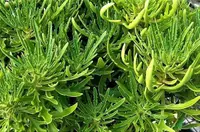
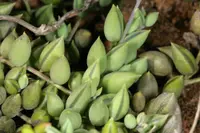
String of fishhooks is a trailing succulent known for its long, cascading stems lined with narrow, curved blue-green leaves that resemble tiny fishhooks. It is often grown in hanging baskets or high shelves where its vines can drape down.

Curio radicans originates from arid regions of South Africa, so it stores water in its fleshy leaves and tolerates short dry periods better than overwatering. These drought-adapted traits make it relatively easy to maintain once its needs are understood.

To care for String of Fishhooks, provide bright light, well-draining soil, and allow the potting mix to dry somewhat between waterings, especially in cooler seasons.

Main Plant Requirements

Care Difficulty

Easy Care

Light Preference

Bright Indirect Light

Water Requirements

Low Water

Temperature Preference

Tropical / Frost Sensitive

Hardiness Zone

10–12

Soil Texture

Sandy, Loamy, Rocky

Soil pH

Acidic (5.5–6.5), Slightly acidic (6.5–7.0)

Soil Drainage

Well-drained

Fertilization

Minimal (feed rarely)

Get Personalized Care Plan

Scan your plant to receive care tips personalized for your specific plant

Personalized Care in the App

Available on iOS and Android

How to Care for the String of Fishhooks

Curio radicans prefers bright, indirect light with some gentle direct sun each day.

  • Provide 4–6 hours of bright, indirect light, such as near an east- or north-facing window or in lightly shaded outdoor spots.
  • Allow soft morning sun but protect from intense midday or afternoon sun, which can scorch leaves and fade the String of Fishhooks color.
  • In winter, move the plant to a brighter position or closer to a window to compensate for shorter days and weaker light.

Curio radicans needs infrequent, thorough watering and fast-draining soil.

  • Water only when the top 3–5 cm of soil feel completely dry, then water deeply so excess drains away.
  • Reduce watering in fall and winter, as growth slows; the soil should stay dry for longer periods without stressing the plant.
  • Watch leaves for signals: firm, plump leaves indicate enough moisture; soft, yellowing, or mushy leaves suggest overwatering and possible root rot.

This succulent prefers warm, dry conditions with protection from frost and extreme heat.

  • Aim for 65–80°F (18–27°C) during active growth, as this range supports steady development and healthy foliage.
  • Protect the plant from temperatures below 40°F (4°C); brief dips may be tolerated, but freezing conditions damage tissues and can kill roots.
  • In hot spells above 90°F (32°C), give light shade, extra airflow, and avoid watering during the hottest part of the day to limit stress.

Curio radicans handles typical indoor humidity well and rarely needs special adjustments.

  • Aim for 30–50% humidity; the plant stays healthiest in this moderate, dry-leaning range.
  • Dry indoor air is usually tolerated, but very hot, forced-air heating can speed leaf shriveling.
  • If leaves wrinkle despite correct watering, increase humidity slightly with a nearby pebble tray or by grouping plants.

Curio radicans prefers a very fast-draining, gritty mix that mimics arid, rocky soils.

  • Use a cactus/succulent base mix amended with extra mineral material such as pumice, perlite, or coarse sand for sharper drainage.
  • Aim for a loose, airy texture that dries quickly between waterings while still holding roots firmly in place.
  • Keep pH slightly acidic to neutral, around 6.0–7.0, which most commercial succulent mixes already provide.
  • Avoid dense, peat-heavy or clay-like mixes that stay wet, since these encourage root rot and stem collapse.

This species is highly suitable for container growing, especially in hanging baskets or high shelves.

  • Choose a shallow but wide container to accommodate its fibrous roots and trailing stems without creating a deep water reservoir.
  • Opt for clay or terra-cotta pots when extra evaporation is needed, as these materials help prevent prolonged moisture around the roots.
  • Ensure drainage holes are unobstructed and elevate the pot slightly so excess water can exit rapidly after each watering.

Curio radicans is a light feeder that benefits from modest nutrition during active growth.

  • Use a balanced liquid fertilizer (for example 10-10-10 or 20-20-20) diluted to 25–50% strength.
  • Feed every 4–6 weeks in spring and summer while vines of String of Fishhooks are actively growing.
  • Skip or greatly reduce feeding in fall and winter when growth slows.
  • Avoid rich compost or heavy slow-release products that keep soil wet or burn roots.

Curio radicans responds well to light pruning that maintains shape and encourages fuller growth.

  • Best time is late winter to early spring, just before new growth begins.
  • Remove dead, shriveled, or damaged stems with clean, sharp scissors or snips.
  • Shorten overly long or sparse strands to encourage branching and a denser trailing form.
  • Take tip pieces from healthy stems, not woody bases, to avoid weakening the plant.

This plant prefers slightly snug conditions and only needs infrequent repotting.

  • Repot every 2–3 years or when roots circle the pot, emerge from drainage holes, or growth slows.
  • Choose late winter to early spring for moving Curio radicans to a new container.
  • Step up only 2–5 cm in pot diameter and use a sharp-draining succulent mix.
  • Water lightly after repotting and keep in bright, indirect light for 7–10 days to reduce root stress.

Curio radicans is commonly propagated from stem cuttings taken from healthy trailing vines.

  • Take 7–10 cm cuttings in spring or summer, selecting firm, non-flowering stems.
  • Strip lower leaves, then lay cuttings on or slightly insert into a gritty, well-drained succulent mix.
  • Maintain bright, indirect light and keep the mix barely moist, never wet, to prevent rot.
  • Roots usually form in 2–4 weeks; then pot several cuttings together for a fuller plant.

Curio radicans is tender to frost and needs simple winter protection in cold climates.

  • Bring container plants indoors before temperatures drop near 40°F, providing bright light and dry soil.
  • In mild regions without hard frost, use a very free-draining mix and avoid winter watering outdoors.
  • Do not expose foliage to freezing or cold, wet drafts near windows or doors.
  • Resume normal watering and feeding only when days lengthen and new growth appears.

Care Tips

Rotate Hanging Pot

Rotate the hanging container a quarter turn every 2–3 weeks so all sides receive similar light exposure and the strands stay evenly full rather than thinning on one side.

Layered Repotting

When repotting, gently coil some of the longer, bare stems onto the soil surface and lightly pin them down so they can root along the nodes and thicken the top of the plant.

Tangle Prevention

Before watering or moving the plant, lightly run fingers through the strands from base to tip to separate and straighten them, which reduces breakage and makes inspection for pests much easier when caring for String of Fishhooks.

Strategic Propagation

Regularly trim overly long or sparse stems, then root 5–8 cm cuttings back into the original pot to rejuvenate the center and maintain a dense, cascading form over time.

Drainage Check Routine

Every few months, confirm that all drainage holes are clear and the liner or decorative cachepot is not holding standing water, as trapped runoff at the base is a common cause of sudden stem collapse in this species.

Common Pests and Diseases

Mealybugs

This pest feeds on sap and often appears as white, cottony clusters in leaf axils and along the stems of string-like leaves. Symptoms include sticky honeydew, distorted new growth, and slowed trailing growth.

Solution

Isolate the plant, then dab visible insects with cotton swabs dipped in 70% isopropyl alcohol and rinse the foliage gently after treatment. Repeat weekly until no new insects appear, and improve air movement and light to support plant recovery as part of general Curio radicans care.

Spider mites

These insects are tiny sap feeders that thrive in warm, dry indoor air and cause fine stippling on leaves and a dull, gray-green appearance, sometimes with fine webbing along the strings. Symptoms include gradual leaf thinning and premature leaf drop along older trails.

Solution

Shower the plant with a lukewarm, gentle spray to physically remove mites, then increase humidity around the plant and avoid hot, stagnant air. For persistent infestations, use a horticultural soap or neem oil spray on all leaf surfaces, repeating every 7–10 days until new growth looks clean.

Aphids

These insects cluster on tender new growth and flower stalks, sucking sap and causing curling, distortion, and sticky honeydew deposits. Symptoms include deformed new leaves and slowed extension of young strings.

Solution

Rinse the plant thoroughly under a soft stream of water to dislodge aphids, shielding the soil to avoid waterlogging. Follow up with an insecticidal soap spray on new growth and repeat as needed, while trimming heavily infested tips to reduce populations quickly.

Leaf spot

This disease causes small, water-soaked spots that enlarge into tan or brown lesions on individual bead-like leaves, sometimes with a dark margin. Symptoms include scattered blemished leaves along the trails and premature leaf yellowing or drop in humid, poorly ventilated conditions.

Solution

Remove and discard all affected leaves and any fallen plant material, then improve air circulation and avoid wetting the foliage during watering. If spots continue to spread, apply a copper-based fungicide according to label directions and keep the plant in a bright, airy location with quick-drying soil surface.

Edema

This disorder appears when roots take up water faster than leaves can transpire, leading to small corky, blister-like bumps or rough patches on the succulent leaves. Symptoms include localized scarring on older leaves while newer growth may appear normal once conditions stabilize.

Solution

Allow the soil to dry more thoroughly between waterings, especially in cool or low-light conditions, and always use a well-draining succulent mix in a pot with drainage holes. Adjust watering to lighter, less frequent applications and maintain strong light to help the plant use water more efficiently.

Interesting Facts

Leaf hook adaptation

The curved, hook-like leaves of this species reduce the surface area directly exposed to sun and air, helping the plant limit water loss in its native arid habitats of South Africa.

Shallow matting roots

Curio radicans forms shallow, fibrous roots that spread laterally rather than deep, allowing it to quickly exploit brief rainfall and thin, gritty soils on rocky slopes.

Short-day flowering habit

In cultivation, this plant most often flowers in the shorter days of fall and winter, producing small white, cinnamon-scented flower heads that attract insect pollinators in its natural range.

Botan icon

Did you know?

Curio radicans and its close relatives once classified in Senecio were reassigned to the genus Curio after molecular studies showed that the old, very broad Senecio group did not reflect true evolutionary relationships, making this plant part of a more narrowly and accurately defined lineage within the daisy family.

FAQs about String of Fishhooks

Lack of flowers usually comes from insufficient light, no cool rest period, or excess nitrogen fertilizer. Provide bright light, slightly cooler, drier winter conditions, and a balanced, low-dose fertilizer to encourage blooming on mature plants.

Grow Healthy Plants with Botan Care

Keep your plants happy and healthy with plant identification, disease detection, and easy care guidance.

Botan plant care app — identify plants on mobile

Explore More Plants