Rock‑crevice planting
Tuck stems into shallow gaps between rocks or paving stones so roots can anchor in cool crevices, which reduces heat stress and keeps the foliage denser and more compact.

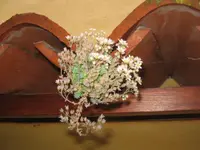
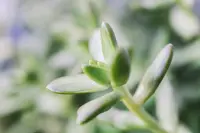
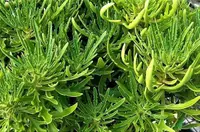
Corsican stonecrop, Sedum dasyphyllum, is a small, mat-forming succulent often used as a groundcover or in rock gardens and container arrangements. It forms dense cushions of tiny, rounded leaves that can shift from blue-green to pinkish tones in strong light.
This species is native to rocky slopes and dry habitats in parts of southern Europe, which explains its high tolerance for heat, sun, and poor, shallow soils. It is generally easy to grow, as it stores water in its leaves and copes well with short dry spells.
Light, well-drained soil and good air movement support healthy growth, and understanding how to care for Corsican Stonecrop starts with avoiding consistently wet conditions.

Care Difficulty
Easy Care

Light Preference
Full Sun

Water Requirements
Low Water

Temperature Preference
Cold Hardy

Hardiness Zone
5–9

Soil Texture
Sandy, Loamy, Rocky

Soil pH
Slightly acidic (6.5–7.0), Slightly alkaline (7.0–7.5)

Soil Drainage
Well-drained

Fertilization
Minimal (feed rarely)
Scan your plant to receive care tips personalized for your specific plant
Available on iOS and Android
This species prefers bright light but tolerates a range of sun exposures if adjusted gradually.
Watering should suit a drought-tolerant succulent that stores moisture in its leaves and stems.
This hardy succulent tolerates a broad temperature range but grows best in moderate conditions.
Humidity is rarely a concern for Sedum dasyphyllum, which prefers dry air conditions.
Sedum dasyphyllum prefers very free-draining, mineral-rich soil that dries quickly between waterings.
This species is very suitable for container growing, including shallow dishes and rock bowls.
Sedum dasyphyllum needs only light feeding to maintain compact, healthy growth.
Sedum dasyphyllum benefits from occasional light pruning to keep mats dense and tidy.
This shallow-rooted sedum needs infrequent repotting and tolerates gentle transplanting well.
Sedum dasyphyllum is commonly multiplied from small stem pieces and divisions.
This sedum is generally cold hardy and needs minimal winter care in most temperate climates.

Plant Health Check
Not sure what's wrong with your plant? Check your plant's health inside the app.
This species commonly grows in tiny rock crevices and mortar joints of old walls, where its shallow but dense root system anchors it securely and exploits minimal pockets of substrate other plants cannot use.
The tiny, bead-like leaves easily detach and root wherever they land, so even a single fallen rosette can form a new clump and gradually carpet stony ground.
In hot, dry periods the plant can partially shrivel and slow its metabolism, then rapidly rehydrate and resume growth after rain, an adaptation that supports reliable success when growing Corsican Stonecrop in harsh sites.
This species spreads slowly to moderately by short trailing stems and self-seeding. It usually forms a low mat 10–30 cm wide. In garden settings it is not considered aggressive and is generally easy to contain.
Keep your plants happy and healthy with plant identification, disease detection, and easy care guidance.