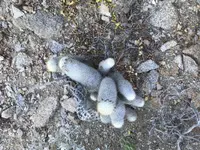
Pickle plant Care (Delosperma echinatum)

Also known as: Prickle Plant, Doringblaarvygie

About Pickle plant

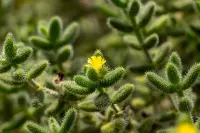
The pickle plant, Delosperma echinatum, is a small succulent from South Africa known for its short, jointed stems covered in soft, bristly, pickle-like leaves. It forms a compact, branching clump that stays low and often looks best in small pots or shallow dishes.

This species stores water in its leaves and stems, so it tolerates brief neglect better than many foliage houseplants. It usually prefers bright light, low to moderate watering, and a fast-draining, sandy or gritty soil mix.

Because of its slow, tidy growth and drought tolerance, many growers find it straightforward to care for Pickle plant when given enough light and protection from cold or excess moisture.

Main Plant Requirements

Care Difficulty

Easy Care

Light Preference

Full Sun

Water Requirements

Low Water

Temperature Preference

Tropical / Frost Sensitive

Hardiness Zone

10–11

Soil Texture

Sandy, Loamy, Rocky

Soil pH

Slightly acidic (6.5–7.0), Neutral (7.0)

Soil Drainage

Well-drained

Fertilization

Minimal (feed rarely)

Get Personalized Care Plan

Scan your plant to receive care tips personalized for your specific plant

Personalized Care in the App

Available on iOS and Android

How to Care for the Pickle plant

This succulent prefers bright light and thrives in full sun conditions when gradually acclimated.

  • Provide 6–8 hours of direct sun daily; morning sun with light afternoon shade suits Pickle plant in hotter regions.
  • Outdoors, choose an open, south- or west-facing spot; in very intense sun, protect during 1–4 p.m. to prevent leaf scorch or yellowing.
  • In cool or cloudy seasons, maximize exposure by avoiding shade from buildings or trees, since low light makes stems stretched and weak.

This drought-tolerant succulent needs infrequent but thorough watering in sharply draining soil.

  • Water only when the top 3–5 cm of soil are completely dry; in hot, dry weather this may be every 7–14 days, less often in cool periods.
  • Use gritty, fast-draining soil; water until it runs through, then discard any collected water so Delosperma echinatum roots do not sit in soggy conditions.
  • Reduce watering sharply in winter; prune back if stems shrivel slightly, but stop and check roots if foliage turns mushy, translucent, or drops suddenly.

This plant prefers warm, dry conditions and dislikes prolonged frost or saturated cold soil.

  • Aim for 65–80°F (18–27°C) during active growth for best branching and flowering.
  • Mature plants can survive brief dips to about 20°F (−6°C) if soil is very well drained, but repeated freezes near this limit increase rot risk.
  • In summer, it tolerates up to 90–95°F (32–35°C) if soil does not stay wet; provide airflow and light shade during extreme heat to limit stress.

This succulent prefers fairly dry air and usually needs no special humidity control indoors.

  • Aim for 30–50% humidity, similar to most heated or air‑conditioned homes.
  • Pickle plant tolerates very dry air if soil moisture is appropriate and roots are not kept wet.
  • Signs of humidity stress are soft, pale, swollen leaves combined with slow drying soil, so increase air movement rather than misting.

This species needs a sharply draining, mineral-rich mix to keep roots dry between waterings.

  • Use a sandy or gritty mix, such as 50–70% inorganic material (pumice, coarse perlite, or grit) blended with 30–50% lean potting mix or cactus substrate.
  • Ensure water drains through within seconds; if it lingers on the surface or the pot feels heavy for long, increase the proportion of coarse particles.
  • Keep pH slightly acidic to neutral (pH 6.0–7.2), which most commercial cactus mixes already provide.
  • Avoid compacted, peat-heavy, or moisture-retentive mixes and do not add water-absorbing crystals, as these promote root rot in Delosperma echinatum.

This compact succulent is very suitable for container growing.

  • Choose a shallow but wide pot to match its mat-forming habit and prevent unused, wet soil around the root zone.
  • Select unglazed terracotta if extra moisture loss is needed in cool or humid climates, as it allows faster evaporation through the pot walls.
  • Raise the container on pot feet or mesh stands outdoors so drainage holes clear quickly and runoff does not pool under the base.

This succulent needs only light feeding to stay compact and healthy.

  • Use a balanced, low-nitrogen succulent fertilizer or diluted 10-10-10 liquid at 1/4–1/2 strength.
  • Feed the Pickle plant once every 4–6 weeks in spring and summer only, after watering.
  • Skip fertilizer in fall and winter when growth slows and the plant rests.
  • Avoid rich compost or frequent slow-release pellets, which can cause weak, stretched growth.

Pruning helps Delosperma echinatum keep a neat mat and supports flowering.

  • Best time is late winter or early spring before strong new growth starts.
  • Snip off dead, damaged, or leggy stems to improve air flow and light penetration.
  • Lightly trim back spent flowering stems to encourage a denser, more compact habit.
  • Use clean, sharp scissors or small pruners and avoid cutting into thick, woody bases.

This plant prefers to stay slightly root-bound and does not need frequent repotting.

  • Consider repotting every 2–3 years or when roots circle the pot and growth becomes slow.
  • Choose late spring as the best time, when active growth helps the plant recover quickly.
  • Use a shallow pot with drainage and a gritty succulent mix to limit water retention.
  • Handle roots gently, loosen only lightly, and keep the plant slightly dry for 3–5 days afterward to reduce stress.

Delosperma echinatum is commonly multiplied by stem cuttings and division.

  • Take 5–8 cm non-flowering stem cuttings in late spring or summer and remove lower leaves.
  • Allow cut ends to dry and callus for 1–2 days before placing in a gritty, barely moist mix.
  • Provide bright, indirect light and warm temperatures around 70–75°F to encourage rooting.
  • Larger clumps can be divided in spring, keeping each division with healthy roots and several stems.

This succulent is only moderately cold tolerant and benefits from simple winter precautions.

  • In regions below about 25°F, grow in containers and move indoors to a bright, cool spot.
  • Keep soil much drier in winter to prevent root rot in cold, low-light conditions.
  • Outdoors in mild climates, use a thin gravel mulch to improve drainage around the crown.
  • Avoid overhead watering during freezes to limit ice damage on foliage and stems.

Care Tips

Encourage Compact Growth

Rotate the pot 90° every 1–2 weeks and lightly pinch back overly long stems in early spring to keep the plant dense, upright, and less prone to breakage.


Use Top-Dressing Grit

Apply a 0.5–1 cm layer of fine gravel or horticultural grit on the soil surface to keep the fuzzy leaves dry at the base, reduce fungus gnat activity, and stabilize shallow roots.

Safe Stem Support

If stems become top-heavy, loosely loop soft plant ties or twine around them and secure to a small stake or the pot rim so the plant does not tip or snap at the base.

Controlled Seasonal Repotting

Repot only in late spring when active growth starts, moving to a pot just 2–3 cm wider and handling the brittle, hair-covered stems by the root ball to avoid damage.

Targeted Pest Checks

Inspect closely between the bristly leaf pairs and at stem joints every few weeks for mealybugs or spider mites, using a cotton swab with 70% isopropyl alcohol to spot-treat small infestations at first sight when caring for Pickle plant.

Common Pests and Diseases

Mealybugs

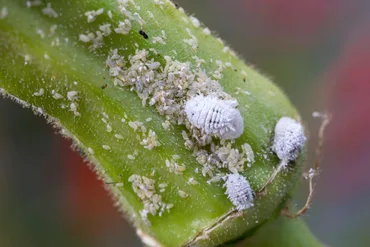
This pest often hides in leaf joints and along the ridged stems, sucking sap and causing distortion and weak growth. Symptoms include white cottony masses, sticky honeydew, and sometimes sooty mold on the pads and stems.

Solution

Isolate the plant, then dab visible insects with cotton swabs dipped in 70% isopropyl alcohol and gently wipe affected areas. Repeat weekly until no new clusters appear and improve light and air movement, using a systemic insecticide or horticultural soap if infestations persist.
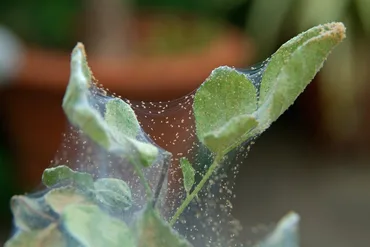
Spider mites

These insects favor the dry conditions often used for succulent care and can cause pale speckling and fine webbing between the small succulent leaves. Leaves may lose their green color, turn dull, and drop prematurely under heavy attack.

Solution

Rinse the plant thoroughly with a strong but gentle stream of lukewarm water, including the undersides of leaves and stems, then increase humidity slightly around the plant without keeping the soil wet. For ongoing Delosperma echinatum care, apply insecticidal soap or a neem-based spray every 5–7 days until new growth appears clean.
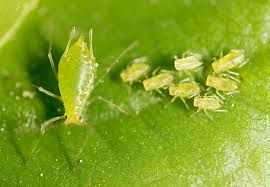
Aphids

These insects gather on tender new shoots and flower stalks, sucking sap and causing curling or distortion of new growth. Sticky honeydew may appear on surfaces below the plant and can attract ants.

Solution

Prune off heavily infested shoot tips and rinse remaining growth with water to dislodge insects. Follow up with a light application of insecticidal soap, checking new growth regularly and repeating treatment if small colonies reappear.

Leaf and stem rot

This disease develops under prolonged wet soil or poor drainage and leads to mushy, translucent pads and stems that collapse from the base upward. Symptoms include a foul smell and brown or black water-soaked tissue at the soil line.

Solution

Remove and discard all affected parts, then unpot the plant and trim any soft or discolored roots, allowing healthy sections to dry for 24–48 hours before replanting in fresh, sharply draining cactus mix. Reduce watering, keep the plant in bright light, and use a pot with ample drainage to prevent future problems.

Interesting Facts

Leaf hairs as sunshades

The soft, translucent hairs on the leaves act like tiny sunshades and light diffusers, protecting the photosynthetic tissue from intense radiation in its native Eastern Cape habitat.

Water-storing “pickle” leaves

Each swollen, sausage-shaped leaf is a specialized water-storage organ that lets the plant survive long dry spells in rocky, fast-draining soils.

Nighttime carbon storage

As a succulent from semi-arid South Africa, it uses CAM photosynthesis, opening stomata mainly at night to take in CO2 and reduce water loss during hot days.

Botan icon

Did you know?

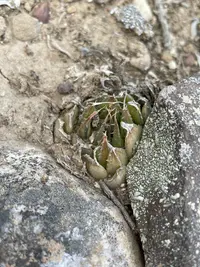
In its native South African range, this species often grows wedged into rock crevices, where its roots exploit tiny pockets of moisture and its compact, cushion-like shape helps shield the plant body from desiccating wind.

FAQs about Pickle plant

Lack of flowering usually comes from too little light, cool temperatures, or excess nitrogen fertilizer. Provide very bright conditions, a slight temperature drop in winter, and avoid heavy feeding. A short dry rest can also trigger better flowering.

Grow Healthy Plants with Botan Care

Keep your plants happy and healthy with plant identification, disease detection, and easy care guidance.

Botan plant care app — identify plants on mobile

Explore More Plants