String of Buttons Care (Crassula perforata)

About String of Buttons

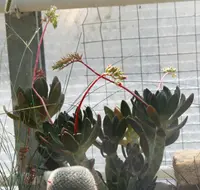
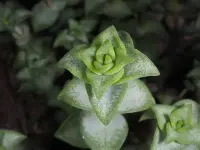
String of buttons, Crassula perforata, is a compact succulent from South Africa with stacked, triangular leaves that spiral around upright or trailing stems. The foliage often shows soft blue-green tones edged with pink when grown in bright light.

This plant forms dense, architectural clumps that suit windowsills, small containers, and mixed succulent arrangements. It prefers bright, indirect sun, fast-draining soil, and light but infrequent watering.

Its slow to moderate growth rate and drought tolerance make it relatively easy for beginners, as long as excess moisture is avoided. Understanding how to care for String of Buttons mainly involves managing light and preventing overwatering.

Main Plant Requirements

Care Difficulty

Easy Care

Light Preference

Partial Sun

Water Requirements

Low Water

Temperature Preference

Tropical / Frost Sensitive

Hardiness Zone

9–11

Soil Texture

Sandy, Loamy, Rocky

Soil pH

Slightly acidic (6.5–7.0), Neutral (7.0)

Soil Drainage

Well-drained

Fertilization

Minimal (feed rarely)

Get Personalized Care Plan

Scan your plant to receive care tips personalized for your specific plant

Personalized Care in the App

Available on iOS and Android

How to Care for the String of Buttons

Crassula perforata prefers bright, direct light but needs protection from harsh extremes.

  • Provide 4–6 hours of morning sun or bright filtered light; light afternoon shade helps prevent leaf scorch in hot climates.
  • Plant outdoors in a position with east or southeast exposure; indoors, place near a south- or west-facing window with sheer curtain if sun is intense.
  • Pale, stretched stems indicate too little light, while brown, crispy patches signal sunburn; adjust exposure seasonally as summer sun is stronger and winter sun weaker.

Water this succulent deeply but infrequently, allowing the soil to dry between waterings.

  • Let the top 3–5 cm of soil dry completely before watering; in active growth, this may mean roughly every 7–14 days depending on heat and sun.
  • Use sharply draining, gritty soil so excess water runs through quickly, which helps prevent root rot and supports healthy Crassula perforata growth.
  • Wrinkling, soft leaves that feel flat indicate thirst, while mushy, translucent, or dropping lower leaves point to overwatering and waterlogged roots.

This species prefers warm, dry conditions and does poorly in frost or prolonged cold.

  • Aim for 65–80°F (18–27°C) for steady growth, with slight drops at night encouraging compact, colorful foliage.
  • Protect from temperatures below 30–32°F (-1–0°C); repeated light frost can scar leaves and kill roots, especially in wet soil.
  • In hot spells above 90°F (32°C), provide light shade and airflow; reduce watering slightly in cool seasons when growth slows and soil stays moist longer.

Humidity is rarely critical for Crassula perforata, which thrives in typical indoor air.

  • Target 30–50% relative humidity, similar to most heated or air-conditioned homes.
  • Dry air is usually tolerated; String of Buttons prefers dryness over prolonged damp, which encourages rot.
  • If leaf tips shrivel while soil moisture is correct, briefly increase humidity with a nearby pebble tray rather than misting.

Crassula perforata prefers a very fast-draining, mineral-rich substrate that dries quickly between waterings.

  • Use a cactus or succulent mix amended with extra mineral grit, such as coarse sand, pumice, or small gravel, for sharper drainage.
  • Aim for a sandy or gritty texture with low to moderate organic matter; excess peat or compost holds water too long around the roots.
  • Maintain slightly acidic to neutral pH around 6.0–7.0, avoiding heavily limed or strongly alkaline mixes that can reduce nutrient availability.
  • Improve aeration and drainage by filling at least the lower third of the pot with coarse material, and avoid any soil that compacts when squeezed.

This species is well suited to container growing due to its compact, spreading habit.

  • Choose a wide, shallow pot to match the horizontal spread of stems and keep the root zone from staying wet at depth.
  • Select unglazed terracotta if extra moisture loss is needed, as its porous walls help dry the mix faster in cool or dim conditions.
  • Stabilize trailing, top-heavy growth by using a heavier pot or adding a top layer of gravel to reduce tipping risk outdoors or on shelves.

Crassula perforata grows well with light feeding during its active season in spring and summer.

  • Use a balanced liquid fertilizer (for example 10-10-10) diluted to 25–50% strength for String of Buttons.
  • Feed every 4–6 weeks during active growth if the plant is in fresh, well-draining mix.
  • Skip rich compost and heavy organic feeds that can keep soil too moist for succulent roots.
  • Stop fertilizing in fall and winter, when growth slows or stops.

Pruning helps Crassula perforata stay compact and encourages branching.

  • Best time is late winter to early spring, just before or as new growth begins.
  • Remove dead, shriveled, or damaged stems with clean, sharp scissors or small pruners.
  • Trim long, stretched stems above a node to create a fuller, bushier shape.
  • Use healthy tip cuttings from pruned stems for propagation if desired.

This succulent prefers slightly snug pots and only needs repotting when clearly rootbound.

  • Check for roots circling the drainage holes, crowded root mass, or slowed growth as signs to repot.
  • Plan to repot every 2–3 years in spring, using a gritty cactus or succulent mix and a pot with drainage.
  • Gently loosen the outer roots, remove old compacted soil, and avoid breaking thick roots.
  • Water lightly after repotting, then allow soil to dry between waterings to limit transplant shock.

Crassula perforata is commonly propagated from stem cuttings taken during the growing season.

  • Take 5–10 cm stem cuttings in spring or early summer, choosing firm, healthy segments.
  • Remove lower leaves and let cut ends dry and callus for 1–3 days to reduce rot risk.
  • Plant cuttings in a dry, gritty succulent mix and place in bright, indirect light.
  • Keep soil barely moist until roots form, then gradually shift to normal succulent watering.

This species is frost sensitive and benefits from simple winter protection in cool climates.

  • Move container plants indoors before temperatures drop near 40°F, placing them in bright light.
  • Keep winter temperatures around 50–65°F and reduce watering so soil dries more between waterings.
  • Outdoors in mild climates, grow in very free-draining soil to prevent cold, wet root rot.
  • Do not use heavy mulches against stems, as excess moisture in cold weather encourages decay.

Care Tips

Encourage Compact Growth

Rotate the pot 90° every 1–2 weeks so all sides receive similar light, which keeps stems shorter, sturdier, and less prone to flopping or bald sections.

Support Trailing Stems

Once stems exceed 15–20 cm, let them spill over the pot edge or place the container on a shelf so the weight is supported and joints are less likely to snap at the base.

Strategic Tip Pinching

Pinch or snip the soft tips of overly long stems in late spring, then replant those cuttings around the mother plant to quickly create a fuller, multi-stemmed clump.

Root Health Checks

Slide the plant gently from its pot once or twice a year to check for firm, white roots and remove any brown, mushy sections to prevent rot before it spreads.

Outdoor Summer Hardening

If moving the plant outdoors for summer, start it in bright shade for 5–7 days before shifting to more sun, which reduces leaf scorch and supports healthier growing String of Buttons.

Common Pests and Diseases

Mealybugs

This pest often hides in leaf joints and along the stacked stems, sucking sap and leaving white cottony clusters. Symptoms include stunted growth, sticky honeydew, and sooty mold on leaves and stems.

Solution

Isolate the plant, then dab visible insects with cotton swabs dipped in isopropyl alcohol (70%) and gently wipe affected areas. Repeat weekly until clear and, for heavier infestations, follow with targeted applications of insecticidal soap, making sure solution reaches crevices along the stems.

Aphids

These insects cluster on soft new growth and flowering tips, feeding on sap and causing curling, distortion, and sticky residue. Symptoms include slowed growth and occasional sooty mold developing on honeydew deposits.

Solution

Rinse the plant under a gentle but thorough stream of water to dislodge colonies, then treat remaining insects with insecticidal soap or a dilute neem oil spray, coating undersides of leaves. Improve airflow and avoid excess nitrogen fertilization, which encourages soft, aphid-prone growth.

Spider mites

This pest thrives in warm, dry indoor conditions, puncturing leaf surfaces and causing fine speckling, dull color, and occasional webbing between the stacked leaves. Symptoms include a dusty appearance and gradual leaf drop if left unmanaged.

Solution

Shower the plant with lukewarm water to remove mites and webbing, then apply insecticidal soap or horticultural oil to all leaf surfaces, including undersides and inner stems. Increase ambient humidity slightly and maintain regular inspections, as repeated treatments every 7–10 days are usually required.

Edema

This disorder appears when roots absorb water faster than leaves can transpire, leading to corky, blister-like spots on thick leaves. Symptoms include rough, raised patches that may remain even after conditions improve but usually do not spread once stabilized.

Solution

Allow the soil to dry more between waterings, particularly in cool or low-light periods, and always use a fast-draining succulent mix in a pot with drainage holes. Provide brighter light and gentle airflow so excess moisture can evaporate, which helps prevent new lesions from forming.

Fungal leaf spots

This disease develops in persistently damp or overcrowded plants, causing small brown or black lesions that may coalesce on the fleshy leaves. Symptoms include localized discoloration and occasional premature leaf drop near the lower or inner parts of the plant.

Solution

Remove and discard affected leaves, keeping cuts dry and clean, and reduce overhead watering so foliage stays dry. Improve light and airflow around the plant and, if spots keep spreading, apply a labeled broad-spectrum fungicide lightly to foliage according to product directions.

Interesting Facts

Stacked leaf geometry

This species forms opposite leaf pairs that twist slightly around the stem, creating a spiral, stacked pattern that maximizes light capture while minimizing self‑shading in intense sun environments.

Native sandstone specialist

In its native range of South Africa, this plant often grows in shallow, gritty soil pockets on rocky or sandstone slopes, where rapid drainage and high light favor its compact, shrubby habit.

Seasonal color change

Leaf margins develop pink to red tones under high light, cool nights, or mild drought, a response linked to increased anthocyanin pigments that help protect tissues from light stress.

Botan icon

Did you know?

In habitat, this species can form low, spreading colonies that drape over rock faces and ledges, helping to stabilize thin soil pockets and providing small hiding places for insects and other invertebrates in otherwise exposed, arid microhabitats.

FAQs about String of Buttons

This species often blooms only when mature and slightly pot-bound. Inadequate light, excess nitrogen fertilizer, or lack of a cooler, drier winter rest can all reduce flowering, even if the plant otherwise looks healthy.

Grow Healthy Plants with Botan Care

Keep your plants happy and healthy with plant identification, disease detection, and easy care guidance.

Botan plant care app — identify plants on mobile

Explore More Plants