Rotate For Balance
Rotate the pot 90° every 1–2 weeks so the leaves receive even light and the plant develops a stable, symmetrical crown that is less likely to lean or topple over.


Purple sword, Alocasia lauterbachiana, is a tropical aroid grown mainly for its long, narrow, wavy leaves with deep purple undersides and dark green tops. It forms upright clumps that give a bold, architectural look, especially in indoor spaces.
This species comes from warm, humid rainforest habitats in New Guinea and nearby regions, so it prefers stable warmth, bright filtered light, and evenly moist but well-drained soil. It can be moderately demanding, as it reacts quickly to cold drafts, low humidity, and overwatering.
Understanding how to care for Purple Sword starts with providing a sheltered spot, consistent moisture without waterlogging, and protection from harsh direct sun or very dry air.

Care Difficulty
Moderate Care

Light Preference
Bright Indirect Light

Water Requirements
Keep Soil Moist

Temperature Preference
Tropical / Frost Sensitive

Hardiness Zone
10–12

Soil Texture
Loamy, Peaty, Organic-rich

Soil pH
Acidic (5.5–6.5), Slightly acidic (6.5–7.0)

Soil Drainage
Moist but well-drained

Fertilization
Moderate (every 2–4 weeks)
Scan your plant to receive care tips personalized for your specific plant
Available on iOS and Android
This Alocasia prefers bright, indirect light that mimics filtered tropical sun.
This species prefers evenly moist, never soggy soil with slight drying at the surface between waterings.
This plant grows best in warm, stable temperatures similar to a tropical understory.
This plant prefers high, stable humidity to keep foliage healthy and growth active.
Alocasia lauterbachiana needs a loose, airy mix that drains quickly but holds steady moisture.
This species is well suited to container growing, as long as the pot supports its moisture needs and tall growth.
Alocasia lauterbachiana grows best with light, consistent feeding during its active season.
Alocasia lauterbachiana needs only light maintenance pruning to stay healthy and tidy.
This species prefers snug pots but benefits from periodic repotting to refresh soil and relieve root congestion.
Alocasia lauterbachiana is most reliably propagated by division of the underground rhizomes or offsets.
This tropical species is frost-sensitive and needs protective winter care in temperate climates.

Plant Health Check
Not sure what's wrong with your plant? Check your plant's health inside the app.
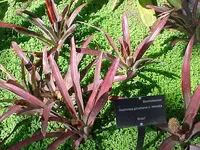
This species develops long, narrow, arching leaves with strongly undulating margins and a deep purple underside, giving it a swordlike profile that is unusual even among other Alocasia species.
The leaf surface has a thin, waxy cuticle that helps water bead and roll off quickly, an adaptation that reduces fungal issues on foliage in its native humid, tropical habitat.
In nature it grows as an understory plant in bright, filtered light beneath taller vegetation, so its leaves are adapted to capture scattered light rather than direct, full sun.

Under ideal tropical conditions in the ground, this species can form a substantial clump with individual leaves approaching 1 m in length, creating a tall, narrow foliage mass that is unusually vertical compared with many other broadly leafed Alocasia relatives.
Brown leaf edges usually result from low humidity, underwatering, or fertilizer salts building up in the potting mix. Check recent care changes, flush the soil occasionally, and trim only the fully dead tissue to prevent further stress.
Keep your plants happy and healthy with plant identification, disease detection, and easy care guidance.