Cool rest period
Provide a distinct rest period in late fall by keeping the plant at 45–55°F for 6–8 weeks with minimal water, which strongly promotes reliable flowering the following spring.

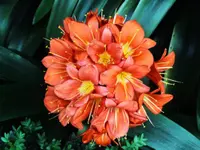
Bush lily, Clivia miniata, is an evergreen flowering plant grown mainly as a houseplant or container plant. It forms dense clumps of strap-shaped, dark green leaves from a thick base. In late winter or spring, it sends up sturdy stems topped with clusters of orange, yellow, or occasionally cream funnel-shaped flowers, followed by decorative berries. Clivia miniata comes from shaded woodland habitats in South Africa, which explains its preference for bright, indirect light and moderate, even moisture. Its slow growth, tolerance of indoor conditions, and ability to handle short periods of neglect make it a reliable choice for those learning how to care for Bush Lily.

Care Difficulty
Moderate Care

Light Preference
Bright Indirect Light

Water Requirements
Moderate Water

Temperature Preference
Tropical / Frost Sensitive

Hardiness Zone
9–11

Soil Texture
Loamy, Sandy, Organic-rich

Soil pH
Acidic (5.5–6.5), Slightly acidic (6.5–7.0)

Soil Drainage
Moist but well-drained

Fertilization
Light (every 4–6 weeks)
Scan your plant to receive care tips personalized for your specific plant
Available on iOS and Android
Clivia miniata prefers bright, indirect light and is sensitive to strong direct sun.
This species prefers evenly moist but not saturated soil, with brief dry periods between waterings.
This plant grows best in cool to mild conditions and dislikes temperature extremes.
This species handles typical indoor humidity well, so humidity management is low priority.
Clivia miniata prefers a loose, airy, slightly acidic to neutral mix that drains quickly yet holds moderate moisture.
This species is well suited to container growing when root space and drainage are controlled carefully.
Clivia miniata benefits from modest, targeted feeding during active growth for reliable flowering.
Clivia miniata needs minimal pruning, focused on cleanliness and maintaining healthy foliage.
Clivia miniata prefers to be somewhat root-bound, so repotting is infrequent and should be gentle.
New Clivia miniata plants are most reliably produced by division, with seed growing used for breeding or patience projects.
This subtropical plant needs cool, frost-free winter conditions to stay healthy and set flower buds.

Plant Health Check
Not sure what's wrong with your plant? Check your plant's health inside the app.
This species evolved in the shaded understory of South African coastal forests and has broad, strap-shaped leaves with high chlorophyll content that allow it to photosynthesize efficiently in low light compared with many flowering houseplants.
Its showy heads of orange funnel-shaped flowers are organized in an umbel produced from a single main axis (a monochasial cyme), which keeps the blooms at a uniform height for efficient pollinator access.
The plant forms fleshy, rope-like roots that store water and nutrients, an adaptation to survive periods of irregular rainfall in its native habitat and a key reason it is sensitive to overwatering in cultivation.

Clivia miniata can live for several decades and is often passed down as an heirloom plant, with old clumps becoming more floriferous with age and producing increasingly large heads of flowers each year under stable conditions.
Lack of flowering often comes from insufficient light, overcrowded roots, or skipping a cool, drier rest in fall–winter. Provide bright shade, leave roots slightly pot-bound, and give a cooler period to support Clivia miniata plant care.
Keep your plants happy and healthy with plant identification, disease detection, and easy care guidance.