Swamp Rose-mallow Care (Hibiscus moscheutos)

Also known as: swamp rosemallow, eastern rosemallow

About Swamp Rose-mallow

Swamp rose-mallow (Hibiscus moscheutos) is a hardy, herbaceous perennial native to wetlands, riverbanks, and marsh edges in eastern and central North America. It forms upright clumps with woody lower stems that die back in winter and resprout in spring.

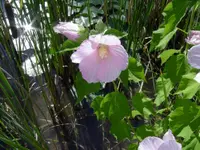
This plant is known for its very large, showy flowers in shades of white, pink, or red, often with a contrasting central eye. Its broad, sometimes slightly fuzzy leaves create a dense, shrubby look in summer.

Swamp rose-mallow prefers full sun, constant moisture, and rich, organic soil, which reflects its wetland origin. Understanding these natural conditions makes it easier to care for Swamp Rose-mallow in home gardens.

Main Plant Requirements

Care Difficulty

Moderate Care

Light Preference

Full Sun

Water Requirements

Keep Soil Moist

Temperature Preference

Cold Hardy

Hardiness Zone

4–9

Soil Texture

Loamy, Clay, Organic-rich

Soil pH

Acidic (5.5–6.5), Slightly acidic (6.5–7.0)

Soil Drainage

Waterlogged tolerant

Fertilization

Light (every 4–6 weeks)

Get Personalized Care Plan

Scan your plant to receive care tips personalized for your specific plant

Personalized Care in the App

Available on iOS and Android

How to Care for the Swamp Rose-mallow

Hibiscus moscheutos needs abundant direct sun to flower heavily and stay compact.

  • Provide 6–8 hours of direct sun daily; full sun is ideal in most climates for maximum blooming.
  • Accepts light afternoon shade, especially in hotter regions, but too much shade causes weak, leggy stems and fewer flowers in Swamp Rose-mallow.
  • In cooler seasons or cloudy regions, choose the sunniest spot available and avoid locations shaded by trees or buildings for most of the day.

This wetland species prefers consistently moist soil and does not tolerate prolonged drought.

  • Aim for soil that stays evenly moist; in garden beds, the top 2–3 cm should not dry out completely between waterings.
  • Increase watering during hot, dry periods when leaves start to droop slightly, and reduce in cool or rainy weather to avoid waterlogging.
  • Signs of overwatering include yellowing lower leaves and foul-smelling, soggy soil, while crisp leaf edges and drooping in dry soil indicate the need to water Hibiscus moscheutos more deeply.

This hardy perennial grows best in warm conditions but tolerates winter dormancy in cold climates.

  • Optimal growth occurs around 70–85°F (21–29°C), with strong flowering in mid to late summer under these temperatures.
  • Mature plants in the ground can survive winter lows down to about -20°F (-29°C) when crowns are mulched, even though tops die back after frost.
  • Short heatwaves up to 95°F (35°C) are tolerated if soil stays moist, but extended extreme heat with dry soil stresses plants and reduces bud formation.

This species prefers consistently moist air but adapts to average home humidity.

  • Aim for 50–70% humidity for largest blooms and healthier foliage.
  • Tolerates short periods of drier air, but leaves may curl, brown at edges, or buds drop when humidity stays low.
  • Increase humidity around Swamp Rose-mallow with grouped plants, a water-filled pebble tray under the pot, or frequent light misting in dry rooms.

This wetland perennial needs moisture-retentive but aerated soil to support vigorous growth.

  • Use a deep, loamy mix rich in organic matter, such as 50–60% composted bark or compost blended with garden loam.
  • Ensure soil holds moisture yet has structure so roots do not sit in stagnant water; avoid heavy, compacted clay in containers.
  • Target slightly acidic to neutral pH, around 6.0–7.0, which supports nutrient availability for Hibiscus moscheutos.
  • Improve aeration and prevent anaerobic (oxygen-poor) conditions by incorporating coarse sand or a small amount of perlite into dense mixes.

This species can grow well in large outdoor containers when moisture and stability are managed carefully.

  • Choose a wide, heavy container that resists tipping, since tall stems and large blooms make the plant top-heavy in wind.
  • Select a pot at least 35–45 cm deep to accommodate the substantial root system and keep the substrate evenly moist.
  • Use a saucer only as a temporary reservoir and empty standing water within 30 minutes to prevent root suffocation.

Hibiscus moscheutos responds well to moderate, consistent feeding during its active growing season.

  • Use a balanced, water-soluble fertilizer (for example 10-10-10) at 1/2 strength every 2–4 weeks from late spring through summer for caring for Swamp Rose-mallow.
  • In early spring, mix compost into the topsoil or around the root zone to support steady growth and flowering.
  • In containers, consider a slow-release granular fertilizer applied once in spring, following label rates to avoid salt buildup.
  • Stop feeding in late summer or early fall so the plant can harden off before winter dormancy.

Pruning Hibiscus moscheutos keeps plants compact, encourages strong new stems, and supports heavy flowering.

  • Cut back dead, weak, or winter-killed stems to near ground level in late winter or very early spring before new shoots emerge.
  • Remove damaged, crossing, or crowded stems during the growing season with clean, sharp pruners to improve air flow.
  • Shorten overly tall stems by up to 1/3 to maintain shape and reduce flopping in windy or exposed sites.
  • Deadhead spent blooms if desired to keep plants tidy, although this species forms new flowers even without deadheading.

This species is most often grown in the ground, so focus on careful transplanting rather than frequent repotting.

  • Plan transplanting for early spring or early fall when temperatures are mild and soil is moist but not waterlogged.
  • Move established plants only every few years, watching for congestion, slow growth, or poor flowering as signs they need more space.
  • Dig a wide root ball, keep soil around the roots intact, and replant at the same depth in a well-prepared, consistently moist bed.
  • Water deeply after transplanting, then keep soil evenly moist and shade the plant lightly for a week to limit transplant shock.

New Hibiscus moscheutos plants are commonly produced from seed, stem cuttings, or division of mature clumps.

  • Sow seeds indoors in late winter or outdoors in spring, using a warm (70–75°F), bright setup and evenly moist, sterile seed-starting mix.
  • Take 10–15 cm softwood cuttings in late spring to early summer, use rooting hormone, and place in high humidity with bright, indirect light.
  • Divide established clumps in early spring just as new shoots emerge, ensuring each division has several buds and a good root portion.
  • Label varieties when propagating to keep track of flower colors and growth habits, since seed-grown plants can be variable.

This cold-hardy perennial usually manages winter well, but above-ground growth dies back while roots overwinter.

  • In USDA zones 4–9, crowns typically survive freezing conditions if soil drainage is good and the root zone stays insulated.
  • After frost blackens stems, cut them back near ground level and remove debris to limit overwintering pests and diseases.
  • Apply a 5–8 cm mulch layer over the root area in late fall to stabilize soil temperature and moisture.
  • For container plants, move pots into an unheated garage or sheltered area where roots stay just above freezing and soil does not dry out completely.

Care Tips

Sturdy stem support

In windy or exposed sites, insert sturdy stakes behind young plants and loosely tie main stems with soft ties to keep tall flower spikes upright without rubbing or cutting into the stems.

Root zone mulching

Apply a 5–8 cm layer of organic mulch over the root zone each spring, keeping it a few cm away from the stems, to keep the shallow roots cool, conserve moisture, and suppress weed competition.

Spring emergence markers

Mark plant locations with permanent labels in fall, since shoots emerge late in spring, so you do not accidentally dig up or disturb the crowns when working the bed early in the season.

Dead flower removal

Snip off spent blooms and developing seed pods every few days during peak season to encourage continued flowering and prevent the plant from putting energy into seed production.

Winter crown protection

After frost kills the top growth, cut stems down to 10–15 cm and leave a light mulch over the crown to protect it from freeze–thaw cycles, which is especially useful when growing Swamp Rose-mallow in colder regions.

Common Pests and Diseases

Hibiscus sawfly

This pest feeds on the leaf edges and surfaces, often skeletonizing foliage and leaving only veins on Hibiscus moscheutos leaves. Symptoms include rapid defoliation starting low on the plant and moving upward in late spring and summer.

Solution

Hand-pick larvae from leaves and drop them into soapy water, and prune off heavily infested stems. For larger outbreaks, spray the foliage thoroughly with an insecticidal soap or a spinosad-based product, repeating as needed according to label directions while avoiding applications during peak bee activity.

Japanese beetle

These insects chew large irregular holes in leaves and flowers, often congregating in groups on the upper plant parts. Damage is most noticeable on sunny days in mid-summer when flowers and new foliage are present.

Solution

Shake beetles off plants early in the morning into a container of soapy water and remove badly damaged flowers. Floating row covers or fine netting can protect plants during peak beetle flights, and nearby Japanese beetle traps should be placed away from the planting so they do not draw more beetles to the hibiscus itself.

Aphids

These insects cluster on tender shoot tips, buds, and the undersides of leaves, sucking sap and causing curling or distortion. Symptoms include sticky honeydew on leaves and stems, sometimes followed by black sooty mold growing on the deposits.

Solution

Spray shoots and leaf undersides with a strong stream of water to dislodge aphids, then follow with insecticidal soap or horticultural oil if needed, making sure to cover all infested surfaces. Encourage or introduce natural predators such as lady beetles by minimizing the use of broad-spectrum insecticides in the garden as part of overall Hibiscus moscheutos care.

Leaf spot

This disease causes brown, tan, or purple spots on leaves, sometimes with yellow halos, which may coalesce and lead to premature leaf drop in warm, humid weather. Symptoms include more severe spotting on older, lower leaves where moisture lingers longer.

Solution

Remove and dispose of affected leaves on and around the plant and water at the base in the morning to keep foliage dry. Improve spacing and airflow, and if spotting progresses, apply a labeled ornamental fungicide containing chlorothalonil or copper, following label directions and focusing on the lower and inner canopy.

Botrytis blight

This disease affects flowers and tender shoots, causing buds to fail to open, petals to become water-soaked, and gray fuzzy mold to develop in cool, damp conditions. Symptoms include browning or collapse of flowers and nearby stems, especially after prolonged rain or overhead irrigation.

Solution

Promptly remove and discard all blighted flowers and soft, moldy tissue, and avoid wetting the blooms by watering at soil level. Increase sun exposure and airflow around plants, and in persistent cool, wet periods consider a preventive fungicide labeled for ornamental botrytis, applied according to directions before or at the first signs of infection.

Interesting Facts

Native wetland specialist

This species is naturally found in freshwater wetlands, marsh edges, and river floodplains in eastern and central North America, where it tolerates periodic flooding and saturated soils that many other shrubs cannot handle.

Cold-hardy tropical look

Despite its large, tropical-looking flowers, this species is reliably cold-hardy into USDA zone 4 and can survive winter ground-freeze, resprouting each spring from its perennial root system.

Pollinator magnet flowers

The large, open flowers produce abundant pollen and nectar and are especially attractive to bumblebees and specialist hibiscus bees, which use the plant as a key summer foraging resource.

Botan icon

Did you know?

This species naturally hybridizes with closely related North American wetland hibiscus species, and those repeated hybridization events are the genetic basis for many of the modern large-flowered ornamental cultivars used in breeding programs for Hibiscus moscheutos plant care and landscaping.

FAQs about Swamp Rose-mallow

Lack of flowers usually comes from insufficient maturity, nutrient imbalance, or stress. Young plants may need 1–2 years. Avoid heavy nitrogen, ensure consistent moisture, and prevent root disturbance to support reliable flowering and general Hibiscus moscheutos care.

Grow Healthy Plants with Botan Care

Keep your plants happy and healthy with plant identification, disease detection, and easy care guidance.

Botan plant care app — identify plants on mobile

Explore More Plants