Dove orchid Care (Peristeria elata)

Also known as: Holy Ghost Orchid

About Dove orchid

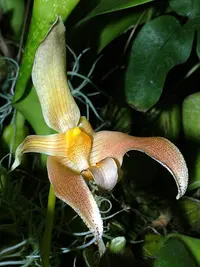
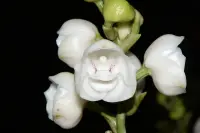
The dove orchid, Peristeria elata, is a tropical epiphytic orchid known for large, waxy white flowers that resemble a small dove inside the bloom. It usually grows from clustered pseudobulbs that produce broad, pleated leaves, giving the plant a lush, architectural look.

This species is native to humid lowland forests of Central and South America, where it experiences warm temperatures and consistent moisture. It is considered moderately challenging, as it needs stable warmth, high humidity, and good air movement.

Those conditions are important to understand when learning how to care for Dove orchid, especially regarding watering and avoiding root rot.

Main Plant Requirements

Care Difficulty

Hard Care

Light Preference

Bright Indirect Light

Water Requirements

Keep Soil Moist

Temperature Preference

Tropical / Frost Sensitive

Hardiness Zone

11–12

Soil Texture

Loamy, Peaty, Organic-rich

Soil pH

Acidic (5.5–6.5)

Soil Drainage

Moist but well-drained

Fertilization

Moderate (every 2–4 weeks)

Get Personalized Care Plan

Scan your plant to receive care tips personalized for your specific plant

Personalized Care in the App

Available on iOS and Android

How to Care for the Dove orchid

Peristeria elata prefers bright, filtered light that mimics high, lightly shaded forest canopies.

  • Provide 6–8 hours of bright, indirect light each day, such as east exposure with gentle morning sun and dappled shade later.
  • Protect the plant from harsh midday and afternoon sun, which can scorch leaves and pseudobulbs; light green leaves indicate good light, yellowed or burned tips indicate excess.
  • In summer, shift the Dove orchid to slightly shadier positions, and in winter move it where it receives the brightest safe light available.

Peristeria elata needs consistently moist but never waterlogged roots, with careful adjustment across seasons.

  • Water when the top 2–3 cm of the medium feels just barely dry, then soak thoroughly and let excess drain completely to avoid root rot.
  • During active growth in spring and summer, expect to water more often, while in cooler or dimmer months reduce frequency as drying slows.
  • Signs of overwatering include black, mushy roots and sour smell; wrinkling pseudobulbs and limp leaves usually indicate underwatering or long drying periods.

This orchid thrives in warm, stable conditions with only mild day–night swings.

  • Aim for 70–80°F (21–27°C) by day and 60–68°F (16–20°C) at night, which supports steady growth and flowering.
  • Protect the plant from temperatures below 55°F (13°C); prolonged exposure near this level slows growth and anything close to frost can kill roots and pseudobulbs.
  • In hot spells above 85°F (29°C), increase air movement and humidity and shade slightly to prevent heat stress, leaf scorch, and bud drop, especially in late spring and summer.

This species needs sustained high humidity for reliable flowering and healthy growth.

  • Aim for 60–80% humidity, especially during active growth and spike formation.
  • Tolerates brief dips to 40–50%, but prolonged dry air causes pleated leaves, brown tips, and stalled buds in Dove orchid.
  • Increase humidity with grouped plants, trays of damp pebbles under pots, or a cool-mist humidifier near but not blowing directly on plants.

This orchid requires a loose, fast-draining yet moisture-retentive medium rather than standard potting soil.

  • Use a coarse orchid mix with medium bark, perlite or pumice, and some sphagnum moss or coco chips for organic matter.
  • Aim for slightly acidic to neutral conditions, around pH 5.5–6.5, which support nutrient uptake and root health.
  • Ensure large air spaces in the mix so roots stay oxygenated; avoid fine peat-heavy blends that compact and stay wet.
  • For Peristeria elata in pots, refresh or adjust the mix if it becomes dense, breaks down, or holds water longer than 3–4 days.

This species is well suited to container growing when the pot and setup support its large pseudobulbs and moisture needs.

  • Select a deep, heavy pot to anchor tall flowering spikes and prevent tipping as the plant gains size.
  • Choose semi-porous containers like terracotta only if you can compensate for faster moisture loss with closer watering attention.
  • Set a raised inner pot or mesh basket inside a cachepot so excess water drains freely while maintaining slight humidity around the roots.

Peristeria elata benefits from moderate, well-timed feeding to support healthy pseudobulbs and flowering.

  • Use a balanced orchid fertilizer (around 20-20-20) diluted to 1/4–1/2 strength in low-mineral water.
  • Feed every 2 weeks during active growth in spring–summer, when new roots and leaves develop.
  • Switch to monthly feeding in late summer–early fall, then stop during winter dormancy when leaves yellow and drop.
  • Avoid compost or heavy slow-release pellets that can burn roots; use formulations made for epiphytic or terrestrial orchids.

Peristeria elata needs only light, hygienic pruning to stay tidy and healthy.

  • Best time to prune is after flowering finishes and flower spikes naturally dry.
  • Remove dead, yellow, or diseased leaves and spent flower spikes at the base with sterilized scissors or pruners.
  • Thin crowded, shriveled pseudobulbs during repotting to improve air flow and reduce rot risk.
  • Avoid cutting green, firm pseudobulbs, as they store water and nutrients important for future growth and flowering.

This orchid prefers infrequent repotting and reacts best to gentle handling of its roots and pseudobulbs.

  • Repot every 2–3 years, or when roots circle the pot, mix breaks down, or drainage slows noticeably.
  • Choose late winter–early spring, just before new root growth, to reduce transplant shock.
  • Use a free-draining orchid mix (bark, perlite, charcoal) and shift only 1 pot size up to avoid staying wet too long.
  • Handle pseudobulbs carefully, keep new roots intact, water lightly for the first week, and maintain high humidity to help recovery.

Peristeria elata is usually propagated by division rather than from seed in home conditions.

  • Divide mature clumps in late winter–early spring when repotting, once there are several healthy pseudobulbs.
  • Use a sterile knife to separate sections with at least 3–4 firm pseudobulbs and visible viable roots.
  • Plant divisions in fresh orchid mix, anchoring them securely so new roots can establish without wobbling.
  • Keep divisions warm (70–80°F), bright but shaded from strong sun, and maintain high humidity to support new growth.

Dove orchid is frost-sensitive and must be kept warm and dryish over winter in most climates.

  • Maintain indoor temperatures above 55°F, ideally 60–70°F, and avoid cold drafts or unheated windowsills.
  • Reduce watering once leaves yellow and drop, keeping pseudobulbs just plump, not shriveled.
  • Provide bright, indirect light indoors and good air circulation to limit fungal problems in cooler, slower-growth periods.
  • In mild climates, container plants can stay outside only if night temperatures remain reliably above 55°F.

Care Tips

Bulb-safe potting

When repotting, position the pseudobulbs just at or slightly above the medium surface and avoid burying the necks, which reduces rot risk and encourages strong new shoot formation.

Staking heavy spikes

As soon as a flower spike reaches 10–15 cm, insert a sturdy stake and secure it with soft ties so the unusually heavy inflorescences do not snap under their own weight.

Root-zone aeration

Use a chopstick or thin stake to gently open small air channels in compacted medium around the pot edge, taking care not to damage roots, to improve gas exchange between repottings.

Rest-period adjustment

At the start of the natural dry rest, reduce both watering and fertilizer while keeping light and temperature stable, which helps trigger reliable flowering when growing Dove orchid.

Humidity zoning

Place this orchid in the center of a grouped display of other high-humidity plants or near an ultrasonic humidifier outlet, but keep at least 60–90 cm distance so leaves receive fine ambient moisture rather than direct mist.

Common Pests and Diseases

Scale insects

This pest often hides on pseudobulbs and leaf bases, sucking sap and weakening the plant over time. Symptoms include small dome-shaped bumps, sticky honeydew, and sooty mold on leaves or flower spikes.

Solution

Isolate the plant, then gently wipe infested areas with cotton pads dipped in isopropyl alcohol, repeating weekly until no new scale appears. Improve air movement, avoid excess nitrogen fertilizer, and for heavy infestations use a labeled systemic insecticide suitable for orchids, following product directions carefully.

Spider mites

These insects thrive in warm, dry air and can damage the thin leaves of Peristeria elata. Symptoms include fine webbing, tiny pale stippling on leaves, and a dull, dusty appearance, especially on undersides.

Solution

Raise humidity to 60–70%, rinse foliage thoroughly under a gentle shower, and wipe leaf undersides with a damp cloth to remove mites and webs. For persistent problems, apply a horticultural soap or neem oil spray safe for orchids, repeating at 5–7 day intervals while monitoring with a hand lens.

Soft rot (Erwinia)

This disease attacks pseudobulbs and leaf bases, especially under stagnant, humid conditions and excess moisture. Symptoms include rapidly spreading wet, mushy, foul-smelling tissue that can collapse an entire bulb.

Solution

Immediately cut out all affected tissue with sterile tools, dust or dab the wound with powdered sulfur or ground cinnamon, and keep the plant much drier around the damaged area. Increase air circulation, keep water off the pseudobulb bases, and avoid overhead watering in warm, crowded growing areas to reduce recurrence.

Leaf spot (fungal/bacterial)

This disease appears on broad leaves as small water-soaked spots that may turn brown or black with yellow halos. Symptoms include slowly enlarging lesions that can merge and cause premature leaf drop if humidity stays high.

Solution

Remove and discard badly spotted leaves, avoid splashing water on foliage, and space plants to improve airflow. Allow leaves to dry quickly after watering, and if new spots keep appearing, use a broad-spectrum orchid-safe fungicide according to the label as part of structured Peristeria elata care.

Interesting Facts

National flower status

This orchid is the national flower of Panama, where it is known as flor del Espíritu Santo and is closely associated with religious celebrations and cultural identity.

Scent and pollinators

The flowers produce a strong, sweet fragrance similar to beer or fermented malt, which helps attract specific bee pollinators in its native lowland tropical forests.

Specialized pseudobulbs

It forms large, rounded pseudobulbs that store water and nutrients, allowing the plant to endure short dry spells on the forest floor despite its preference for consistently moist conditions.

Botan icon

Did you know?

The intricate, three-dimensional white lip of each flower naturally resembles a small dove with outstretched wings, a feature so striking that it has independently inspired common names like dove orchid and Holy Ghost orchid in multiple languages and cultures.

FAQs about Dove orchid

Insufficient light intensity, lack of a slightly cooler, drier rest period, and nutrient imbalance commonly delay flowering. Dense, old pseudobulbs may also reduce spikes. Adjust seasonal rest conditions and fertilization before assuming a serious problem.

Grow Healthy Plants with Botan Care

Keep your plants happy and healthy with plant identification, disease detection, and easy care guidance.

Botan plant care app — identify plants on mobile

Explore More Plants