


Rotate For Symmetry
Turn the pot 90° every 2–3 weeks so all sides receive similar light, which keeps the canopy balanced and reduces leaning or weak, stretched stems.

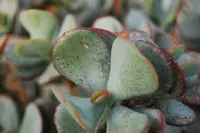
The silver jade plant, Crassula arborescens, is a compact, woody succulent shrub valued for its thick, rounded, silvery blue-green leaves with reddish edges. It is native to South Africa, where it grows in rocky, dry habitats with strong light and well-drained soils.
This plant stays relatively slow-growing and forms a branching, tree-like shape over time, making it suitable for containers and indoor displays. Its drought tolerance and fleshy leaves make it resilient to occasional missed waterings, so many find it straightforward to care for Silver Jade Plant.
It generally prefers bright light, low to moderate watering, and a gritty, free-draining potting mix to avoid root problems.

Care Difficulty
Easy Care

Light Preference
Full Sun

Water Requirements
Low Water

Temperature Preference
Tropical / Frost Sensitive

Hardiness Zone
10–11

Soil Texture
Sandy, Loamy, Rocky

Soil pH
Slightly acidic (6.5–7.0), Neutral (7.0)

Soil Drainage
Well-drained

Fertilization
Minimal (feed rarely)
Scan your plant to receive care tips personalized for your specific plant
Available on iOS and Android
This succulent prefers bright light with some direct sun but benefits from protection from harsh afternoon exposure.
Crassula arborescens stores water in its leaves and needs infrequent, careful watering.
This species prefers warm, dry conditions and is sensitive to frost and prolonged cold.
This succulent handles typical indoor humidity easily and rarely needs special adjustments.
Crassula arborescens needs a sharply draining, mineral-rich mix to prevent root rot.
This species is well suited to container growing due to its compact, slow growth and succulent roots.
Crassula arborescens benefits from modest feeding during the active growing season to support compact, healthy growth.
Pruning Crassula arborescens helps maintain a compact form and encourages branching.
Crassula arborescens grows slowly and prefers slightly tight containers, so repotting is infrequent.
Crassula arborescens is commonly propagated from stem or leaf cuttings during the warm growing season.
Crassula arborescens is not frost hardy and needs protection from freezing conditions in most climates.

Plant Health Check
Not sure what's wrong with your plant? Check your plant's health inside the app.
In its native Western Cape habitats, this succulent often grows among white quartz pebbles, where the pale stones reflect light and keep root zones cooler than the surrounding soil.
The bluish leaves are coated with a fine waxy bloom called epicuticular wax, which scatters intense sunlight and reduces water loss in the arid, high-radiation areas where the plant evolved.
In South Africa it grows mainly during the cooler, wetter winter months and slows almost to dormancy in summer heat, an adaptation to a Mediterranean-type climate pattern.

The natural range of this species is quite restricted, occurring in scattered, localized populations on rocky slopes of the Western Cape in South Africa, which makes wild plants vulnerable to habitat disturbance despite the species being common in cultivation.
Leaf browning usually comes from underwatering, intense direct sun, or salt buildup from fertilizer. Check soil moisture, flush the pot with clean water occasionally, and move the plant slightly back from the harshest sun exposure.
Keep your plants happy and healthy with plant identification, disease detection, and easy care guidance.

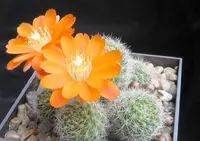
Aylostera fiebrigii
Aylostera fiebrigii
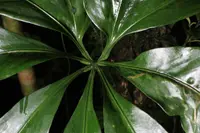
Anthurium pentaphyllum var. pentaphyllum
Anthurium pentaphyllum var. pentaphyllum
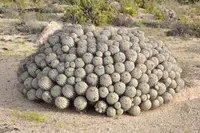
Copiapoa malletiana
Copiapoa malletiana
 POPULAR
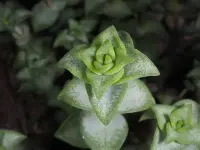
String of Buttons
Crassula perforata

dwarf upright elephant ear
Englerarum hypnosum
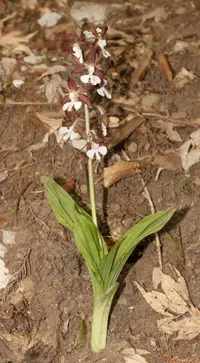
Calanthe discolor
Calanthe discolor
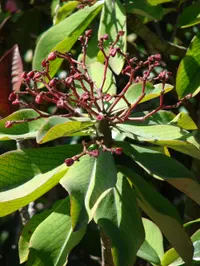
African milkbush
Euphorbia umbellata
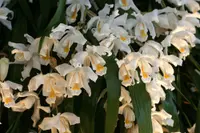
Coelogyne cristata
Coelogyne cristata