Horse's Teeth Care (Haworthia truncata)

Also known as: Horse's Teeth

About Horse's Teeth

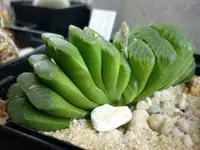
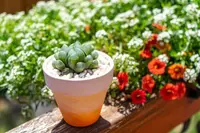
Horse's teeth (Haworthia truncata) is a small, slow-growing succulent known for its distinctive flat-topped, windowed leaf tips arranged in neat rows. Each thick, truncated leaf stores water, which helps the plant survive in its native arid habitats of South Africa.

It stays compact and low to the ground, making it suitable for windowsills and small indoor collections. Its drought tolerance and modest growth rate make it relatively easy to care for Horse's Teeth, especially for patient growers.

This species generally prefers bright, indirect light, infrequent but deep watering, and a very well-draining, gritty soil mix to avoid root rot.

Main Plant Requirements

Care Difficulty

Easy Care

Light Preference

Bright Indirect Light

Water Requirements

Low Water

Temperature Preference

Tropical / Frost Sensitive

Hardiness Zone

10–11

Soil Texture

Sandy, Loamy, Rocky

Soil pH

Acidic (5.5–6.5), Slightly acidic (6.5–7.0)

Soil Drainage

Well-drained

Fertilization

Minimal (feed rarely)

Get Personalized Care Plan

Scan your plant to receive care tips personalized for your specific plant

Personalized Care in the App

Available on iOS and Android

How to Care for the Horse's Teeth

This compact succulent prefers bright, indirect light and gentle sun exposure to maintain its compact form.

  • Provide 4–6 hours of bright, filtered light daily, such as an east-facing windowsill or light shade outdoors, to keep Horse's Teeth leaves firm and patterned.
  • Tolerates partial shade for much of the day, but very low light causes stretched, elongated growth and duller leaf windows over several months.
  • Avoid harsh midday and afternoon sun; intense light can scorch or bleach leaf tips, especially in summer, so add sheer curtains or move slightly farther from the window.

This species stores water in its thick leaves and needs infrequent but careful watering.

  • Let the top 3–5 cm of soil dry fully before watering, checking with a finger rather than following a fixed schedule.
  • Water thoroughly until excess drains out, then empty any saucer; use a gritty, fast-draining mix to reduce the risk of root rot in Haworthia truncata.
  • In spring–fall, watering is typically needed every 2–4 weeks; in winter, extend intervals, watching for slight leaf wrinkling (thirst) or mushy bases (overwatering).

This slow-growing succulent prefers moderate warmth and stable conditions throughout the year.

  • Ideal growth occurs at 65–80°F (18–27°C), with good airflow and protection from sudden drafts or strong heating vents.
  • Plant tissue is damaged by frost; protect from temperatures below 40°F (4°C) and keep above 50°F (10°C) for reliable long-term health.
  • Short periods up to 90–95°F (32–35°C) are tolerated if shade and ventilation are provided, but extended extreme heat with strong sun can cause leaf scorch and stress.

Humidity is rarely critical for Haworthia truncata, which prefers dry indoor air similar to typical heated homes.

  • Aim for 30–50% humidity, avoiding constantly damp rooms such as bathrooms or unventilated kitchens.
  • Horse's Teeth tolerates very dry air; soft, translucent, or splitting leaves usually reflect watering or light issues rather than humidity.
  • If air is extremely dry and hot, move the pot away from direct hot drafts instead of using pebble trays or humidifiers.

This species needs a very fast-draining, mineral-rich, gritty mix to prevent root rot.

  • Use a cactus/succulent base mix heavily amended with coarse mineral material such as pumice, perlite, and 2–5 mm gravel or coarse sand.
  • Aim for a loose, airy texture that falls apart when squeezed; roots must have many air pockets rather than compact, wet zones.
  • Keep pH slightly acidic to neutral, around 6.0–7.0, avoiding strongly acidic peat-heavy mixes that stay wet for long periods.
  • Avoid dense garden soil, high-peat potting soil, or mixes with a lot of fine sand, which hold water and restrict aeration.

This species is very suitable for container growing due to its compact, shallow root system.

  • Choose a wide, shallow pot that matches the shallow roots, leaving only 1–2 cm of extra space around the plant to limit excess wet substrate.
  • Select unglazed terracotta if moisture needs to evaporate faster in cool or low-light situations, as it dries more quickly than plastic or glazed ceramic.
  • Ensure large, unobstructed drainage holes so water exits within seconds of watering, preventing any prolonged pooling at the pot base.

This compact succulent benefits from light feeding but grows well even with minimal fertilizer.

  • Use a diluted balanced liquid fertilizer (around 10-10-10 or 20-20-20 at 1⁄4–1⁄2 strength) for Horse's Teeth.
  • Feed once every 4–6 weeks during the active growing season in spring and summer.
  • Skip or greatly reduce feeding in fall and winter when growth slows.
  • Apply only to moist soil, never onto dry mix, to reduce root burn risk.

Haworthia truncata needs little structural pruning, mainly occasional cleanup to maintain health and appearance.

  • Best time for any pruning is during active growth in spring or early summer.
  • Gently remove dead, shriveled, or damaged leaves at the base to reduce rot risk.
  • Thin out crowded offsets only if they are deforming the clump or blocking airflow.
  • Use clean fingers or a small sterile knife, avoiding cuts into healthy leaf tissue.

This slow-growing succulent prefers infrequent repotting and does best when kept slightly root-bound.

  • Check for roots circling the pot, growing out of drainage holes, or noticeably slowed growth as signs to repot.
  • Plan to repot every 3–4 years in late spring, using a very fast-draining succulent mix.
  • Lift the plant gently, tease roots free with minimal disturbance, and remove any rotted roots with sterile scissors.
  • Replant at the same depth, keep the mix dry for 3–5 days, then resume light watering to reduce transplant shock.

Haworthia truncata is commonly propagated by division and, less often, from seed in controlled conditions.

  • Divide offsets in late spring or early summer when the parent plant is actively growing.
  • Carefully separate pups with some roots attached using a sterile knife, minimizing root damage.
  • Allow cut surfaces to dry and callus for 1–2 days before placing in dry, gritty succulent mix.
  • Provide bright, indirect light and very light watering after initial rooting to avoid rot.

This succulent is not frost hardy and needs controlled indoor conditions in cold climates.

  • Move container plants indoors before temperatures drop below 40°F, ideally keeping them at 50–65°F.
  • Provide bright, indirect light, such as a south or east-facing windowsill.
  • Reduce watering significantly, letting the mix dry almost completely between light waterings.
  • Avoid cold drafts, wet soil, and contact with freezing window glass to prevent tissue damage.

Care Tips

Optimize pot shape

Use a wide, shallow pot to allow the taproot to sit deep while keeping the leaf fan close to the rim, which helps prevent rot and shows the flat leaf tops clearly.


Top-dress with grit

Add a 0.5–1 in layer of coarse pumice or gravel on the soil surface to keep the neck of the plant dry, stabilize the roots, and reduce fungus gnat activity.

Gradual light shifts

When moving the plant between seasons or locations, increase light levels over 1–2 weeks by shifting it closer to the window a little at a time to avoid sudden sun stress and scarring on the translucent leaf windows.

Cool, dry dormancy

In winter, keep the plant slightly cooler and much drier, giving just enough water to prevent full shriveling, which mimics its native rest period and supports more compact growth when days lengthen.

Root health checks

Unpot and inspect the roots every 1–2 years, trimming any dead or mushy sections and refreshing the gritty mix, which is a key part of caring for Horse's Teeth over the long term.

Common Pests and Diseases

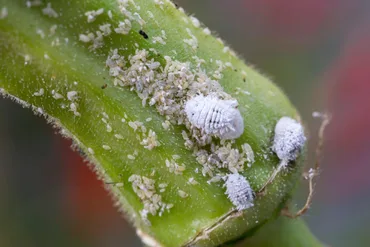
Mealybugs

This pest hides in leaf crevices and the leaf base, sucking sap and causing pale, shriveled, or distorted leaves with cotton-like clusters. Infestations often start in tight leaf windows and along the short stem where they are hard to see.

Solution

Isolate the plant, then remove visible insects with a cotton swab dipped in 70% isopropyl alcohol and gently clean between the leaf ridges. For heavier cases, repeat alcohol swabs weekly and apply a systemic insecticide labeled for succulent use, keeping the plant in bright, dry, well-ventilated conditions to discourage reinfestation as part of Haworthia truncata plant care.

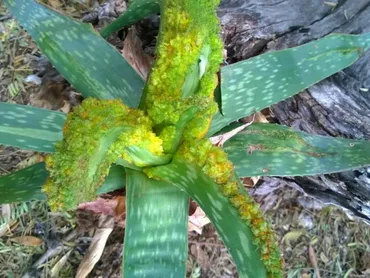
Aloe mite (eriophyid mite)

This pest causes abnormal, tumor-like growths or rough, warty tissue on the leaf tips and edges, sometimes with distorted leaf windows. Symptoms include clustered deformities that slowly spread rather than typical sap-sucking damage.

Solution

Remove and discard all affected leaves or entire rosettes well below the deformity, sterilizing cutting tools between cuts. Dispose of infected material in the trash, not compost, and keep new growth under observation; if symptoms reappear, discard the whole plant to protect nearby succulents, especially other Haworthia and Aloe relatives.

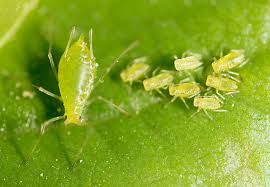
Aphids

These insects occasionally colonize the soft new growth at the leaf tips, causing slight distortion, sticky honeydew, and sometimes sooty mold on nearby surfaces. Infestations are more common on plants grown outdoors or near open windows.

Solution

Rinse the plant gently with a firm stream of water, then treat remaining clusters with insecticidal soap or neem oil, focusing on the leaf tips and bases. Repeat every 5–7 days until no aphids remain and avoid overfertilizing, as very soft new growth attracts them.

Fungal leaf spots

This disease appears as small, sunken brown or black spots, often starting where water sat on the translucent leaf windows or along old mechanical damage. Symptoms include slow-spreading spots with dark edges that may coalesce on stressed leaves.

Solution

Remove affected leaves or trim out damaged sections with a sterile blade and allow the wound to dry in a warm, airy place. Keep water off the foliage, improve airflow, and water at the soil level; in persistent cases, apply a sulfur- or copper-based fungicide according to label directions and correct any overwatering or high-humidity issues.

Bacterial soft rot

This disease starts as a wet, translucent patch on the leaf base or core that rapidly becomes mushy and foul-smelling, often beginning after mechanical injury or prolonged saturation. Symptoms include collapse of the rosette from the center outward rather than simple outer-leaf shriveling.

Solution

At the first sign, cut away all affected tissue well into firm, healthy material using sterilized tools, then let the plant dry in a warm, dry place for several days before replanting in fresh, very free-draining mix. If the rot has reached the crown and cannot be fully removed, discard the plant to prevent spread and review watering frequency, pot drainage, and soil structure to avoid future cases when caring for Horse's Teeth.

Interesting Facts

Windowed leaf tips

The leaf tips form translucent window-like panels that allow light to penetrate into the internal tissues, an adaptation that lets the plant photosynthesize while most of the leaf stays buried and protected from intense sun in its native habitat.

Living at ground level

In habitat, the flattened leaves often sit almost flush with the soil surface, making the plant look like cracked stones or dried leaf fragments, which helps it avoid herbivores and reduces water loss in its arid South African environment.

Extremely limited range

This species occurs naturally in a small area of the Little Karoo region of South Africa, where it grows in very specific quartz or shale-rich soils, making wild populations sensitive to habitat disturbance and over-collecting.

Botan icon

Did you know?

In its natural habitat, this species is so well camouflaged among pebbles and soil crust that field botanists often locate plants more easily by spotting their inconspicuous flower stalks than by seeing the rosettes themselves.

FAQs about Horse's Teeth

Brown tips or patches usually come from underwatering, intense direct sun, or mineral buildup from hard water. Check roots for rot, adjust watering schedule, use filtered or rainwater, and provide bright but softened light to stabilize growth.

Grow Healthy Plants with Botan Care

Keep your plants happy and healthy with plant identification, disease detection, and easy care guidance.

Botan plant care app — identify plants on mobile

Explore More Plants