Support climbing vines
Provide a thin trellis, hoop, or mesh and gently clip or wind the stems so the parachute-like flowers hang freely, which reduces stem breakage and improves flower display.

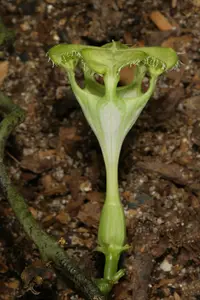
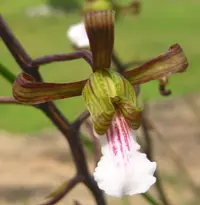
Parachute flower, Ceropegia sandersonii, is a tender perennial vine in the Apocynaceae family, grown mainly as a decorative houseplant. It produces thick, trailing stems with opposite, fleshy leaves and distinctive parachute-shaped green and white flowers. These blooms are adapted to trap pollinating insects in its native habitats of South Africa and Eswatini.
The plant has a climbing or hanging growth habit and does well in containers or hanging baskets. It is generally easy to grow for those who learn how to care for Parachute Flower, as it tolerates short dry spells but dislikes waterlogged soil.
It prefers bright, indirect light, a very free-draining, gritty mix, and moderate watering that allows the soil to dry between waterings.

Care Difficulty
Moderate Care

Light Preference
Bright Indirect Light

Water Requirements
Low Water

Temperature Preference
Tropical / Frost Sensitive

Hardiness Zone
11–12

Soil Texture
Sandy, Loamy, Organic-rich

Soil pH
Acidic (5.5–6.5), Slightly acidic (6.5–7.0)

Soil Drainage
Well-drained

Fertilization
Light (every 4–6 weeks)
Scan your plant to receive care tips personalized for your specific plant
Available on iOS and Android
Ceropegia sandersonii prefers bright, indirect light and protection from harsh midday sun.
This species is a semi-succulent vine that needs thorough but infrequent watering.
This plant prefers warm, stable temperatures typical of many subtropical vines.
This species handles typical indoor humidity but prefers slightly moderate levels.
This succulent climber needs very fast-draining, airy soil to prevent root rot.
This species is very suitable for container growing due to its compact root system and trailing habit.
Ceropegia sandersonii benefits from light, consistent feeding during active growth but is sensitive to excess salts.
Ceropegia sandersonii needs only light pruning to maintain a tidy, manageable vine.
This species prefers slightly snug pots and only occasional repotting to avoid overwatering risk.
Ceropegia sandersonii is commonly propagated from stem cuttings rather than seed in home settings.
Ceropegia sandersonii is not frost hardy and needs indoor or greenhouse conditions in cold climates.

Plant Health Check
Not sure what's wrong with your plant? Check your plant's health inside the app.
The inflated green and white flowers form a temporary pitfall trap for small flies, which are guided inside by translucent windows and downward-pointing hairs, then released after pollination when the hairs wilt.
In its native range in southern Africa, this species is pollinated mainly by small fly species attracted by the flower’s scent and tubular shape, rather than by bees or butterflies.
Although often grown as a trailing plant, this species naturally behaves as a climbing succulent vine, using other vegetation for support while storing water in its thick, fleshy stems.

This species is known to mimic the appearance of a small, enclosed shelter to certain flies, which are lured into the flower, temporarily imprisoned, dusted with pollen, and then deliberately released, an example of highly specialized deceptive pollination in the Apocynaceae family.
Lack of flowers usually comes from insufficient light, overly frequent watering, or fertilizer with too much nitrogen. Slight root restriction, a well-drained mix, and a short, cooler, slightly drier rest period often trigger better flowering when growth resumes.
Keep your plants happy and healthy with plant identification, disease detection, and easy care guidance.