


Support Mature Leaves
Install a sturdy moss pole, bark slab, or trellis early so long leaves can elongate without creasing or tearing under their own weight as they mature.

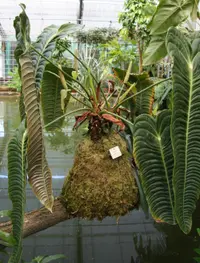
King anthurium, Anthurium veitchii, is a tropical aroid grown mainly for its long, corrugated leaves that can become very large with age. It is usually grown as an epiphyte or in loose, airy mixes that resemble its natural habitat.
This species comes from humid Colombian rainforests, where it grows on trees in warm, filtered light. In homes and greenhouses it prefers bright, indirect light, steady warmth, and evenly moist but well-drained substrate.
Its size, slow growth, and need for stable humidity make it more demanding than many common houseplants, but it is manageable with consistent conditions. Learning how to care for King Anthurium helps it develop the impressive leaf size and texture it is known for.

Care Difficulty
Hard Care

Light Preference
Bright Indirect Light

Water Requirements
Keep Soil Moist

Temperature Preference
Tropical / Frost Sensitive

Hardiness Zone
11–12

Soil Texture
Loamy, Peaty, Organic-rich

Soil pH
Acidic (5.5–6.5), Slightly acidic (6.5–7.0)

Soil Drainage
Moist but well-drained

Fertilization
Light (every 4–6 weeks)
Scan your plant to receive care tips personalized for your specific plant
Available on iOS and Android
Anthurium veitchii prefers bright, indirect light that mimics dappled rainforest conditions.
Watering for Anthurium veitchii should aim for consistently slightly moist, never soggy, root conditions.
This species prefers warm, stable temperatures with minimal sudden swings.
This species needs sustained high humidity to keep its long leaves healthy and free from damage.
This epiphytic aroid prefers a loose, airy, organic-rich medium that drains quickly yet stays lightly moist.
This climbing, large-leaved species is well suited to container growing when the pot supports its tall, top-heavy habit.
Anthurium veitchii benefits from light, consistent feeding during its active growing season.
Anthurium veitchii needs only light, maintenance pruning to stay healthy and tidy.
This species prefers a stable root environment but benefits from occasional repotting into a fresh, airy mix.
Propagation of Anthurium veitchii is usually done on mature plants and is moderately demanding.
This tropical aroid is frost tender and needs indoor-style winter care in most climates.

Plant Health Check
Not sure what's wrong with your plant? Check your plant's health inside the app.
Mature plants develop extremely long, strap-shaped leaves that can reach several feet under ideal conditions, a growth form adapted to catching diffuse light and dripping water in the rainforest canopy.
Its leaf blades have pronounced, parallel corrugations and a semi-velvety surface caused by dense microscopic cells that scatter light, which increases light capture while also giving the foliage a matte, quilted appearance.
In nature this species often grows as an epiphyte on trees in humid Colombian rainforests, anchoring to bark with roots that absorb moisture and nutrients from rain, organic debris, and the surrounding air rather than from soil alone.

The species was formally described in the 19th century and named in honor of the Veitch family, a prominent British horticultural dynasty that played a major role in introducing many tropical ornamentals into European cultivation.
Brown, crispy leaf edges usually result from low humidity, salt buildup from fertilizer, or underwatering. Increase humidity to around 60–70%, flush the pot occasionally with clean water, and keep moisture consistent without letting the mix stay soggy.
Keep your plants happy and healthy with plant identification, disease detection, and easy care guidance.

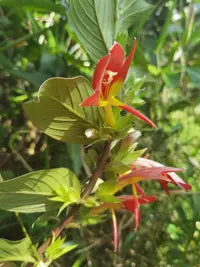
Columnea nicaraguensis
Columnea nicaraguensis
 POPULAR
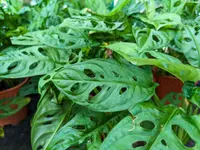
Swiss Cheese Vine
Monstera adansonii
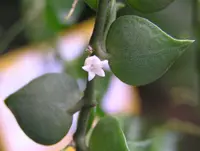
Million Hearts
Dischidia ruscifolia
Trichocentrum pumilum
Trichocentrum pumilum
Dendrobium verruciferum
Dendrobium verruciferum
Dendrobium munificum
Dendrobium munificum
Erycina pusilla
Erycina pusilla
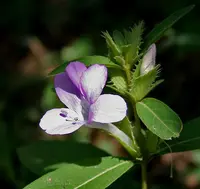
crested Philippine violet
Barleria cristata