Rotate For Symmetry
Turn the pot 90° every 2–3 weeks so new leaves orient evenly to the light, which keeps the clump balanced and reduces leaning or one-sided growth when growing Homalomena rubescens.

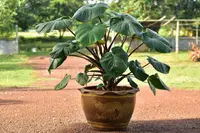
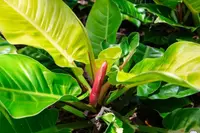
Homalomena rubescens is a tropical evergreen perennial from Southeast Asian rainforests, often grown as a compact indoor foliage plant. It forms a clump of thick stems with large, glossy, heart-shaped leaves that may show red tones on the undersides or petioles.
In nature it grows on the forest floor in warm, shaded, and consistently moist conditions. This background makes it a good candidate for homes with stable indoor temperatures and moderate light.
Its slow to moderate growth rate, tolerance of indoor humidity, and manageable size generally make it straightforward for patient growers who learn how to care for Homalomena rubescens. It usually prefers bright, indirect light, evenly moist but not waterlogged soil, and a sheltered spot away from drafts.

Care Difficulty
Moderate Care

Light Preference
Bright Indirect Light

Water Requirements
Keep Soil Moist

Temperature Preference
Tropical / Frost Sensitive

Hardiness Zone
11–12

Soil Texture
Loamy, Peaty, Organic-rich

Soil pH
Acidic (5.5–6.5), Slightly acidic (6.5–7.0)

Soil Drainage
Moist but well-drained

Fertilization
Light (every 4–6 weeks)
Scan your plant to receive care tips personalized for your specific plant
Available on iOS and Android
This species prefers bright, gentle light similar to a shaded tropical understory.
Watering should keep the root zone evenly moist but never saturated.
Stable, warm conditions support steady growth for this tropical aroid.
This species benefits from moderately high, stable humidity to keep foliage healthy and reduce stress.
Homalomena rubescens prefers an airy, organic-rich mix that holds moisture yet drains quickly.
This species is well suited to container growing when the pot is chosen to manage moisture and root space carefully.
Consistent but moderate feeding supports steady foliage growth for Homalomena rubescens in containers.
Pruning is light and mainly hygienic, helping this plant maintain a compact, tidy form.
Container-grown plants respond well to occasional repotting, which supports root health and steady growth.
Propagation is most reliable by division, using established clumps with several healthy stems.
This tropical species is frost-sensitive and needs warm, stable indoor conditions during winter in most climates.

Plant Health Check
Not sure what's wrong with your plant? Check your plant's health inside the app.
The leaves often show a distinct reddish tint on the undersides and along the petioles, a pigmentation caused by anthocyanins that helps protect tissues from excess light in its native understory habitat.
When the foliage is bruised or crushed, it can release a noticeable spicy or camphor-like scent due to volatile aromatic compounds stored in the leaf tissues.
This species belongs to the Araceae family and is closely related to anthuriums and philodendrons, sharing the same spadix-and-spathe type inflorescence even though it is grown mainly for foliage rather than flowers.
Yellowing leaves usually come from overwatering, soggy soil, or low light stress. Older leaves may yellow naturally as they age. Check drainage, let the top layer of soil partly dry, and remove only fully spent leaves.
Keep your plants happy and healthy with plant identification, disease detection, and easy care guidance.