Golden Pothos Care (Epipremnum aureum)

Also known as: Golden Pothos, Ivy-arum, Silver Vine, Taro vine, Money Plant

About Golden Pothos

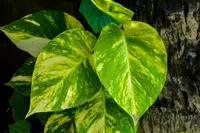
Golden pothos, Epipremnum aureum, is a trailing tropical vine commonly grown as an indoor foliage plant. It is valued for its heart-shaped leaves, often marbled in green and yellow.

In the wild it comes from the forests of Southeast Asia and the Pacific, where it climbs trees and forms long, cascading stems. Indoors it adapts well to hanging baskets, shelves, or training on supports.

This species is popular because it tolerates a wide range of indoor conditions, including lower light and irregular watering. It grows best in bright, indirect light, moderate moisture, and well-drained potting soil, which makes it straightforward to care for Golden Pothos.

Main Plant Requirements

Care Difficulty

Easy Care

Light Preference

Bright Indirect Light

Water Requirements

Moderate Water

Temperature Preference

Tropical / Frost Sensitive

Hardiness Zone

11–12

Soil Texture

Loamy, Peaty, Organic-rich

Soil pH

Acidic (5.5–6.5), Slightly acidic (6.5–7.0)

Soil Drainage

Moist but well-drained

Fertilization

Light (every 4–6 weeks)

Get Personalized Care Plan

Scan your plant to receive care tips personalized for your specific plant

Personalized Care in the App

Available on iOS and Android

How to Care for the Golden Pothos

Epipremnum aureum grows best in bright, filtered light that mimics dappled forest shade.

  • Provide 6–8 hours of bright, indirect light daily, such as near an east or north window or under light tree shade outdoors.
  • Plant tolerates partial shade, but in very low light vines stretch, growth slows, and variegation on Golden Pothos leaves may fade to solid green.
  • Avoid harsh midday or strong afternoon sun; direct exposure through glass or outdoors can scorch leaves, especially in summer, so shift to gentler light in hotter months.

Watering for Epipremnum aureum should balance consistent moisture with very good drainage.

  • Allow the top 2–4 cm of soil to dry before watering again; check with a finger rather than following a fixed calendar schedule.
  • In spring and summer, expect to water more often as growth and evaporation increase; in fall and winter, extend the drying period between waterings.
  • Yellowing, soft leaves and a musty smell suggest overwatering and poor drainage, while limp, curling leaves and very light, shrinking soil indicate underwatering.

Temperature control helps this tropical vine maintain steady growth and healthy foliage.

  • Aim for 65–80°F (18–27°C) for active growth, with the most stable performance in the middle of this range.
  • Keep the plant above 55°F (13°C); exposure near or below this level can cause leaf damage, stalling, and potential root stress.
  • Protect from frost and sudden cold drafts, and in heat above 86°F (30°C) increase shade and airflow to reduce leaf scorch and stress.

This species prefers moderate household humidity but benefits from slightly higher levels in heated or air-conditioned homes.

  • Aim for 40–60% humidity to keep leaves lush and reduce brown edges on Golden Pothos.
  • Tolerates drier air, but prolonged levels below 30% can cause crispy tips and slowed growth.
  • Increase humidity with a nearby humidifier, grouping plants, or a pebble tray rather than misting alone.

This species grows best in a loose, airy, organic-rich substrate that drains quickly yet holds some moisture.

  • Use a peat- or coco-based potting mix with added perlite and fine bark to create a chunky, well-aerated structure.
  • Aim for slightly acidic to neutral pH around 6.0–7.0, which supports nutrient availability and root health for Epipremnum aureum.
  • Ensure fast drainage; water should flow through in seconds and not leave the mix waterlogged or compacted.
  • Avoid dense garden soil, heavy clay, or pure compost, which restrict air spaces and promote root rot in containers.

This species is very suitable for container growing in homes and offices.

  • Choose a stable, wider container to counterbalance long, trailing vines and prevent tipping as foliage gains weight.
  • Select pot materials with moderate moisture retention, such as plastic or glazed ceramic, if the environment is warm and dry.
  • Use a pot only slightly wider than the root mass to keep the mix drying evenly and reduce the risk of chronic wet pockets.

Epipremnum aureum responds well to moderate feeding during its active growing season.

  • Use a balanced liquid fertilizer (for example 10-10-10 or 20-20-20) diluted to 1/4–1/2 strength for Golden Pothos.
  • Apply every 4–6 weeks in spring and summer; skip or reduce to 1 application in fall and winter.
  • Alternatively, mix a small amount of compost into the top 2–3 cm of soil once in spring.
  • Slow-release granules can be used at label rates, avoiding direct contact with stems or roots.

Pruning Epipremnum aureum helps control length and maintain a dense, tidy plant.

  • Best time is late winter to early spring, before strong new growth starts.
  • Use clean, sharp scissors or pruning shears to remove dead, yellowing, or damaged leaves and stems.
  • Shorten overly long or sparse vines by cutting just above a leaf node to encourage branching.
  • Thin crowded stems to improve light penetration and airflow through the foliage.

This vine adapts well to containers but benefits from periodic repotting to maintain healthy growth.

  • Check for roots circling the pot, emerging from drainage holes, or slowed growth as signs it needs more space.
  • Plan to repot every 1–2 years in spring, moving to a container 2–5 cm wider with drainage holes.
  • Gently loosen circling roots, remove some old compacted soil, and reset the plant at the same soil level.
  • Water thoroughly after repotting, then keep in bright, indirect light while the roots recover from stress.

Epipremnum aureum is commonly multiplied by stem cuttings taken from healthy vines.

  • Take 8–12 cm cuttings in spring or summer, each with at least 1–2 nodes and a leaf.
  • Root cuttings in water or moist, well-drained potting mix kept at 70–80°F and high humidity.
  • Position at least 1 node below the surface in mix, or under water, since roots form at the nodes.
  • After strong roots develop, pot into small containers and avoid overwatering while new growth establishes.

This tropical species is frost-sensitive and must be kept above freezing in winter.

  • Maintain indoor temperatures around 60–75°F; avoid cold drafts near windows and doors.
  • Move any outdoor containers indoors before temperatures drop near 50°F.
  • Reduce watering in low light, allowing the top 2–3 cm of soil to dry before rewatering.
  • Keep foliage away from very cold window glass and use curtains to buffer temperature swings at night.

Care Tips

Strategic Vine Training

Pin vines to a moss pole, trellis, or wall using plant clips or soft ties so nodes stay in contact with a surface, which encourages stronger stems and larger, more mature leaves over time.

Regular Node Refresh

Every 6–12 months, trim back very long, bare sections of stem to just above a node and restart cuttings in fresh substrate to keep the plant compact, leafy, and rejuvenated rather than long and sparse.

Support-Aided Rooting

When staking to a moss pole, press the aerial roots firmly against the moist support and secure them with soft ties so they can attach and function like additional roots, improving water and nutrient uptake.

Preventive Pest Checks

Inspect the undersides of leaves and along stems every 2–3 weeks with a hand lens or phone flashlight, and isolate and treat the plant promptly if sticky residue, webbing, or stippling appears to stop pests before they spread.

Low-Light Rotation Strategy

In lower light homes, rotate the plant 90° every 2–3 weeks and occasionally move it to a brighter room for a 1–2 week period to maintain even growth and stable variegation when growing Golden Pothos.

Common Pests and Diseases

Spider mites

This pest causes fine stippling on leaves, dull or grayish foliage, and often fine webbing on leaf undersides and along vines.

Solution

Rinse vines and leaf undersides thoroughly with a strong but gentle stream of lukewarm water, then repeat every few days; for persistent cases, apply insecticidal soap or neem oil to all leaf surfaces and increase ambient humidity while reducing heat and dryness that favor mites.

Mealybugs

These insects appear as white, cottony clusters in leaf axils, on stems, and sometimes on roots, causing yellowing and stunted growth.

Solution

Isolate the plant, then dab visible mealybugs with cotton swabs dipped in 70% isopropyl alcohol and rinse foliage; follow up with several applications of insecticidal soap or neem oil at 7–10 day intervals and inspect new growth regularly as part of ongoing Epipremnum aureum plant care.

Scale insects

This pest appears as small, dome-shaped brown or tan bumps on stems and leaf veins, leading to sticky honeydew and sooty mold on leaves and nearby surfaces.

Solution

Scrape or peel off individual scales with a fingernail or soft tool, wipe stems with a cloth lightly moistened with 70% isopropyl alcohol, then treat remaining insects with repeated applications of horticultural or neem oil, ensuring good coverage of stems and leaf midribs.

Bacterial leaf spot

This disease produces small, water-soaked or translucent spots that turn brown with yellow halos, often starting on older leaves in warm, humid conditions.

Solution

Remove and discard affected leaves, avoid wetting foliage, improve air circulation around vines, and keep leaves dry by watering only at the soil level; in severe or recurring cases, discard heavily infected plants to prevent spread to nearby aroids.

Pythium root rot

Symptoms include sudden wilt, yellowing leaves, and black, mushy roots, often after prolonged overwatering or poorly draining potting mix.

Solution

Remove the plant from its pot, trim away all soft or black roots, and repot into fresh, well-draining mix in a pot with drainage holes; reduce watering frequency, allow the top 2–3 in of soil to dry between waterings, and avoid letting the pot sit in standing water to prevent reinfection.

Interesting Facts

Wild giant leaf form

In its native and naturalized tropical forests, this species can develop enormous, deeply fenestrated leaves and a thick climbing stem, very different from the small, simple leaves usually seen on indoor vines.

Epiphytic shingling habit

In the wild, its juvenile shoots can cling flat against tree trunks using strong aerial roots, a growth pattern called shingling, before transitioning to larger, climbing adult foliage higher in the canopy.

Documented invasive climber

In many warm regions such as parts of Florida and Hawaii, it is classified as an invasive vine capable of smothering native vegetation by forming dense mats and climbing high into tree canopies.

Botan icon

Did you know?

Mature individuals in suitable tropical conditions can climb more than 10 m up host trees and develop thick, liana-like stems, allowing them to function as true canopy vines in forest ecosystems.

FAQs about Golden Pothos

Brown, crispy edges usually result from low humidity, underwatering, or salt buildup from fertilizer. Check soil moisture, flush the pot occasionally, and avoid placing the plant near heating vents or strong drafts that dry foliage.

Grow Healthy Plants with Botan Care

Keep your plants happy and healthy with plant identification, disease detection, and easy care guidance.

Botan plant care app — identify plants on mobile

Explore More Plants