Jewel Orchid Care (Ludisia discolor)

Also known as: Jewel orchid

About Jewel Orchid

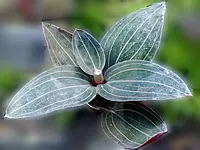
The jewel orchid is a small, terrestrial orchid grown mainly for its velvety, patterned foliage rather than its flowers. It stays low and spreading, making it suitable for shelves and terrariums. Ludisia discolor comes from humid forest floors in Southeast Asia, where it grows in shade among leaf litter. Its dark leaves with fine copper or pink veins are the main ornamental feature. In home conditions, it prefers soft, indirect light, stable warmth, and evenly moist but well-drained soil. These traits make it one of the easier orchids to grow, and understanding how to care for Jewel Orchid helps keep its foliage dense and healthy over time.

Main Plant Requirements

Care Difficulty

Moderate Care

Light Preference

Bright Indirect Light

Water Requirements

Keep Soil Moist

Temperature Preference

Tropical / Frost Sensitive

Hardiness Zone

11–12

Soil Texture

Loamy, Peaty, Organic-rich

Soil pH

Acidic (5.5–6.5)

Soil Drainage

Moist but well-drained

Fertilization

Light (every 4–6 weeks)

Get Personalized Care Plan

Scan your plant to receive care tips personalized for your specific plant

Personalized Care in the App

Available on iOS and Android

How to Care for the Jewel Orchid

This orchid prefers soft, indirect light that mimics a shaded forest floor.

  • Provide 6–8 hours of bright, filtered light each day, such as near an east or north-facing window with sheer curtains or under light shade outdoors.
  • Tolerates partial to deep shade, but if light is too low leaves may lose contrast and stems stretch; move slightly closer to the light source if this happens.
  • Protect the Jewel Orchid from direct midday or strong afternoon sun, which can cause leaf scorch and dull the velvety surface, especially in summer.

This species prefers consistently lightly moist, never soggy, substrate.

  • Water when the top 2–3 cm of the mix feels dry to the touch, allowing lower layers to remain faintly moist rather than drying out completely.
  • In spring and summer, expect to water more often as growth and evaporation increase; in fall and winter, extend the interval once growth slows and the surface stays damp longer.
  • Watch for limp, wrinkling leaves and very dry, pulling-away roots as signs of underwatering, and yellowing lower leaves, fungus gnats, or a sour smell as indicators of overwatering and poor drainage for Ludisia discolor.

Stable, warm conditions support healthy growth and flowering.

  • Aim for 65–80°F (18–27°C) for best growth, with only gentle nightly drops of 5–10°F (3–5°C) to mimic natural understory conditions.
  • Avoid temperatures below 55°F (13°C); brief dips may be tolerated, but exposure to 40°F (4°C) or frost can cause leaf collapse and root damage.
  • In hot periods above 85°F (29°C), increase air movement and humidity, and keep the plant shaded from intense sun to limit stress and prevent leaf scorch.

This species prefers moderately humid air but usually adapts to typical home conditions.

  • Aim for 50–70% humidity to keep leaves smooth and vibrant, especially in heated or air-conditioned rooms.
  • It tolerates brief dips to 35–40%, but prolonged very dry air can cause brown leaf edges and dull foliage.
  • Increase humidity with a nearby humidifier, grouped plants, or a pebble tray, keeping Jewel Orchid foliage dry and well ventilated.

Ludisia discolor grows best in a loose, airy, organic-rich mix that drains quickly yet holds some moisture.

  • Use a mix of roughly 40% fine orchid bark, 30% peat or coco coir, and 30% perlite or pumice for structure and aeration.
  • Ensure the mix is free-draining so water runs through in seconds while the particles stay lightly moist, not waterlogged.
  • Keep pH slightly acidic to neutral (about 5.5–7.0), avoiding strongly alkaline media that can limit nutrient uptake.
  • Avoid dense garden soil or heavy peat-only mixes that compact, reduce oxygen around roots, and promote rot.

This species is well suited to container growing for precise control of moisture and drainage.

  • Choose a wide, shallow pot that matches its creeping rhizomes, so stems can spread horizontally without crowding roots.
  • Select a potting container material that slightly reduces evaporation, such as glazed ceramic or plastic, to prevent the mix from drying out too quickly.
  • Stabilize low, spreading growth by using a heavier pot or adding a top layer of coarse bark to keep the container from tipping when foliage expands.

This orchid benefits from light, consistent feeding during active growth.

  • Use a balanced orchid or general houseplant fertilizer (around 10-10-10) diluted to 1/4–1/2 strength.
  • Feed every 3–4 weeks in spring and summer while growing Jewel Orchid indoors under stable light.
  • Switch to feeding once every 6–8 weeks in fall and winter, or pause if growth slows.
  • Apply to moist substrate only, and flush the pot with plain water every 4–6 weeks to limit salt buildup.

Pruning needs for Ludisia discolor are minimal and mainly cosmetic.

  • Best time is late winter to early spring, before strong new growth starts.
  • Use clean, sharp scissors to remove yellowing, damaged, or diseased leaves and spent flower spikes.
  • Trim leggy stems just above a node to encourage bushier, lower growth.
  • Discard removed material rather than composting if any fungal spots or pests are present.

This orchid prefers shallow, occasional repotting rather than frequent disturbance.

  • Repot every 2–3 years or when roots circle the pot, substrate breaks down, or growth becomes slow.
  • Choose late winter or early spring and move to a shallow, slightly wider pot with a loose, airy mix.
  • Water the plant lightly before repotting, then gently tease roots apart and remove decayed material.
  • After repotting, keep in bright, indirect light with slightly reduced watering for 1–2 weeks to limit stress.

Ludisia discolor is typically propagated vegetatively from stem sections rather than from seed.

  • Best season is spring to early summer when plants are actively growing.
  • Take 7–10 cm stem cuttings with at least 2–3 nodes and remove lower leaves.
  • Lay cuttings horizontally on moist, airy mix or place upright with 1 node buried, then maintain high humidity and warmth (70–80°F).
  • Division of dense clumps during repotting also works; keep each division with several healthy stems and roots.

This tropical orchid is frost tender and must be kept above freezing in winter.

  • Maintain indoor temperatures around 60–75°F and avoid drafts or sudden cold air near windows.
  • For container plants outdoors, move indoors before temperatures drop below 55°F.
  • Use a light, breathable cover only for brief temperature dips, ensuring foliage stays dry.
  • Reduce watering slightly in winter while keeping the substrate just lightly moist, never soggy or bone dry.

Care Tips

Use Wide Pots

Choose a low, wide pot rather than a deep one to match the plant’s creeping rhizomes and encourage it to spread into a fuller mat instead of growing weak, upright stems.

Layered Top-Dressing

Add a thin layer of fine orchid bark or small-grade pine bark on top of the mix to cushion fragile surface roots, retain moisture slightly longer, and keep leaves clean from splashing soil.

Gentle Stem Support

If stems begin to flop, tuck them gently under low hoops made from soft wire or plastic stakes rather than tying them upright, so new growth continues to creep horizontally and root along the surface.

Divide With Root Sections

When rejuvenating an older clump, cut the rhizome into sections with at least 2–3 growth nodes each and replant them shallowly, which helps maintain a compact, bushy look when growing Jewel Orchid.

Careful Flower Spiking

As flower spikes fade, cut them back close to the base with clean scissors while avoiding damage to nearby leafy stems, which preserves energy for new vegetative growth instead of unwanted seed production.

Common Pests and Diseases

Spider mites

This pest thrives in warm, dry indoor air and feeds on the soft undersides of Jewel Orchid leaves, causing fine speckling and dull, stippled foliage. Symptoms include very fine webbing between stems and leaves and gradual leaf decline.

Solution

Rinse foliage thoroughly under lukewarm running water, focusing on leaf undersides, then repeat every few days for 1–2 weeks. Increase humidity around the plant, isolate it from others, and if mites persist, use a ready-to-use insecticidal soap or horticultural oil, applying carefully to both leaf surfaces.

Mealybugs

These insects hide in leaf axils and along stems, appearing as white cottony clusters that suck sap and weaken the plant. Symptoms include sticky honeydew, distorted new growth, and slow decline in vigor.

Solution

Remove visible clusters with a cotton swab dipped in 70% isopropyl alcohol, then gently wipe stems and leaf bases where insects shelter. Repeat inspections weekly, isolating the plant, and for heavier infestations use insecticidal soap or a light horticultural oil spray, avoiding runoff into the crown.

Scale insects

These insects attach tightly to stems and leaf midribs as small tan or brown bumps that often go unnoticed at first. Symptoms include yellowing leaves, sticky residue, and reduced growth over time.

Solution

Manually remove scales with a fingernail or soft toothbrush, then wipe affected areas with a cloth lightly moistened with 70% isopropyl alcohol. Monitor weekly and treat remaining insects with targeted applications of insecticidal soap or horticultural oil, ensuring good coverage of stems and vein areas.

Bacterial leaf spot

This disease produces water-soaked, translucent patches on the leaves that may turn brown with a yellow halo and sometimes ooze. Symptoms include rapid spread of spots in warm, humid conditions and premature leaf drop.

Solution

Promptly remove and discard affected leaves, cutting several cm into healthy tissue and sterilizing tools with alcohol between cuts. Improve air circulation, avoid wetting foliage when watering, and keep leaves dry; if spread continues, discard severely affected plants to protect nearby orchids.

Fungal leaf and stem rot

This disease often develops when the plant is kept too wet or crowded, causing soft, dark, mushy areas at the stem base or on leaves. Symptoms include collapse of affected sections and a musty or sour odor near the potting mix or crown.

Solution

Immediately cut away all soft, rotting tissue with sterilized tools and discard it, then repot into fresh, well-drained orchid mix, removing any decomposed medium. Reduce watering, provide moderate airflow, and keep the crown just above the substrate surface; consider a labeled orchid-safe fungicide if high humidity and past problems make recurrence likely.

Interesting Facts

Terrestrial forest orchid

This species is a true terrestrial orchid from lowland tropical forests of Southeast Asia, growing in soil and leaf litter on the forest floor rather than as an epiphyte on trees like many other orchids.

Gem-like leaf veins

Its dark, velvety leaves have iridescent copper to pink veins formed by specialized air-filled cells that refract light, which makes the venation appear to glow when light hits at certain angles.

Self-pollination ability

Although it can be cross-pollinated by insects, this species is capable of self-pollination, allowing isolated plants to set viable seed and maintain populations in fragmented forest habitats.

Botan icon

Did you know?

In its native range, this orchid has been collected so heavily for the ornamental trade that some wild populations have declined noticeably, and it is now widely maintained in cultivation as an easy model species for studying Jewel Orchid indoor care and propagation under controlled conditions.

FAQs about Jewel Orchid

Blooming usually fails when light is too low, the plant is very young, or recently repotted. Short, stable day length, moderate light, and avoiding heavy fertilizing in late fall help trigger flowers and support growing Jewel Orchid successfully.

Grow Healthy Plants with Botan Care

Keep your plants happy and healthy with plant identification, disease detection, and easy care guidance.

Botan plant care app — identify plants on mobile

Explore More Plants