Heartleaf philodendron Care (Philodendron hederaceum)

Also known as: vilevine

About Heartleaf philodendron

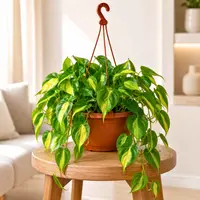
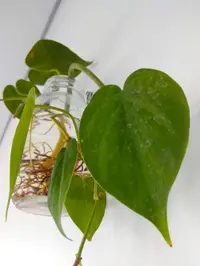
Heartleaf philodendron (Philodendron hederaceum) is a tropical evergreen vine from Central and South American rainforests, where it climbs trees under warm, shaded conditions. Its trailing stems and glossy, heart-shaped leaves make it a common choice for hanging baskets, shelves, and support poles indoors.

This species is forgiving of occasional care mistakes and adapts well to typical home conditions. It prefers bright, indirect light, evenly moist but not waterlogged soil, and a free-draining potting mix.

Because it tolerates a range of indoor environments and recovers well from minor stress, it is often recommended for those learning how to care for Heartleaf philodendron.

Main Plant Requirements

Care Difficulty

Easy Care

Light Preference

Bright Indirect Light

Water Requirements

Moderate Water

Temperature Preference

Tropical / Frost Sensitive

Hardiness Zone

11–12

Soil Texture

Loamy, Peaty, Organic-rich

Soil pH

Acidic (5.5–6.5), Slightly acidic (6.5–7.0)

Soil Drainage

Moist but well-drained

Fertilization

Light (every 4–6 weeks)

Get Personalized Care Plan

Scan your plant to receive care tips personalized for your specific plant

Personalized Care in the App

Available on iOS and Android

How to Care for the Heartleaf philodendron

This species prefers bright, filtered light that mimics a forest understory.

  • Provide 6–8 hours of bright, indirect light each day; gentle morning sun is acceptable, but keep it out of direct midday or harsh afternoon sun to prevent leaf scorch.
  • It tolerates partial shade, but in very low light you may see stretched, pale vines and smaller leaves on a Heartleaf philodendron.
  • In winter, move the plant closer to bright windows or use sheer curtains to boost light while still diffusing direct sun exposure.

Watering should balance consistent moisture with enough drying to protect the roots.

  • Before watering, let the top 2–5 cm of soil dry; this often means watering every 7–10 days in active growth, but timing depends on pot size, soil mix, and light.
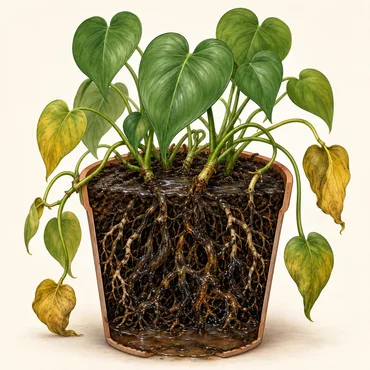
  • Use a fast-draining, airy mix so excess water exits quickly; never leave the root zone in standing water, which encourages root rot and fungus gnats.
  • In cooler months, allow slightly more drying between waterings; drooping, thin leaves signal underwatering, while yellowing leaves and a sour smell indicate overwatering in Philodendron hederaceum.

Stable, warm conditions support steady growth and reduce stress for this species.

  • Aim for 65–80°F (18–27°C) for best growth, with only brief exposure below or above this range to avoid slowed development and leaf damage.
  • Keep it above 55°F (13°C); cold drafts, open windows in winter, or unheated porches can cause leaf yellowing, dark patches, or drop, especially near frost level.
  • The plant tolerates short spikes to 85–90°F (29–32°C) if shaded and kept humid; in hot spells, increase airflow and avoid placing it near hot, sun-heated glass or radiators.

This species prefers moderate to high humidity but usually tolerates typical indoor levels.

  • Aim for 50–70% humidity to support steady leaf growth and reduce browning edges.
  • It copes with 35–40% air, but prolonged very dry rooms cause crispy tips and slower growth in Heartleaf philodendron.
  • Increase humidity with a nearby humidifier, grouping plants, or a pebble tray, but avoid misting that keeps leaves wet for long.

Philodendron hederaceum prefers a loose, airy, organic-rich mix that drains quickly but holds some moisture.

  • Use roughly 40% peat or coco coir, 30% perlite, and 30% fine orchid bark for a well-structured mix.
  • Aim for slightly acidic pH around 5.5–6.5, which supports nutrient availability and root health.
  • Ensure water drains from the pot within seconds, not minutes, to avoid low-oxygen, waterlogged conditions.
  • Avoid heavy garden soil, unamended potting soil, or mixes that compact, and add extra perlite or bark if drainage slows.

This species is very suitable for container growing in homes and offices.

  • Choose a pot just 2–4 cm wider than the root mass to keep moisture levels more predictable and prevent stagnant pockets.
  • Use a sturdy pot or add weight at the base when using a moss pole so the container does not tip as vines elongate.
  • Select terracotta if the environment is humid to help excess moisture evaporate, or plastic in drier rooms to slow moisture loss.

Philodendron hederaceum responds well to light, consistent nutrition during its active growing season.

  • Use a balanced liquid fertilizer (around 10-10-10 or 20-20-20) at 1/4–1/2 strength in spring and summer.
  • Apply every 4–6 weeks to container plants; many outdoor, in-ground plants need only rich compost once yearly.
  • Pause or reduce feeding to 1 light application in late fall and none in midwinter when growth slows.
  • Rinse the potting mix with plain water every few months to limit salt buildup and root stress when caring for Heartleaf philodendron.

Pruning helps Philodendron hederaceum stay compact, full, and healthier over time.

  • Plan main pruning in spring or early summer when growth is active and recovery is fastest.
  • Remove dead, yellowing, or damaged leaves and any weak, bare, or tangled stems at the base or just above a node.
  • Shorten overly long vines to encourage branching and denser foliage rather than a sparse trailing habit.
  • Use clean, sharp scissors or pruning shears and disinfect blades between plants to reduce disease spread.

This species adapts well to containers and benefits from timely repotting to support steady growth.

  • Check for roots circling the pot, pushing through drainage holes, or noticeably slower growth as signs repotting is needed.
  • Plan to move Philodendron hederaceum to a pot 2–5 cm wider every 2–3 years, ideally in spring or early summer.
  • Water well the day before, then gently loosen and untangle roots, trimming only thick, dead sections to limit shock.
  • Set the plant at the same soil level in fresh, airy mix, water thoroughly, and keep in bright, indirect light for 1–2 weeks.

Philodendron hederaceum is most often propagated from stem cuttings taken from healthy vines.

  • Take 8–12 cm cuttings in spring or summer with at least 2–3 nodes and 1–2 leaves.
  • Remove lower leaves and place nodes in water or a moist, well-draining mix; keep humidity high and temperature near 70–80°F.
  • Provide bright, indirect light and avoid direct sun while roots develop, usually within a few weeks.
  • After roots reach about 3–5 cm, pot cuttings into small containers and resume normal Philodendron hederaceum plant care.

This tropical vine is not frost hardy and needs indoor conditions or a warm environment in winter.

  • Move container plants indoors before temperatures drop near 50°F, choosing bright, indirect light away from drafts.
  • Maintain indoor temperatures around 65–80°F and avoid cold windowsills or heater blasts that stress foliage.
  • Water less often than in summer, allowing the top layer of mix to dry, since growth slows in low light and short days.

Care Tips

Support For Climbing

Provide a moss pole, plank, or plastic trellis and gently tie stems with soft plant ties so aerial roots can attach and form larger, more mature foliage over time.

Strategic Vine Rotation

Every 4–6 weeks, rotate the pot and gently rearrange vines so light reaches inner leaves, which reduces bare, woody sections and keeps the plant full from all sides.

Node-Based Propagation

When pruning long vines, cut just below a node with a visible aerial root, then root the cuttings in water or moist mix and replant them into the mother pot to thicken the plant.

Prevent Tangled Stems

Guide young vines along their support or rim of the pot before they become long and tangled, which makes later pruning and training much easier when caring for Heartleaf philodendron.

Regular Pest Checks

Inspect the undersides of leaves, petiole joints, and along the vines every 1–2 weeks for early signs of spider mites, mealybugs, or scale, and isolate and treat promptly if any are found.

Common Pests and Diseases

Spider mites

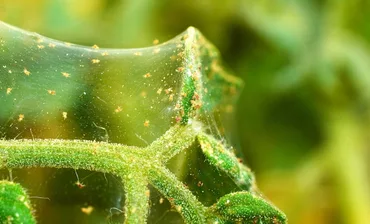
This pest feeds on leaf sap, causing pale stippling, fine webbing, and general loss of vigor, especially in dry indoor air. Symptoms include yellowing leaves that feel dry or rough to the touch.

Solution

Rinse foliage thoroughly in the shower or sink, focusing on leaf undersides, then repeat every 5–7 days for several cycles. Increase humidity, isolate the plant, and apply a miticidal soap or horticultural oil according to label directions until no new damage appears.

Mealybugs

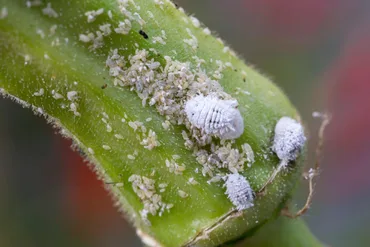
These insects appear as white, cottony clusters in leaf nodes, on stems, and along aerial roots, sucking sap and causing leaf yellowing and sticky residue. Infestations often start in dense, shaded parts of the vine where air movement is low.

Solution

Dab visible insects with cotton swabs dipped in 70% isopropyl alcohol, then rinse the plant after treatment. Inspect weekly, prune heavily infested vines, and use insecticidal soap or a light horticultural oil spray, repeating as needed until no new mealybugs are seen.

Scale insects

This pest forms small, brown or tan bumps along stems and leaf midribs, drawing sap and leading to yellow patches, leaf drop, and sticky honeydew. Symptoms include slow decline despite normal watering and light.

Solution

Gently scrape or wipe off individual scales with a fingernail or soft cloth, then wash the plant with lukewarm water and mild insecticidal soap. Repeat treatments every 7–10 days, improve light and airflow, and discard heavily infested pruned material in sealed bags.

Bacterial leaf spot

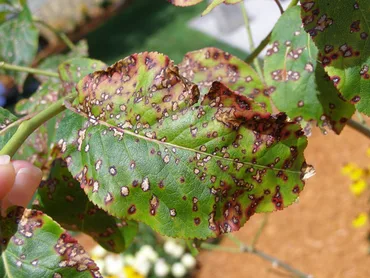
This disease causes water-soaked, translucent or dark lesions on leaves that may turn yellow around the edges and spread rapidly in warm, wet conditions. Symptoms include irregular patches that can coalesce and cause large sections of the leaf to collapse.

Solution

Remove and discard all affected leaves, sterilizing scissors between cuts, and avoid wetting the foliage during watering. Improve air circulation, reduce crowding, keep leaves dry, and, if spread continues, discard severely affected plants to protect nearby philodendrons.

Erwinia stem rot

This disease leads to rapidly spreading, soft, foul-smelling rot at nodes and stems, especially where cuttings or injuries occur in warm, wet conditions. Symptoms include sudden wilting of entire vines while the potting mix remains moist.

Solution

Immediately cut away and discard all mushy, discolored tissue, sterilizing tools between each cut, and allow the potting mix to dry slightly between waterings. In advanced cases, take healthy tip cuttings from unaffected sections, root them in fresh sterile substrate, and discard the original plant to prevent spread.

Interesting Facts

Hemiepiphyte growth strategy

In the wild, this species often starts life on tree trunks or in debris as a hemiepiphyte, then sends roots down to the soil as it matures, allowing it to exploit both canopy light and ground nutrients over time.

Leaf shape plasticity

Its heart-shaped leaves stay small and thin in low light, but in brighter, more humid rainforest conditions the same plant can produce significantly larger and thicker leaves with more pronounced tips and lobes.

Climbing with aerial roots

Specialized aerial roots allow this vine to cling tightly to rough bark and other supports, anchoring the stems while also absorbing moisture and dissolved nutrients from the surface they contact.

Botan icon

Did you know?

Wild populations in Central and South American forests can climb many meters up host trees, and as they ascend and receive more light, the leaves can become so large and leathery that the mature vine looks almost like a different species from the small-leaved juvenile form commonly grown indoors.

FAQs about Heartleaf philodendron

Yellow leaves usually result from overwatering, poor drainage, or natural aging of older foliage. Check that the pot drains well, allow the top soil to dry slightly between waterings, and remove only fully yellow, older leaves.

Grow Healthy Plants with Botan Care

Keep your plants happy and healthy with plant identification, disease detection, and easy care guidance.

Botan plant care app — identify plants on mobile

Explore More Plants