Creeping philodendron Care (Rhaphidophora decursiva)

About Creeping philodendron

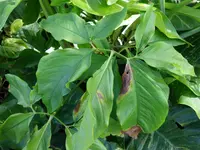
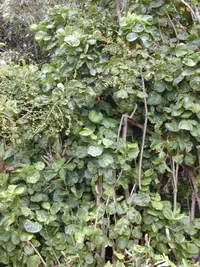
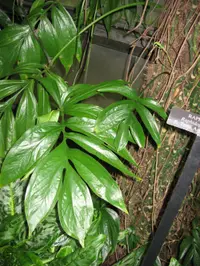
Rhaphidophora decursiva, often sold as creeping philodendron, is a tropical climbing aroid valued for its large, deeply lobed mature leaves. Young plants start with simple, narrow foliage, then develop dramatic splits as they age and gain support.

In nature it grows in forests of Southeast Asia, using trees or other structures to climb toward brighter light. Indoors it is generally considered moderately easy, as long as it receives bright, indirect light, stable warmth, and a support to climb.

Tolerant of brief neglect but sensitive to waterlogged soil, it does best in a well-draining mix that stays lightly moist. Understanding these habits makes it easier to care for Creeping philodendron in a home or office setting.

Main Plant Requirements

Care Difficulty

Moderate Care

Light Preference

Bright Indirect Light

Water Requirements

Moderate Water

Temperature Preference

Tropical / Frost Sensitive

Hardiness Zone

11–12

Soil Texture

Loamy, Peaty, Organic-rich

Soil pH

Acidic (5.5–6.5), Slightly acidic (6.5–7.0)

Soil Drainage

Moist but well-drained

Fertilization

Light (every 4–6 weeks)

Get Personalized Care Plan

Scan your plant to receive care tips personalized for your specific plant

Personalized Care in the App

Available on iOS and Android

How to Care for the Creeping philodendron

Rhaphidophora decursiva grows best in bright, indirect light that mimics dappled forest shade.

  • Provide 6–8 hours of bright, filtered light each day, such as near an east-facing window with sheer curtains or under light tree cover outdoors.
  • Tolerates partial shade, but growth slows and internodes stretch if light is too low; leaves stay smaller and may lose their deep lobing.
  • Avoid harsh midday and strong afternoon sun, which can cause yellow patches or crisp brown edges; in summer, shift Creeping philodendron slightly farther from intense windows.

Watering for Rhaphidophora decursiva should balance consistent moisture with good air around the roots.

  • Allow the top 2–4 cm of soil to dry before watering again; check by feeling the soil rather than following a strict calendar schedule.
  • Use a loose, fast-draining mix and water thoroughly until excess drains away, then empty saucers to prevent root rot, yellowing leaves, and a sour soil smell from overwatering.
  • In brighter, warmer months, expect faster drying and more frequent watering; in cooler, lower-light periods, extend the drying interval and watch for drooping, thin leaves as a sign of underwatering.

Stable, warm temperatures support steady growth and leaf development.

  • Aim for 65–80°F (18–27°C) for active growth; the plant slows below 65°F (18°C) but usually remains stable if conditions are dry and sheltered from drafts.
  • Avoid exposure below 55°F (13°C), as chilling can cause leaf yellowing and tissue damage; the plant is not frost tolerant and should be protected from any freeze.
  • In hot spells above 85°F (29°C), increase airflow and shade from intense sun to reduce heat stress, leaf curl, and rapid soil drying.

This aroid appreciates moderate to high humidity for best foliage and growth.

  • Aim for 50–70% humidity; below 40% the leaves may develop brown, crispy edges.
  • It tolerates typical heated home air but prolonged very dry conditions slow growth and increase leaf tip burn.
  • Watch for curling leaves, stalled new growth, and persistent brown margins as humidity stress signals.
  • To support caring for Creeping philodendron relatives, group plants, use a small humidifier, or place pots on pebble trays with water.

Use a loose, airy, organic-rich mix that drains quickly yet retains some moisture.

  • Combine roughly 40% all-purpose potting mix, 30% fine bark, 20% perlite, and 10% coconut coir or compost for structure and moisture balance.
  • Target slightly acidic to neutral pH around 6.0–7.0, which supports nutrient uptake for Rhaphidophora decursiva.
  • Improve aeration by using chunky components like orchid bark and medium perlite, avoiding dense peat-only blends.
  • Avoid heavy garden soil, clay-based mixes, or pots that stay waterlogged, as these promote root rot and oxygen-poor conditions.

This species is well suited to container growing when its climbing habit and root space are planned for.

  • Choose a pot wide and deep enough to anchor a sturdy moss pole or trellis so the vine does not pull the container over.
  • Use a relatively heavy or terracotta pot to add weight and prevent tipping as stems become long and top-heavy.
  • Ensure drainage holes stay unobstructed and empty any outer cachepot quickly so roots do not sit in trapped water.

This tropical climber responds well to moderate, balanced feeding during active growth.

  • Use a balanced liquid fertilizer (for example 10-10-10 or 20-20-20) at 1/4–1/2 strength for caring for Creeping philodendron.
  • Feed every 4–6 weeks in spring and summer when growth is strongest.
  • Skip or greatly reduce feeding in fall and winter when light and growth slow.
  • Organic compost or a slow-release fertilizer can be added lightly at the start of the growing season.

Thoughtful pruning keeps Rhaphidophora decursiva manageable and encourages fuller growth.

  • Best time is late winter to early spring, just before new growth starts.
  • Remove dead, yellowing, damaged, or pest-infested leaves with clean, sharp pruners.
  • Shorten overly long or leggy vines to shape the plant and encourage branching.
  • Cut just above a node, and avoid removing more than 20–25% of foliage at one time.

This climbing aroid benefits from periodic repotting to support its rapid root and shoot growth.

  • Repot every 2–3 years, or when roots circle the pot, emerge from drainage holes, or growth slows noticeably.
  • Choose late winter to early spring so the plant can recover quickly during the growing season.
  • Move to a pot 2–5 cm wider, using airy, chunky soil to keep roots well oxygenated.
  • Water thoroughly after repotting, keep in bright, indirect light, and avoid heavy feeding for 2–3 weeks to limit root stress.

New plants are most often produced from stem cuttings rather than seed.

  • Use semi-mature stem sections with at least 1–2 nodes and a healthy aerial root if possible.
  • Take cuttings in late spring or early summer when Rhaphidophora decursiva is actively growing.
  • Root in water or a moist, well-drained mix, keeping humidity high and temperature around 70–80°F.
  • Provide bright, indirect light and avoid waterlogging the medium until strong new roots and leaves form.

This species is frost-sensitive and needs protection in regions with cold winters.

  • Keep indoor plants above 60°F; growth slows if temperatures drop much below this.
  • In zones with frost, grow in containers so the plant can be moved indoors before nights reach 50°F.
  • Indoors, place in bright, indirect light away from drafts or heating vents to avoid stress.
  • Reduce watering slightly in winter, letting the top layer of soil dry more between waterings.

Care Tips

Early support training

Install a sturdy moss pole or slatted board when the plant is still small and loosely tie each new vine segment as it elongates, so aerial roots can attach and the stems do not kink or snap under their own weight later.

Encourage aerial rooting

Lightly press developing aerial roots against a moist support surface or tuck them into pockets of sphagnum moss on the pole to improve anchoring and increase water and nutrient uptake for larger, more divided leaves.

Strategic rotational pruning

Once or twice a year, remove 1–2 of the oldest, most woody vines at the base to stimulate new shoots closer to the soil line and keep the overall structure compact and easier to manage indoors.

Gradual light transitions

When moving the plant between locations or seasons, increase light exposure in small steps over 7–10 days to avoid bleaching the large leaves and to keep photosynthesis stable during Rhaphidophora decursiva plant care.

Routine pest scouting

Inspect the undersides of leaves, stem joints, and aerial roots every 2–3 weeks and wipe them with a damp cloth or alcohol-moistened cotton pad at the first sign of scale, mealybugs, or spider mites to prevent infestations from becoming established.

Common Pests and Diseases

Spider mites

This pest thrives on Rhaphidophora decursiva in warm, dry indoor air and causes tiny yellow speckling, dull leaves, and fine webbing on new growth and leaf undersides.

Solution

Rinse foliage thoroughly with lukewarm water, focusing on the undersides of leaves, then treat with repeated applications of insecticidal soap or neem oil every 5–7 days until new growth is clean; increase humidity and regularly shower the plant to make conditions less favorable for mites.

Mealybugs

These insects hide in leaf axils, along stems, and around aerial roots, appearing as white cottony clusters and causing stunted growth and sticky honeydew on leaves and nearby surfaces.

Solution

Isolate the plant, dab visible mealybugs with cotton swabs dipped in isopropyl alcohol (70%), then follow with thorough sprays of insecticidal soap or neem oil at weekly intervals, checking crevices and aerial root nodes carefully until no new insects appear.

Scale insects

This pest appears as small tan or brown bumps on stems and leaf midribs, drawing sap and causing yellowing, drooping, and weak new growth, especially on older canes and climbing sections.

Solution

Gently scrape or wipe off adult scale with a soft cloth or cotton swab dipped in isopropyl alcohol, then apply horticultural oil or neem oil to thoroughly coat stems and leaf veins, repeating every 7–10 days and pruning heavily infested sections if necessary.

Bacterial leaf spot

This disease causes water-soaked, translucent spots that may turn dark and form irregular patches on the thin areas between veins, often starting where water sits on leaves or around recent damage.

Solution

Remove and discard affected leaves, avoid overhead watering, keep foliage dry, and improve air circulation; disinfect pruning tools with 70% alcohol between cuts and, in severe or recurring cases, discard heavily infected plants to protect nearby aroids.

Fungal leaf blight

Symptoms include brown or tan lesions with darker borders that can expand rapidly in humid, low-airflow conditions, causing large portions of the broad leaves to die back from the edges or tips inward.

Solution

Cut away all affected leaf tissue back to healthy green areas, reduce humidity spikes, space plants for better airflow, and water the soil directly rather than the foliage; for persistent issues, use a labeled broad-spectrum fungicide and monitor new leaves closely as part of general Rhaphidophora decursiva plant care.

Interesting Facts

Unusual leaf transformation

Juvenile plants have small, entire leaves, but as the vine matures and climbs, the leaves become very large and deeply pinnatifid (feather-like divided). This dramatic change in leaf form with age is called heteroblasty and is especially pronounced in this species.

Climbing strategy in forests

In its native Southeast Asian habitats, this aroid grows as a shingling juvenile that hugs tree trunks and then transitions into a vigorous climber with thick stems. It uses adventitious roots to attach tightly to bark and reach higher light levels in the canopy.

Aroid family relative

This species belongs to the Araceae family, making it a relative of Monstera, Philodendron, and Epipremnum. Despite the visual similarity to split-leaf philodendrons, molecular and morphological studies place it firmly in the genus Rhaphidophora.

Botan icon

Did you know?

In the wild, mature specimens can develop leaves well over 90 cm long with many deep, ladder-like segments, creating a foliage pattern that can be confused with some palm fronds when viewed from a distance high in the canopy.

FAQs about Creeping philodendron

This species is a climbing aroid that anchors itself with aerial roots. Given a sturdy support, it tends to grow upward and form large, split leaves; without support, stems may sprawl and look untidy.

Grow Healthy Plants with Botan Care

Keep your plants happy and healthy with plant identification, disease detection, and easy care guidance.

Botan plant care app — identify plants on mobile

Explore More Plants