Provide sturdy support
Install a rigid trellis, fence, or railing for stems to lean and drape over so the arching growth does not break in wind or under its own weight.

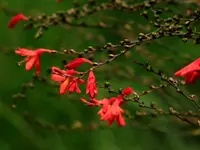
The firecracker plant, Russelia equisetiformis, is a shrubby, fountain-shaped plant known for its many slender, arching stems. It produces abundant tubular red flowers that resemble falling sparks, which attract hummingbirds in warm climates.
This species is native to Mexico and thrives in warm, frost-free regions, where it can be grown as a cascading shrub or in hanging containers. It is generally easy to grow if given plenty of light, well-drained soil, and regular moisture without waterlogging.
Its fast growth and tolerance of heat and short dry spells make it suitable for beginners learning how to care for Firecracker plant, especially in outdoor patios or bright sunrooms.

Care Difficulty
Easy Care

Light Preference
Full Sun

Water Requirements
Moderate Water

Temperature Preference
Tropical / Frost Sensitive

Hardiness Zone
9–11

Soil Texture
Sandy, Loamy, Organic-rich

Soil pH
Acidic (5.5–6.5), Slightly acidic (6.5–7.0)

Soil Drainage
Well-drained

Fertilization
Light (every 4–6 weeks)
Scan your plant to receive care tips personalized for your specific plant
Available on iOS and Android
This plant prefers bright, warm conditions that mimic a sunny, frost-free climate.
Russelia equisetiformis prefers consistent moisture but dislikes waterlogged soil.
This species thrives in warm, frost-free climates and reacts quickly to cold snaps.
This species handles a wide humidity range but benefits from slightly elevated levels in very dry homes.
Provide a sharply draining, sandy mix that stays airy after watering.
This species is well suited to container growing when given room for its arching stems and free-draining substrate.
Russelia equisetiformis responds well to light, consistent feeding during the warm growing season.
Pruning Russelia equisetiformis helps keep the plant compact and encourages more flowering shoots.
Container-grown Russelia equisetiformis benefits from occasional repotting to maintain vigor and root health.
Russelia equisetiformis is commonly propagated from softwood or semi-ripe stem cuttings taken in warm months.
Russelia equisetiformis is frost-tender and needs protection in climates with cold winters.

Plant Health Check
Not sure what's wrong with your plant? Check your plant's health inside the app.
This species has very small, scale-like leaves and relies mainly on its green, rush-like stems for photosynthesis, an adaptation that helps reduce water loss in hot, exposed habitats.
Its long, tubular red flowers are shaped and positioned to match hummingbird beaks, making bird pollination far more common than insect pollination in regions where hummingbirds occur.
The plant naturally forms arching, fountain-like mounds with stems that can hang or spill over edges, a growth form that helps it drape over rocks and slopes in its native Mexican habitats.

In frost-free climates this species can flower almost continuously through much of the year, providing an unusually long-lasting nectar source for hummingbirds and other nectar-feeding wildlife compared with many other ornamental shrubs.
Poor flowering usually comes from insufficient light, low nutrients, or old, woody stems. Provide more sun, use a balanced, low-phosphorus fertilizer sparingly, and prune lightly after flowering to stimulate new growth that carries next season’s blooms.
Keep your plants happy and healthy with plant identification, disease detection, and easy care guidance.