Encourage Bushy Shape
Pinch back soft shoot tips by 1–2 in during active growth to promote dense branching and more flowering stems rather than tall, leggy growth.

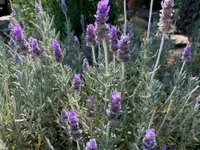
Fringed lavender, Lavandula dentata, is an aromatic evergreen shrub from the Mediterranean region and North Africa. It is often grown as an ornamental herb in gardens and containers.
The plant forms a compact, bushy mound with gray-green, toothed leaves and upright flower spikes topped with soft, tufted bracts. It tends to bloom over a long season in mild climates.
Lavandula dentata prefers sunny, dry, well-drained conditions and tolerates heat and poor soils better than many other lavenders. Its forgiving nature makes it easier to care for Fringed Lavender than more fussy species, provided the roots do not stay wet.

Care Difficulty
Moderate Care

Light Preference
Full Sun

Water Requirements
Low Water

Temperature Preference
Warm Climate

Hardiness Zone
8–11

Soil Texture
Sandy, Loamy, Rocky

Soil pH
Slightly acidic (6.5–7.0), Slightly alkaline (7.0–7.5)

Soil Drainage
Well-drained

Fertilization
Minimal (feed rarely)
Scan your plant to receive care tips personalized for your specific plant
Available on iOS and Android
This shrub thrives in strong sun but benefits from some protection from harsh extremes.
Lavandula dentata prefers infrequent, deep watering in fast-draining soil.
This lavender species favors mild, dry conditions and dislikes prolonged cold or extreme humidity.
Lavandula dentata prefers fairly dry air and usually adapts well to typical indoor humidity.
Lavandula dentata grows best in lean, sharply drained, mineral-rich soil.
This species is well suited to container growing when drainage and root space are carefully managed.
Lavandula dentata needs modest feeding, as excessive nutrients reduce essential oil concentration and flowering.
Thoughtful pruning keeps Lavandula dentata compact, long-lived, and floriferous.
Container-grown Lavandula dentata benefits from occasional repotting or transplanting to maintain root health and drainage.
Lavandula dentata is most reliably propagated from semi-ripe stem cuttings rather than seeds.
Lavandula dentata prefers mild winters and suffers in prolonged frost or freezing, especially in containers.

Plant Health Check
Not sure what's wrong with your plant? Check your plant's health inside the app.
This species has softly toothed or fringed leaf margins, which gives rise to the common name fringed lavender and helps distinguish it from the smoother-edged English lavender types.
Lavandula dentata is naturally adapted to mild, frost-free Mediterranean and Macaronesian climates, so it tolerates heat and coastal exposure better than many other lavenders but is less cold-hardy.
Its flower spikes carry small purple flowers topped with showy, sterile bracts that resemble rabbit ears, a feature that makes it especially valued in ornamental breeding and selection.

Genetic and morphological studies place this species in a distinct group within the genus Lavandula, and it is frequently used in hybridization programs to introduce heat tolerance, long blooming, and decorative bracted flower heads into new garden lavenders.
Lack of flowers usually comes from insufficient light, heavy or very rich soil, or old, unpruned stems. Light annual pruning after flowering and avoiding high-nitrogen fertilizer help redirect energy into buds instead of leafy, unproductive growth.
Keep your plants happy and healthy with plant identification, disease detection, and easy care guidance.