Cape jasmine Care (Gardenia jasminoides)

Also known as: common gardenia, gardenia

About Cape jasmine

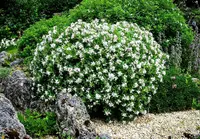
Cape jasmine, Gardenia jasminoides, is an evergreen shrub valued for its waxy white flowers and glossy dark green leaves. It typically forms a dense, rounded shape. Native to parts of China and Japan, it is now widely grown in warm and mild climates and also as a container plant indoors. The strongly scented blooms are its main attraction but also signal that the plant can be somewhat demanding. It prefers bright light, consistent moisture, and acidic, well-drained soil. Understanding these needs is key to how to care for Cape jasmine successfully over the long term.

Main Plant Requirements

Care Difficulty

Hard Care

Light Preference

Partial Sun

Water Requirements

Keep Soil Moist

Temperature Preference

Tropical / Frost Sensitive

Hardiness Zone

8–11

Soil Texture

Sandy, Loamy, Organic-rich

Soil pH

Strongly acidic (4.5–5.5), Acidic (5.5–6.5)

Soil Drainage

Moist but well-drained

Fertilization

Moderate (every 2–4 weeks)

Get Personalized Care Plan

Scan your plant to receive care tips personalized for your specific plant

Personalized Care in the App

Available on iOS and Android

How to Care for the Cape jasmine

Gardenia jasminoides needs bright, gentle light to form buds and bloom well.

  • Provide 4–6 hours of bright, indirect light or dappled sun daily; morning sun with afternoon shade suits Cape jasmine best.
  • Outdoors, give east-facing exposure or light shade under high, open trees; avoid harsh west or all-day summer sun that scorches leaves.
  • Too little light leads to weak growth and few flowers; in winter, maximize light with an unobstructed window or lightly filtered southern exposure.

This plant prefers evenly moist, not soggy, soil with slight drying at the surface between waterings.

  • Before watering, let the top 2–3 cm of soil dry; check by feeling the soil rather than following a fixed schedule.
  • In warm growing seasons, water thoroughly so moisture reaches the root zone, then drain away excess to prevent root rot.
  • Reduce watering in cooler months while preventing complete dryness; yellow, soft leaves suggest overwatering, while dull, crispy edges indicate underwatering in Gardenia jasminoides.

This species thrives in mild, stable temperatures without sudden hot or cold swings.

  • Ideal growing range is 65–75°F (18–24°C) by day and 60–65°F (16–18°C) at night for reliable bud and flower development.
  • Protect from frost; sustained temperatures below 40°F (4°C) can cause leaf drop and damage, and hard freezes may kill the plant.
  • In hot weather above 85°F (29°C), provide light shade and consistent soil moisture to limit heat stress and bud drop, especially during flowering.

This shrub needs consistently high humidity to maintain healthy buds and glossy foliage.

  • Aim for 50–70% humidity, as Cape jasmine declines quickly in dry, heated indoor air.
  • Crisp leaf edges, bud drop, and dull foliage often indicate air humidity is too low.
  • Increase humidity with a nearby room humidifier, grouped plants, or a shallow pebble tray kept topped with water.

Gardenia jasminoides requires acidic, moisture-retentive but sharply draining soil to prevent root stress.

  • Use a loose, loamy mix rich in organic matter, such as 50% peat or coco coir with 25% pine bark and 25% perlite or coarse sand.
  • Keep soil slightly acidic, ideally pH 5.0–6.0, using an azalea or camellia potting mix as a base.
  • Ensure strong drainage and aeration so water drains within seconds, preventing soggy, airless pockets around the roots.
  • Avoid heavy clay, unamended garden soil, or mixes that compact quickly, as these promote root rot and nutrient imbalance.

This species is well suited to container growing when the pot supports its root system and moisture needs.

  • Choose a pot just 2–5 cm wider than the root ball to limit excess wet soil while still allowing root expansion.
  • Select a stable, heavy container to prevent tipping, as the shrub forms a dense, top-heavy canopy when mature.
  • Use a pot material like glazed ceramic or plastic that slows evaporation, helping the fine roots avoid drying between irrigations.

Gardenia jasminoides benefits from consistent, light feeding to support foliage and bud formation.

  • Use an acidic, balanced fertilizer (around 10-10-10) or slow-release formula labeled for acid-loving plants when growing Cape jasmine.
  • Feed every 2–4 weeks in spring and summer, using liquid fertilizer at 1/2–1/4 label strength to avoid root burn.
  • Stop or reduce feeding to once every 6–8 weeks in fall and winter, when growth slows.
  • Supplement with organic matter such as compost or well-rotted leaf mold to support soil structure and microbial activity.

Pruning Gardenia jasminoides maintains a compact shape and encourages better flowering.

  • Time main pruning for right after the main flowering flush so flower buds for next season are not removed.
  • Use clean, sharp hand pruners to remove dead, diseased, crossing, or inward-growing stems back to healthy wood.
  • Thin crowded interior branches to improve air flow and light penetration, which reduces fungal problems.
  • Lightly tip back long shoots to control size and encourage branching, avoiding heavy cuts into old, bare wood.

Gardenia jasminoides in containers or landscape beds benefits from careful, infrequent repotting or transplanting.

  • Check for roots circling the pot, pushing through drainage holes, or slow, weak growth as signs the plant needs a larger container.
  • Plan repotting or transplanting for late winter to early spring, just before active growth, usually every 2–3 years in pots.
  • Move to a pot only 2–5 cm wider, using acidic, well-drained mix; keep the root ball at the same soil level as before.
  • Handle roots gently, water thoroughly after moving, and keep in bright, indirect light for 1–2 weeks to reduce transplant stress.

Gardenia jasminoides is most commonly propagated from semi-hardwood cuttings for reliable clones of the parent plant.

  • Take 8–12 cm semi-hardwood stem cuttings in late spring or summer, choosing non-flowering shoots.
  • Remove lower leaves, dip the cut end in rooting hormone, and insert into a sterile, acidic, well-drained medium.
  • Maintain bottom warmth around 70–75°F, high humidity, and bright, indirect light to support root formation.
  • Seeds and air layering are possible but slower; allow several months for rooted cuttings to establish before potting up.

Gardenia jasminoides needs protection in climates colder than its hardiness range, especially when grown in containers.

  • In-ground plants tolerate only light frost; temperatures below about 20°F can damage stems and roots.
  • Apply 5–8 cm of mulch around the root zone, keeping it slightly away from the trunk, to buffer freeze–thaw cycles.
  • Wrap or cover shrubs with breathable frost cloth during hard freezes, avoiding plastic contact with foliage.
  • Move container plants indoors or into a cool, bright, frost-free space before the first hard freeze, and reduce watering.

Care Tips

Bud-drop prevention

Keep the plant in one stable location and avoid sudden changes in light, temperature, or watering routine, since shifting conditions during bud formation is a major cause of buds yellowing and falling off before opening.

Iron chlorosis check

If new leaves are pale with dark green veins, use a soil pH test and, if needed, apply a chelated iron product labeled for acid-loving plants to correct iron chlorosis and restore healthy green foliage.

Targeted pest scouting

Inspect the undersides of leaves, stem joints, and bud clusters every 1–2 weeks for aphids, scale, mealybugs, and spider mites, and treat early with a horticultural oil or insecticidal soap according to label directions.

Controlled container sizing

Use a pot only 2–5 cm wider than the previous one and repot gradually, as overpotting keeps roots too wet, reduces oxygen in the root zone, and can lead to root rot and bud drop.

Cool-night flowering boost

During active bud development, provide cooler nights around 60–65°F if possible, which supports stronger fragrance and better flower set when growing Cape jasmine.

Common Pests and Diseases

Aphids

This pest feeds on tender new growth and flower buds, sucking sap and causing distortion, sticky honeydew, and sometimes sooty mold. Symptoms include curled leaves, stunted shoots, and clusters of soft-bodied insects, often on tips and undersides of leaves.

Solution

Rinse stems and leaves with a strong but controlled stream of water to dislodge insects, then treat remaining colonies with insecticidal soap or a neem oil spray, covering undersides of leaves. For ongoing Gardenia jasminoides plant care, monitor new growth weekly and remove heavily infested shoots before populations build up.

Whiteflies

These insects are small white, moth-like pests that fly up in a cloud when the plant is disturbed and feed on the underside of leaves. Symptoms include yellowing leaves, reduced vigor, and sticky honeydew that can lead to sooty mold.

Solution

Use yellow sticky traps to monitor and reduce adult numbers, and regularly spray the undersides of leaves with insecticidal soap or horticultural oil. Improve air movement around the plant and remove heavily infested leaves to break the life cycle over several weeks.

Sooty mold

This disease is a fungal growth that develops on the sugary honeydew excreted by sap-sucking insects such as aphids, whiteflies, and scale. Symptoms include a black, sooty coating on leaves and stems that can block light and reduce photosynthesis.

Solution

Control the underlying insect infestation first, then gently wipe affected leaves with a damp cloth or rinse with lukewarm water to remove the mold. Ensure good light and airflow so foliage dries quickly after cleaning and prune dense inner growth if the canopy is very crowded.

Bud drop

This disorder causes flower buds to yellow, dry, and fall off before opening, and is often linked to environmental stress such as temperature swings, low humidity, or inconsistent watering. Symptoms include dropping green or yellow buds and reduced flowering despite seemingly healthy foliage.

Solution

Keep soil evenly moist but not waterlogged, avoid letting the root zone fully dry, and maintain stable temperatures around 65–75°F with moderate humidity. Do not move the plant frequently, avoid cold or hot drafts, and feed lightly with an acid-forming fertilizer during active growth to reduce stress-related bud loss.

Leaf spot

This disease typically appears as small brown, tan, or purplish spots on leaves that may enlarge, merge, and cause premature leaf drop, especially in humid or poorly ventilated conditions. Symptoms include spotted foliage starting on lower leaves and sometimes a thin yellow halo around lesions.

Solution

Remove and discard affected leaves, avoid overhead watering, and water early in the day so foliage dries quickly. Improve airflow, space plants so leaves are not touching, and if spots continue to spread, use a labeled copper or chlorothalonil fungicide according to directions, focusing on new leaves as they develop.

Interesting Facts

Fragrant night pollination

The flowers release their strongest scent in the evening and at night, an adaptation that helps attract nocturnal moth pollinators in its native habitats in China and Japan.

Naturally double-flowered forms

This species naturally produces both single and double-flowered forms, and centuries of selection in East Asia have favored highly double, rose-like cultivars with increased petal number but reduced seed production.

Soil acid indicator

The leaves often turn pale or yellow when grown in neutral or alkaline soil, because this species is adapted to acidic, iron-rich substrates and quickly shows iron deficiency when soil pH is too high.

Botan icon

Did you know?

Historically, this species was so prized in 18th–19th century Europe and the United States that greenhouse-grown cut flowers were sold at high prices for use as corsages and buttonhole flowers, making it a status symbol in formal dress and floristry.

FAQs about Cape jasmine

Lack of blooms often comes from insufficient light, low humidity, nutrient imbalance, or pruning at the wrong time that removes flower buds. Stable temperatures and avoiding root disturbance also support reliable flowering over the season.

Grow Healthy Plants with Botan Care

Keep your plants happy and healthy with plant identification, disease detection, and easy care guidance.

Botan plant care app — identify plants on mobile

Explore More Plants