Naked Lady plants Care (Amaryllis belladonna)

Also known as: belladonna lily, Naked Ladies, Naked Lady, Jersey lily

About Naked Lady plants

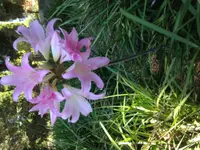
Naked lady plants, botanically known as Amaryllis belladonna, are bulb-forming perennials valued for their late-summer flower display. They send up clusters of trumpet-shaped pink blooms on leafless stems, which gives them their common name.

This species is native to South Africa but is widely grown in mild, dry-summer climates. It naturalizes easily in well-drained soil and often appears in long-lived garden clumps.

Amaryllis belladonna is generally low-maintenance once established, as the bulbs tolerate drought and brief neglect. Good drainage and a sunny to lightly shaded site make it easier to care for Naked Lady plants.

Main Plant Requirements

Care Difficulty

Moderate Care

Light Preference

Full Sun

Water Requirements

Low Water

Temperature Preference

Warm Climate

Hardiness Zone

7–10

Soil Texture

Sandy, Loamy, Organic-rich

Soil pH

Slightly acidic (6.5–7.0), Neutral (7.0)

Soil Drainage

Well-drained

Fertilization

Minimal (feed rarely)

Get Personalized Care Plan

Scan your plant to receive care tips personalized for your specific plant

Personalized Care in the App

Available on iOS and Android

How to Care for the Naked Lady plants

Amaryllis belladonna needs strong light to flower well in most outdoor climates.

  • Provide 6–8 hours of full sun daily, ideally with morning sun and light afternoon shade in hot summer areas.
  • Tolerates light partial shade, but flowering of Naked Lady plants declines if they receive less than about 4–5 hours of direct sun.
  • In very hot regions, protect bulbs from intense late-afternoon sun with filtered light from taller plants or a light shade structure.

Amaryllis belladonna prefers dry to moderately moist soil and is sensitive to excess water around the bulbs.

  • During active growth, water only when the top 3–5 cm of soil are dry, allowing water to drain freely away from the bulbs.
  • In summer dormancy, keep soil almost dry; occasional light watering is enough to prevent complete desiccation of the bulb and roots.
  • Watch for yellowing, soft foliage and a rotten smell as signs of overwatering; limp, shriveled leaves indicate the plant stayed too dry for too long.

This bulb thrives in mild, Mediterranean-type climates with warm, dry summers and cool, frost-free winters.

  • Optimal growth and flowering occur around 65–80°F (18–27°C), with warm, dry conditions helping the bulbs ripen after flowering.
  • Plants tolerate brief dips to about 25°F (-4°C) if soil is well-drained, but repeated hard frosts or frozen ground can damage bulbs.
  • Heat to 90–95°F (32–35°C) is usually tolerated outdoors if soil does not stay wet and foliage has some protection from reflected heat.

Amaryllis belladonna handles typical household humidity well and rarely needs special adjustment.

  • Aim for 30–50% humidity; the bulbs are naturally adapted to dry, Mediterranean-type air.
  • Dry indoor air is tolerated, but extremely arid conditions can slow leaf growth and flowering over time.
  • If foliage tips brown or look papery, increase humidity slightly with a nearby pebble tray or by grouping Naked Lady plants with other pots.

Amaryllis belladonna grows best in fast-draining, slightly gritty soil that keeps bulbs dry between waterings.

  • Use a sandy or sandy-loam mix with 50–70% mineral content (coarse sand, small gravel, or pumice) and 30–50% organic matter such as compost or leaf mold.
  • Ensure sharp drainage; in pots, combine equal parts all-purpose potting mix, coarse sand, and perlite to prevent waterlogging around the bulb base.
  • Aim for slightly acidic to neutral pH, roughly 6.0–7.0, as strongly acidic or alkaline soils can limit nutrient uptake.
  • Avoid heavy clay, compacted ground, or peat-only mixes; improve dense soil with coarse sand and grit to increase aeration around roots and bulb scales.

This species is well suited to container growing when the pot is stable and drains rapidly.

  • Choose a pot only 2–3 in wider than the bulb cluster so the plant flowers better and the mix dries evenly.
  • Select a heavier material such as ceramic or clay to keep tall flower stalks from tipping the container in wind.
  • Fill the pot so the upper third of each bulb remains above the soil surface, which lowers rot risk while still anchoring the plant.

Amaryllis belladonna benefits from light, targeted feeding rather than heavy fertilization.

  • Use a balanced, water-soluble fertilizer (e.g., 10-10-10) at half strength as foliage emerges and during active growth.
  • Apply every 4–6 weeks in spring and early summer, then stop feeding once leaves begin to yellow and enter dormancy.
  • Avoid fertilizing dormant bulbs; excess nutrients at this stage can promote rot instead of strong future flowering.
  • In lean soils, a thin layer of well-rotted compost around Naked Lady plants in spring supports flowering without overfeeding.

Pruning needs for Amaryllis belladonna are minimal and focused on hygiene rather than shaping.

  • Cut spent flower stalks at the base once blooms fade, leaving green leaves intact to recharge the bulb.
  • Remove yellowing or damaged foliage at soil level during late autumn to reduce disease and tidy the clump.
  • Use clean, sharp scissors or hand pruners, disinfecting blades if plants show any signs of fungal spots.
  • Avoid cutting healthy leaves in the growing season, as this can weaken bulbs and reduce future flowering.

Transplanting is infrequent, as Amaryllis belladonna performs best when bulbs remain undisturbed for years.

  • Plan lifting and transplanting for late summer to early autumn, after foliage has completely died back.
  • Look for overcrowded clumps, reduced flowering, or bulbs pushing above the soil as signs relocation may help.
  • Dig with a broad fork or spade, lifting bulbs carefully to keep roots and basal plate intact and unstressed.
  • Replant in well-drained soil with necks at or just above the surface, water lightly, then allow bulbs to resettle without further disturbance.

Propagation of Amaryllis belladonna is possible but slow, mainly through bulb division or seeds.

  • Divide offsets in late summer or early autumn when lifting dormant clumps, choosing firm, healthy daughter bulbs.
  • Replant offsets in sharply drained soil, spacing 15–20 cm apart, with the bulb neck at or slightly above the surface.
  • For seed propagation, sow fresh seed in shallow trays, barely covering, and keep at 65–75°F with even moisture.
  • Grow seedlings in bright, indirect light; flowering may take several years, so maintain consistent care and avoid disturbing young bulbs.

Winter care for Amaryllis belladonna depends on climate, with bulbs tolerating light frost but disliking prolonged freeze.

  • In mild climates (USDA 8–10), bulbs can stay in the ground year-round with minimal intervention.
  • Where winters drop below about 20°F, mulch the bulb area 5–8 cm deep to insulate the root zone.
  • For container plants in colder regions, move pots to a frost-free, dry, bright spot and keep soil barely moist during dormancy.

Care Tips

Bulb crowding strategy

Plant several bulbs fairly close together (about 10–15 cm apart) in the same bed or container to increase flowering reliability and create the dense clump effect this species prefers.

Summer dry rest

Once foliage yellows and dies back in late spring or early summer, keep the bulbs almost dry and undisturbed to allow a proper dormancy period that triggers stronger bloom spikes later.

Minimal disturbance rule

Avoid lifting, dividing, or replanting bulbs more often than every 5–7 years, since settled clumps flower better when left to establish long-term in the same spot.

Targeted neck exposure

Set bulbs so the necks sit slightly above soil level and keep this upper portion clear of mulch to reduce rot risk and let warmth and light signal the bulbs to initiate flower stalks.

Long-term clump rejuvenation

When flowering declines in older plantings, divide the clump after the dormant period, replant only the firm, medium-to-large bulbs, and use offsets to start a new group, which helps maintain consistent performance when growing Naked Lady plants.

Common Pests and Diseases

Narcissus bulb fly

This pest targets bulbs, where its larvae tunnel inside and hollow them out from within. Symptoms include weak or absent shoots, distorted growth, and bulbs that feel unusually light or rotten when cut open.

Solution

Discard any infested bulbs, as they cannot recover once larvae are inside. Inspect bulbs before planting, use physical barriers like fine mesh over outdoor plantings during the fly’s egg‑laying period, and rotate planting spots to reduce recurring infestation when growing Naked Lady plants.

Spider mites

These insects feed on sap, especially in warm, dry conditions, leading to pale, stippled leaves and fine webbing on foliage or flower stalks. Symptoms include slow growth and leaves that yellow and dry prematurely.

Solution

Rinse foliage and stems thoroughly with a strong but gentle stream of water, then increase humidity around the plant and improve air movement. For persistent infestations, apply insecticidal soap or a horticultural oil to all leaf surfaces, repeating according to label directions until mites are controlled.

Mealybugs

This pest appears as white, cottony clusters in leaf bases, along flower stalks, or around the neck of the bulb. Symptoms include sticky honeydew, sooty mold growth on that residue, and general decline of the plant due to sap loss.

Solution

Wipe visible insects with cotton swabs dipped in isopropyl alcohol and remove heavily affected leaves or stalks. If the population is larger, follow up with insecticidal soap or horticultural oil, making sure to treat leaf bases, sheaths, and crevices where mealybugs hide.

Basal plate rot

This disease is a fungal or bacterial decay starting at the basal plate, the flat bottom of the bulb, often after injury or poor storage. Symptoms include soft, foul‑smelling tissue at the base, failure to sprout, and yellowing foliage that collapses early.

Solution

Remove and discard severely affected bulbs to prevent spread. For mildly affected bulbs, cut away all soft tissue with a sterile knife, dust the wound with a dry fungicidal bulb treatment, then cure and store the bulb in a dry, well‑ventilated place before replanting in a well‑drained mix.

Red blotch (leaf scorch)

This disease causes bright red, elongated spots or streaks on leaves, flower stalks, and bulb scales, which may later crack or deform tissue. Symptoms include distorted scapes, reduced flowering, and weakened bulbs over time.

Solution

Remove and destroy affected leaves or scapes and avoid wetting foliage when watering. Space plants for good air circulation, keep bulbs and leaves dry, and use a labeled systemic fungicide during active growth if the disease recurs, especially in collections of Amaryllis belladonna plant care species and hybrids.

Interesting Facts

Autumn leafless flowering

This species often sends up tall, pink flower stalks in late summer or early autumn after its strap-like leaves have already died back, a habit known as hysteranthy. The flowers appear on bare stems, which led to common names like naked lady and belladonna lily.

Fog-belt native range

It is naturally native to the winter-rainfall, summer-dry regions of the Western Cape in South Africa, where it is adapted to cool, moist winters and hot, dry summers. In its native habitat it often grows on rocky hillsides and in scrubby vegetation influenced by coastal fog.

Highly toxic alkaloids

All parts of this plant, especially the bulbs, contain toxic alkaloids similar to those found in other amaryllis relatives. Ingestion can cause serious poisoning in humans and animals, which is why bulbs should never be eaten and should be kept away from pets and small children.

Botan icon

Did you know?

Bulbs of this species were carried from South Africa to Europe in the 18th century and became naturalized in Mediterranean-climate regions such as coastal California, where long-lived clumps can persist and flower reliably for decades with very little intervention, making it a classic example of how to take care of Naked Lady plants in low-input landscapes.

FAQs about Naked Lady plants

Lack of flowering often results from bulbs planted too shallow, insufficient summer sun, or bulbs divided too frequently. Allow foliage to mature fully each year and keep bulbs undisturbed for several seasons to restore bloom.

Grow Healthy Plants with Botan Care

Keep your plants happy and healthy with plant identification, disease detection, and easy care guidance.

Botan plant care app — identify plants on mobile

Explore More Plants