Deadhead Regularly
Remove spent flower clusters down to a leaf node every 1–2 weeks to extend the blooming period and keep plants compact rather than leggy.

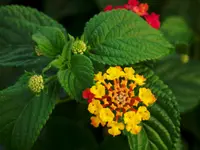
West Indian lantana (Lantana camara) is a sun-loving flowering shrub grown mainly for its long-lasting, brightly colored flower clusters. It often forms a dense, bushy mound and can be used in garden beds, borders, or large containers. In warm climates it may become woody and semi-evergreen. Native to tropical regions of the Americas, it is now widely grown in subtropical and warm temperate areas. It tolerates heat, drought, and poor soils, which makes it relatively easy to grow but sometimes invasive outdoors. It prefers full sun, well-drained soil, and moderate watering, and understanding how to care for West Indian Lantana starts with providing enough light and avoiding waterlogged conditions.

Care Difficulty
Easy Care

Light Preference
Full Sun

Water Requirements
Low Water

Temperature Preference
Tropical / Frost Sensitive

Hardiness Zone
9–11

Soil Texture
Sandy, Loamy, Rocky

Soil pH
Acidic (5.5–6.5), Slightly acidic (6.5–7.0)

Soil Drainage
Well-drained

Fertilization
Minimal (feed rarely)
Scan your plant to receive care tips personalized for your specific plant
Available on iOS and Android
Lantana camara needs strong, direct light to flower heavily and stay compact.
Lantana camara prefers slightly dry conditions and is sensitive to waterlogged soil.
This species thrives in warm conditions and reacts poorly to frost or prolonged cold.
Lantana camara grows best in relatively dry air and does not need added humidity.
Lantana camara prefers light, sharply draining soil that does not stay wet after watering.
This species is well suited to container growing outdoors on patios, balconies, and sunny entrances.
Lantana camara responds well to modest feeding during its active growing season.
Lantana camara benefits from periodic pruning to maintain shape and encourage heavy flowering.
Lantana camara tolerates somewhat tight quarters but grows better when roots have room to expand.
Lantana camara is commonly propagated from semi-ripe cuttings and, less often, from seed.
Lantana camara is frost-sensitive and needs protection in regions with cold winters.

Plant Health Check
Not sure what's wrong with your plant? Check your plant's health inside the app.
Individual flower clusters often open yellow or orange, then shift through pink to red as they age; pollinators use these color changes as cues, since younger flowers usually contain more nectar.
This species is listed among the world’s most invasive plants in many tropical and subtropical regions, where it forms dense thickets that outcompete native vegetation and alter fire regimes.
The foliage and unripe fruits are toxic to livestock and many mammals, but ripe fruits are eaten by birds, which disperse the seeds over long distances and contribute to its spread.

Lantana camara is so genetically variable that hundreds of distinct forms and cultivars exist worldwide, and in some regions different invasive populations show measurable differences in leaf chemistry, growth, and thorniness, which complicates both identification and control programs.
Poor flowering usually comes from insufficient light, excess nitrogen fertilizer, or lack of deadheading. Old or shaded wood flowers less. Regularly remove spent blooms and lightly prune after flushes to encourage new flowering stems and buds.
Keep your plants happy and healthy with plant identification, disease detection, and easy care guidance.